How to Organize Cleaning Supplies at Home
A crowded cabinet full of half-used sprays, loose sponges, and mystery bottles can make a five-minute cleanup feel like a chore before you even start. Learning how to organize cleaning supplies is less about buying matching containers and more about putting the things you actually use where they make sense. A simple system saves time, clears visual clutter, and makes it easier to keep up with the everyday messes.
Start by taking stock of what you have
Pull everything out of the cabinet, closet, laundry shelf, or wherever your cleaning supplies have gathered. Yes, it may look worse before it looks better. That is normal, and this step is where you find the duplicates, dried-out wipes, empty bottles, and products you bought for one specific project three years ago.
Check expiration dates when they are listed, especially on disinfectants. If a product is leaking, unlabeled, or past its useful life, dispose of it according to the instructions on its label and your local guidelines. Never pour cleaners down the drain unless the label specifically says it is safe to do so.
As you sort, group supplies by job rather than by brand. Bathroom cleaners, kitchen degreasers, glass cleaner, floor care, dusting supplies, and laundry products each deserve a clear category. You may find that you own three nearly identical all-purpose sprays but no clean microfiber cloths. That is useful information for your next shopping trip.
Keep specialty products only if they solve a real problem in your home. A stainless steel cleaner may earn its spot if you use it weekly. A niche cleaner for a surface you no longer have does not need valuable cabinet space.
Choose one main cleaning supply zone
Most homes work best with one primary storage area for backup products and a few smaller, task-specific kits. The main zone might be under the kitchen sink, in a laundry room cabinet, a hall closet, or on a garage shelf. The right spot depends on your layout, but it should be dry, reasonably cool, and out of reach of children and pets.
Avoid storing cleaning products directly beside food, medicine, or pet supplies. Under-sink storage is convenient, but it can be damp and cramped, especially around plumbing. If that cabinet has leaks or little airflow, use it for tools like gloves, sponges, and trash bags instead, then store chemical products elsewhere.
A hall closet can be a great central cleaning station for a larger household. It gives you room for a mop, vacuum attachments, paper products, and refill bottles in one place. In a small apartment, a narrow utility cabinet or one shelf in the laundry area may be all you need. The goal is not a Pinterest-perfect supply closet. It is a home base you can reach without digging.
Keep daily-use supplies close to the mess
Central storage is helpful for backups, but the supplies used every day should live near the rooms they serve. Keep dish soap, a countertop spray, and a couple of cloths near the kitchen. Store toilet bowl cleaner and a bathroom-safe disinfectant in the bathroom, if you have a secure cabinet.
This is especially useful for busy families and anyone who tends to put off cleaning once it becomes a bigger project. When a small spill can be handled in 30 seconds, it is far less likely to turn into a sticky countertop or stained floor later.
Use containers that solve a specific problem
You do not need to decant every product into pretty bottles. In fact, cleaning chemicals should stay in their original containers so labels, safety instructions, and usage information remain easy to read. Instead, use organizers to contain categories and make supplies easier to grab.
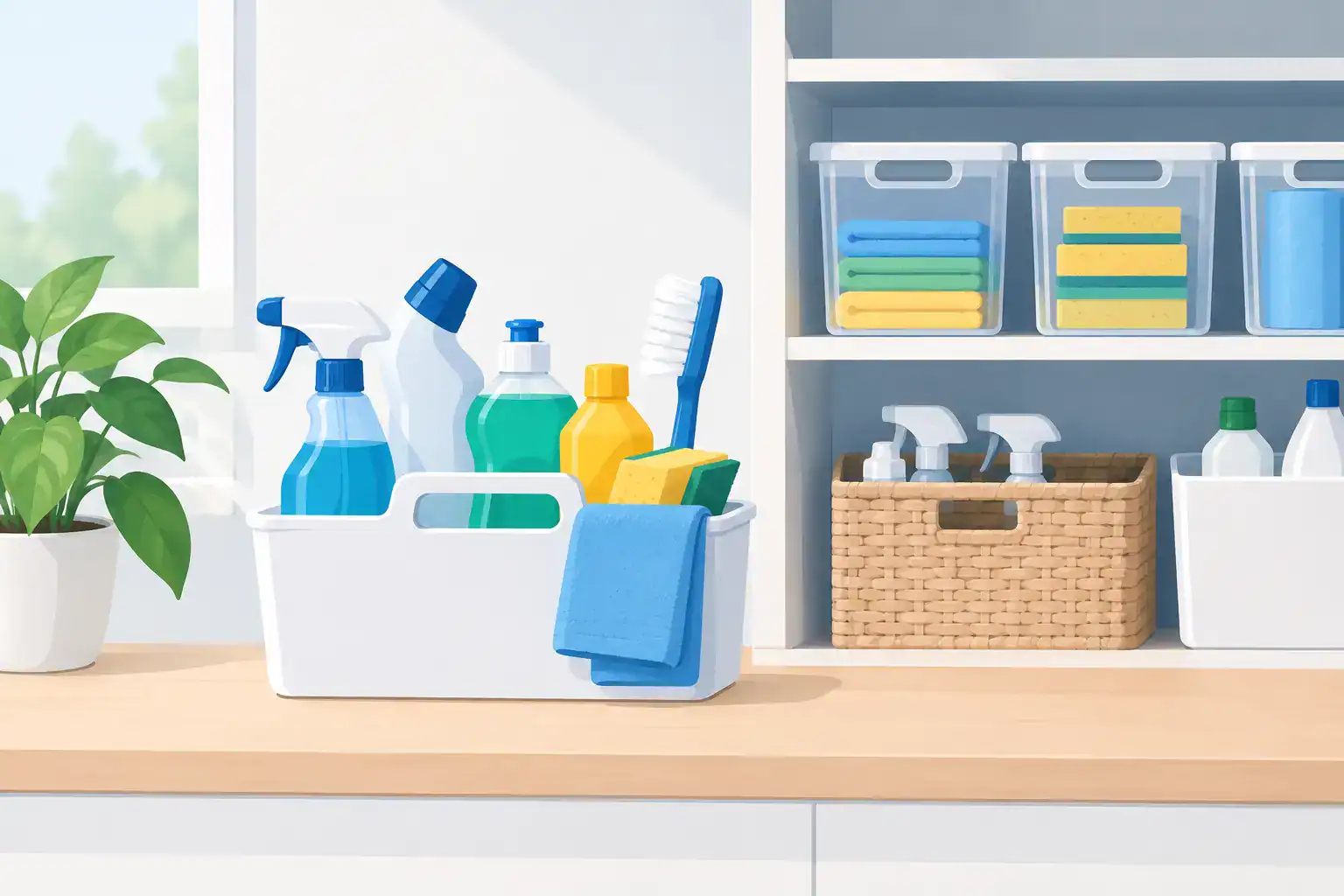
A handled cleaning caddy is one of the most practical tools for this job. Fill it with your most-used all-purpose cleaner, glass cleaner, disinfectant, gloves, scrub brush, microfiber cloths, and a few sponges. You can carry it room to room instead of making repeated trips back to the cabinet.
Clear plastic bins work well for grouping backup sprays, dishwasher tablets, laundry stain treatments, or extra sponges. Choose bins with low sides so you can see and reach what is inside. Deep bins often become a place where small items disappear.
For under-sink cabinets, a pull-out organizer can make use of the awkward space around pipes. Stackable drawers are another good option for sponges, cloths, trash bags, and dishwasher pods. If you are renting or want a low-commitment fix, a simple tension rod can hold spray bottles by their triggers and free up the cabinet floor.
Use hooks or wall-mounted holders for brooms, mops, dusters, and dustpans. Long-handled tools are easy to neglect when they slide behind shelves or fall into a messy corner. Getting them off the floor creates instant breathing room, even in a compact laundry closet.
Set up simple categories that stay organized
The easiest systems have obvious homes. Label containers if multiple people clean in your household, or if the contents are not immediately clear. Labels do not need to be fancy. A basic label such as “bathroom,” “floors,” or “refills” removes the guesswork.
Try organizing your main supply zone into four practical groups:
- Daily cleaners: all-purpose spray, glass cleaner, disinfectant, dish soap, and cleaning cloths.
- Room-specific products: toilet cleaner, oven cleaner, wood polish, or shower cleaner.
- Tools: gloves, scrub brushes, sponges, mop pads, dusters, and vacuum attachments.
- Backstock: unopened refills, extra paper towels, replacement mop heads, and bulk purchases.
Keep backstock behind or below active products. This simple rule prevents you from opening a new bottle when an older one is already half full. If you buy in bulk to save money, give those extras a firm boundary. A full shelf is enough. Once the shelf is full, pause before buying more.
Store cleaning products safely
A good organization system should never trade safety for convenience. Keep cleaning products in their original containers, with caps tightly closed and labels facing forward when possible. Never combine products in the same bottle or use an unlabeled container for a chemical cleaner.
Bleach, ammonia, and other strong cleaners can create dangerous fumes when mixed. Store them separately if possible, and always follow the label directions. Products should be secured in a locked cabinet or placed high enough to be inaccessible to children and pets.
Cloths, sponges, and scrub brushes need attention too. Let damp tools dry fully before putting them into a closed bin. Otherwise, an organized cabinet can quickly develop odors or mildew. Keep a small open basket for clean dry cloths and another for used ones waiting for laundry.
Create a reset routine you can actually keep
The best way to organize cleaning supplies is to make the system easy to reset, not to expect yourself to maintain it perfectly. After a cleaning session, return the caddy to its spot, toss used cloths into the laundry, and put products back in their assigned category. That takes a minute, not an entire weekend.
Once a month, take a quick look at the area. Wipe up spills, replace depleted basics, and move stray items back where they belong. Before a seasonal deep clean, check what needs replenishing so you do not discover an empty spray bottle halfway through the bathroom.
If your system starts looking chaotic again, do not assume you failed. It usually means the categories are too complicated, the container is too small, or the supplies are stored too far from where you use them. Adjust the setup until it works with your real routine. A cleaning supply station that is easy to use on an ordinary Tuesday is the one that will keep your home feeling calmer all week.