Paper Organization That Actually Stays Manageable
The kitchen counter is where paper organization usually breaks down. A piece of mail lands there because you need to look at it later. A school flyer joins it. Then come a warranty, a receipt, a form to sign, and a bill you already paid but are not quite ready to toss. Before long, the counter is doing the work of an inbox, filing cabinet, reminder system, and trash can.
The fix is not buying a bigger file box and trying to become the kind of person who files every scrap immediately. A useful paper system has to match the way your household actually moves. It should make the next decision obvious, protect the documents that matter, and keep everyday surfaces clear without demanding a weekend of maintenance.
A Paper Organization System Starts With Decisions
Paper piles feel overwhelming because they combine items with very different jobs. Some need action this week. Some need a quick reference. Some need to be kept for years. Some are already finished and can leave the house today.
Start with a quick sort, not a detailed filing project. Put every loose paper from your main trouble spots into one central area, then sort it into five plain-language categories: act, file, read, recycle, and shred. Do not stop to research every document or create perfect labels. The point is to separate papers by what happens next.
The act pile includes bills to pay, forms to return, invitations that require a response, school paperwork, appointment reminders, and anything with a deadline. The file pile is for documents you need to keep but do not need this week. Read is for magazines, catalogs, printouts, and information you genuinely plan to review. Keep this category small. If a magazine has sat untouched for months, it is not reading material anymore – it is clutter with good intentions.
Recycle obvious junk mail, duplicate instructions, expired coupons, and old flyers right away. Shred documents with account numbers, Social Security information, medical details, or other sensitive personal data. If you do not own a shredder, keep a small labeled bag or envelope for shredding and empty it on a regular errand run.
Decide what deserves paper storage
Not every record needs a physical home. Many statements, manuals, and confirmations are easier to find online, especially when you can search by date or company name. Before filing a paper, ask whether it is available digitally and whether you would know where to find it if you needed it later.
Keep original documents when the original matters: birth certificates, passports, vehicle titles, signed legal agreements, insurance policies, estate documents, and certain tax records. Store these in a waterproof, fire-resistant document box or another secure location. A desk drawer is convenient, but it is not the best place for papers that would be difficult or expensive to replace.
For everyday records, it depends on your comfort level and the document. Some households prefer to save a paper copy of major home repairs, medical explanations of benefits, or warranties. Others scan those documents and recycle the originals. Either choice can work if you use a consistent naming system and back up digital files.
Set Up Paper Organization Zones That Fit Your Home
A single file cabinet is not always the answer. Paper enters your home in one place, gets handled in another, and may need long-term storage somewhere else. Giving each stage a small, clear zone prevents the kitchen counter from becoming permanent storage.
Create an active-paper station
Your active-paper station should live near the place where you naturally open mail or handle household tasks. For many homes, that is a kitchen command center, a home office desk, or a small section of a mudroom drop zone.
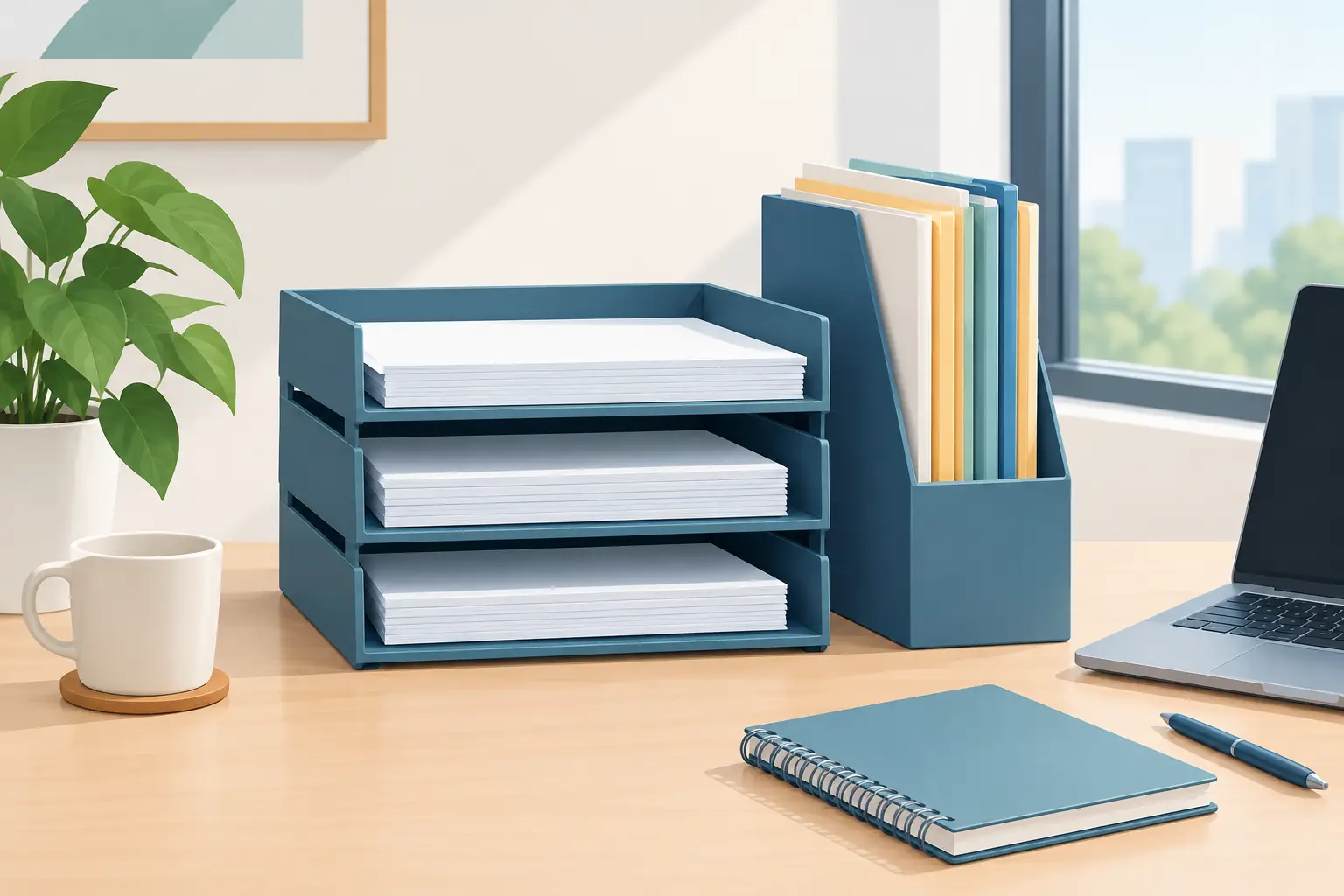
Use a vertical sorter, wall pocket, or desktop file organizer with only a few labels. “To pay,” “To sign,” “To do,” and “To file” are enough for most households. A family with school-age kids might add “School” or give each child a labeled slot. A busy household may also benefit from a small tray for outgoing mail, returns, and items that need to leave the house.
Choose an open organizer for active papers. If the system is hidden inside a deep drawer, it is easy to forget deadlines. The trade-off is visual clutter, so keep the organizer limited to current tasks. A weekly reset keeps it from turning into another pile.
Give reference papers a simple home
Reference papers are things you may need to check occasionally but do not act on every week. Think appliance manuals, paint colors, pet vaccination records, vehicle service receipts, and home improvement paperwork.
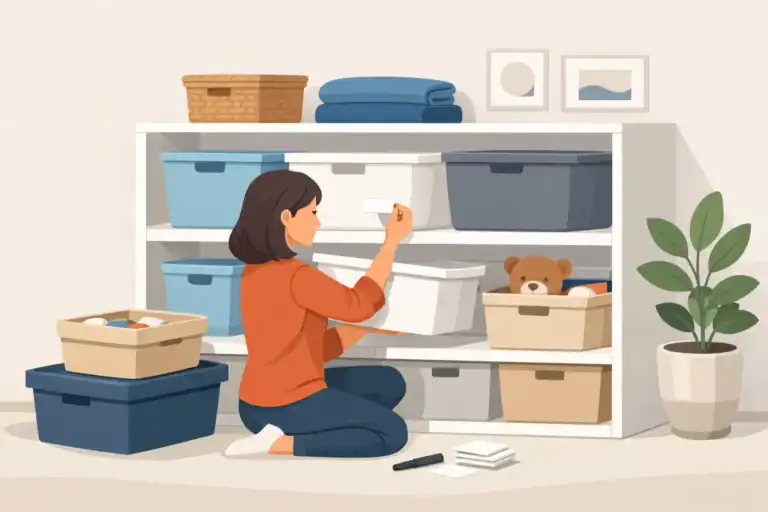
A portable file box with hanging folders works well for renters, apartment dwellers, and anyone without room for a filing cabinet. It can move between rooms, tuck into a closet, and travel with you during a move. If you have a dedicated home office and a larger volume of paperwork, a locking file cabinet may make more sense.
Keep categories broad enough to use. “Home,” “Auto,” “Medical,” “Pets,” “Taxes,” “Work,” and “School” are more sustainable than dozens of narrow folders. You can add a few subfolders where volume demands it, such as “Home – warranties” or “Medical – 2026.” If you have to pause and wonder where a paper belongs, your system is probably too complicated.
Protect the papers you cannot replace
Your most important papers deserve a separate system from daily files. Store them together in labeled document sleeves inside a fire-resistant document box. Include a short list of what is inside, and tell another trusted adult where the box is kept.
This is also a good place for a small emergency information sheet with key contacts, insurance details, medication lists, and account instructions. Review it once a year or after a major life change. The goal is not to collect every possible record. It is to make essential information easier to locate when life is already stressful.
Make Incoming Paper Easier to Control
The best paper storage setup will still fail if every piece of mail gets set down “just for now.” Build a short routine around the moment paper comes inside.
Open mail near a recycling bin and shred pile. Throw out envelopes, inserts, and obvious junk before they reach the counter. Put action items in the active-paper station immediately, not in a separate temporary pile. If a bill is set to autopay, you may only need to confirm the amount and file or recycle it.
Reduce incoming paper where you can. Switch recurring statements to digital delivery, opt out of catalogs you never read, and ask medical offices whether forms can be completed online. Be selective here. Digital clutter is still clutter if your inbox is impossible to search, so create a dedicated email folder for receipts, household records, and statements you may need later.
Families often need one extra layer: a routine for school papers. Instead of saving every worksheet, use one temporary folder or bin per child. Review it weekly, keep special artwork or major records, and recycle the rest. A single memory box for each child is more realistic than storing years of daily assignments in a closet.
Use a Maintenance Routine, Not a Marathon
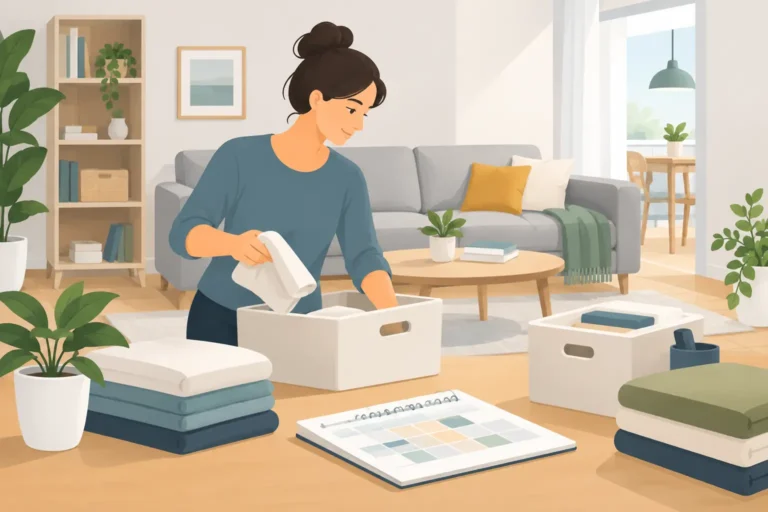
Paper organization stays manageable through small resets. Pick one day each week to pay bills, respond to forms, and clear the active folders. Ten or fifteen minutes is often enough when papers already have a home.
Then schedule a larger review twice a year. Empty outdated folders, remove expired warranties, shred old items you no longer need, and check whether your labels still fit your life. Tax documents, medical records, and business paperwork can have different retention needs, so check with a qualified tax professional, attorney, or financial advisor if you are unsure what to keep.
Avoid organizing products that create more work than they solve. Decorative boxes without labels can hide clutter. Oversized binders can become heavy paper graveyards. Fancy color-coding may look great at first, but simple labels usually win because everyone in the household understands them.
A practical setup is one you can maintain when you are tired, busy, or running out the door. Clear one small pile today, give active papers a visible place, and let the system improve from there. A calmer counter is not about having less life happening at home. It is about knowing exactly where the paper from that life belongs.