Apartment Kitchen Storage Guide for Small Spaces
A kitchen can feel full before you have even unpacked a single grocery bag. One shallow drawer turns into a jumble of utensils, the cabinet under the sink becomes a cleaning-supply avalanche, and the counter collects everything that has nowhere else to go. This apartment kitchen storage guide is built for that reality: limited cabinets, rental-friendly options, and a kitchen that needs to work hard every day.
The goal is not to own matching containers or reduce your kitchen to three forks. It is to give the things you actually use a dependable home, so making coffee, packing lunch, and cooking dinner require less digging and less cleanup afterward.
Start With How Your Kitchen Actually Works
Before buying bins, shelf risers, or drawer dividers, take a quick look at where frustration happens. The best storage system is based on your routines, not on the label a product happens to have.
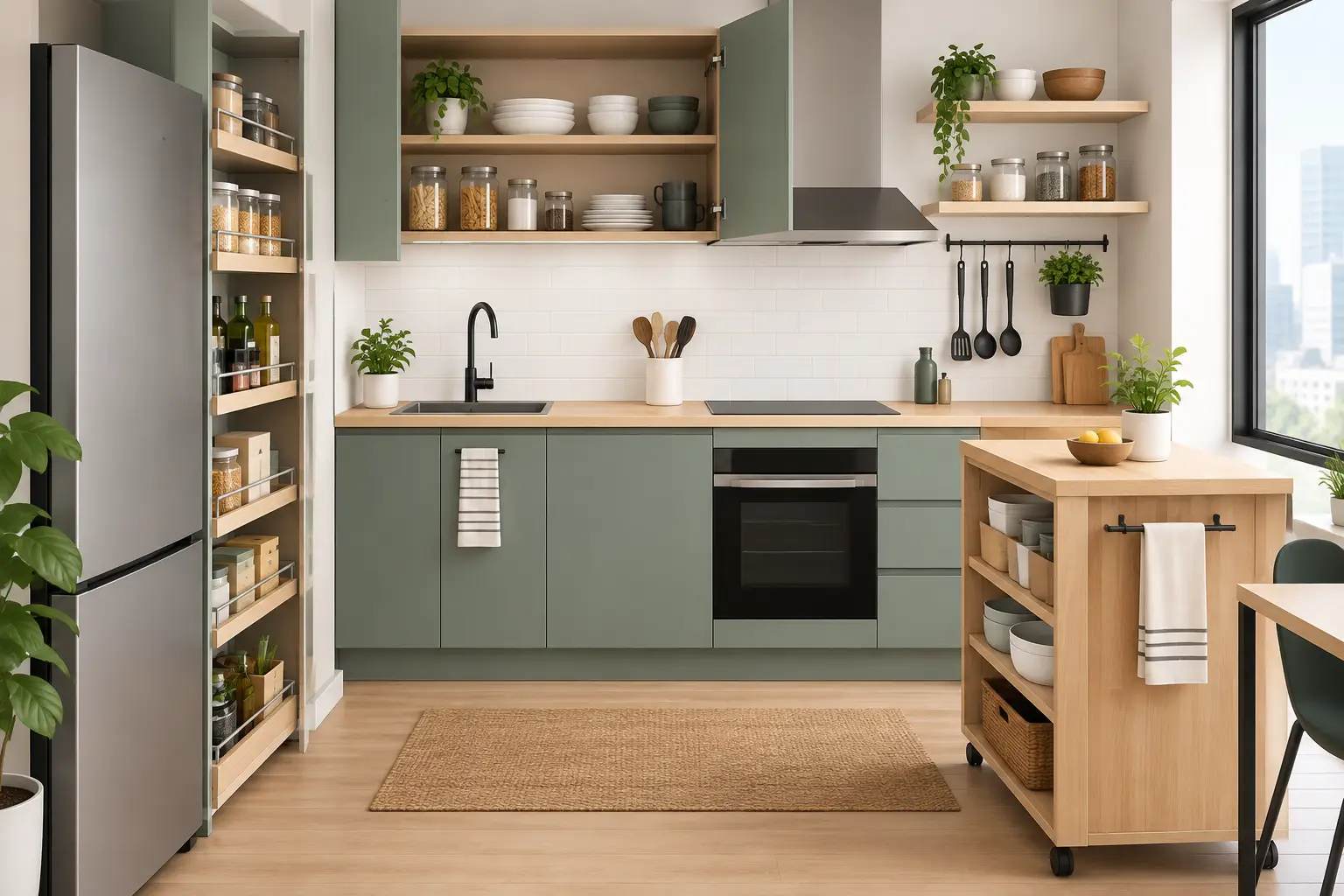
Keep everyday items closest to where you use them. Mugs belong near the coffee maker or kettle. Cooking utensils should sit near the stove. Food-storage containers work best close to the fridge, dishwasher, or prep area. If you have to cross the kitchen every time you need an item, the system will slowly fall apart.
It also helps to separate daily-use items from backups. A small apartment kitchen often gets crowded because everything is treated as equally important. One open package of foil is useful. Four backup boxes taking up half a cabinet are not. Store only a reasonable backup supply, or move extras to a closet, utility area, or higher shelf if you have one.
Clear the Cabinet Space You Already Have
Most apartment cabinets are not truly too small. They are just designed as empty boxes, which means valuable vertical room disappears above stacks of plates, cans, and bowls.
Add Levels to Deep Shelves
Shelf risers are one of the simplest ways to make a cabinet more useful. Use them for plates, mugs, canned goods, or short pantry items that otherwise get stacked in hard-to-reach piles. They work especially well in cabinets with a lot of unused height.
Be honest about the trade-off, though. Risers help with visibility, but a very deep cabinet can still become a black hole. In that case, place the items you use less often toward the back and keep daily essentials in front. Pull-out cabinet bins can also make deep shelves easier to use, but measure the interior width, depth, and door clearance before ordering anything.
Stop Stacking Pots, Pans, and Lids
Nested cookware saves some room, but it can make cooking feel like a small excavation project. A vertical pan organizer can hold skillets, baking sheets, cutting boards, and pot lids upright so you can grab one without lifting the entire stack.
If you do not have enough cabinet width for an organizer, use a simple tension rod or adhesive hooks inside a cabinet door for lightweight lids. Renters should check whether an adhesive product is rated for the surface and weight involved. Cheap hooks are convenient until they pull paint off with them.
Give Food Containers a Reset
Plastic food containers are a frequent source of apartment-kitchen chaos because the lids and bases multiply quickly. Match every lid to a base, recycle or discard warped extras, and keep only the sizes you regularly use.
Store bases nested by size and lids upright in a lid organizer or narrow bin. The aim is not a picture-perfect drawer. It is being able to find one container and its lid in the same minute.
Make Drawers Work Harder
A drawer without dividers eventually becomes a place for loose tools, takeout menus, batteries, and the one mystery key nobody recognizes. Start by deciding what the drawer is for, then keep it specific.
For utensil drawers, adjustable dividers are usually more practical than fixed trays because apartment drawers vary widely in size. Keep frequently used tools in the front sections and less-used gadgets toward the back. If the drawer is shallow, skip bulky organizers and use slim dividers or small open trays instead.
Consider creating a small cooking-tools zone near the stove for spatulas, tongs, measuring spoons, and oven mitts. This frees your main utensil drawer for forks, knives, and spoons. If counter space is tight, a narrow drawer organizer or wall-mounted rail may be a better choice than a countertop crock.
Use Walls and Doors Without Making the Kitchen Feel Busy
Vertical space is useful, but it is easy to overdo. Covering every wall with hooks can make a small kitchen feel more crowded, not less. Choose one or two high-impact areas instead.
An over-the-door organizer can turn a pantry door or cabinet door into a home for spices, wraps, snacks, or cleaning supplies. A slim magnetic strip can hold knives or metal utensils when drawer space is scarce, but only place it where it is safely out of the path of children and pets. A wall rail with hooks can hold a few everyday tools, a dish towel, or a small colander.
For renters, removable adhesive hooks and lightweight wall systems are often the safest bet. Read the weight limits, clean the wall first, and let adhesive cure as directed. A hook that falls at 2 a.m. is not storage success.
Fix the Zones That Get Messy Fast
Some areas need more attention because they handle many different items in a small footprint. Solving these zones can make the whole kitchen feel calmer.
Under the Sink
The plumbing takes up most of this cabinet, so avoid trying to force large bins underneath it. A two-tier organizer with a narrow cutout for pipes can help, but a simple setup often works just as well: a small handled caddy for daily cleaners, a separate bin for dishwashing supplies, and a hook or bar for damp towels.
Keep chemical cleaners away from food-storage items and check for leaks every few weeks. If children or pets have access to the kitchen, use a cabinet lock or store hazardous products elsewhere.
The Counter
Counters are working surfaces, not long-term storage. Keep only the appliances you use several times a week, such as a coffee maker or toaster. Everything else should earn its spot through frequent use.
A tray can make necessary counter items look intentional while containing crumbs and drips. Try one near the coffee station for mugs, coffee, filters, and sweetener. Another small tray by the stove can hold cooking oil and salt. If a tray starts becoming a dumping ground, it is a sign that an item needs a different home.
The Refrigerator
A crowded refrigerator wastes food because ingredients disappear behind leftovers and condiment bottles. Use clear bins to group categories such as snacks, lunch items, cheese, or produce. Clear bins make it easier to see what you have, while handled bins let you pull a whole category forward instead of rearranging the shelf.
Do not buy refrigerator bins before measuring shelf depth and checking adjustable shelf positions. A bin that is two inches too deep is not a bargain. Reserve one visible area for foods that need to be eaten soon, which can help reduce waste without adding another complicated rule.
Choose Storage Tools Based on the Problem
The right product depends on what is failing in your kitchen. Shelf risers help when you are wasting height. Pull-out bins help when cabinets are deep. Drawer dividers help when small items migrate. Over-the-door organizers help when you need storage but cannot spare a shelf.
Avoid buying organizers as a substitute for editing what you own. A bin can contain clutter, but it cannot make duplicate gadgets, expired spices, or six water bottles more useful. Start with the items that genuinely belong in the kitchen, then choose tools that make those items easier to reach and put away.
Measure every storage area before shopping: interior width, depth, height, and clearance around hinges, pipes, or shelves. In a small apartment kitchen, a few accurate measurements can prevent a pile of almost-right organizers from becoming its own clutter problem.
Keep the System Easy Enough to Maintain
Your kitchen does not need a weekend reset every month. It needs small habits that prevent buildup. Put clean dishes away before they claim the counter, toss expired food during a grocery restock, and return tools to their zone after cooking. Five minutes of maintenance is far less annoying than a full cabinet overhaul.
If your household shares the kitchen, use plain labels only where they solve a real problem, such as pantry bins or food-container sections. Over-labeling can make a simple system feel fussy. The best apartment kitchen storage setup is one everyone can follow without asking where the scissors, snacks, or skillet went.
A calmer kitchen usually starts with one drawer, one cabinet, or one frustrating counter corner. Fix that spot first, live with the solution for a week, and let the next improvement reveal itself from there.