How to Organize Refrigerator Door Storage
The refrigerator door is where good intentions go to disappear. A half-used bottle of dressing gets buried behind three kinds of mustard, the salsa tips over every time you reach for milk, and somehow there are two open jars of pickles. Learning how to organize refrigerator door storage is less about making it look picture-perfect and more about making the items you use every day easy to see, grab, and put back.
The key is to work with the door’s limits. It is usually the warmest part of the refrigerator, and its shelves are narrow, so it is best for condiments, drinks, and other items that can handle slightly warmer, fluctuating temperatures. Save the main shelves and drawers for more temperature-sensitive foods. A few simple zones can turn this small, chaotic space into one of the hardest-working parts of your kitchen.
Start With a Quick, Honest Reset
Take everything off the door before buying bins or trying to rearrange bottles. This is the fastest way to spot expired items, near-empty duplicates, and condiments your household simply does not use. Check dates, wipe sticky bottle bottoms, and toss anything questionable. If you have four open barbecue sauces but only use one, keep the favorite and move unopened backups to a pantry or a designated refrigerator shelf.
Clean the door shelves with warm, soapy water and dry them fully. Sticky shelves make bottles slide, labels tear, and clutter return faster. If a shelf liner feels useful for your fridge, choose a thin, washable one that will not interfere with the shelf lip or door closure. Often, a clean surface and fewer items are all you need.
Before putting anything back, adjust the door shelves if your refrigerator allows it. Taller bottles need a home, but giving every shelf extra height can waste valuable vertical space. Set one lower shelf for tall drinks and leave the remaining shelves closer together for jars, tubes, and shorter bottles.
How to Organize Refrigerator Door Storage by Zone
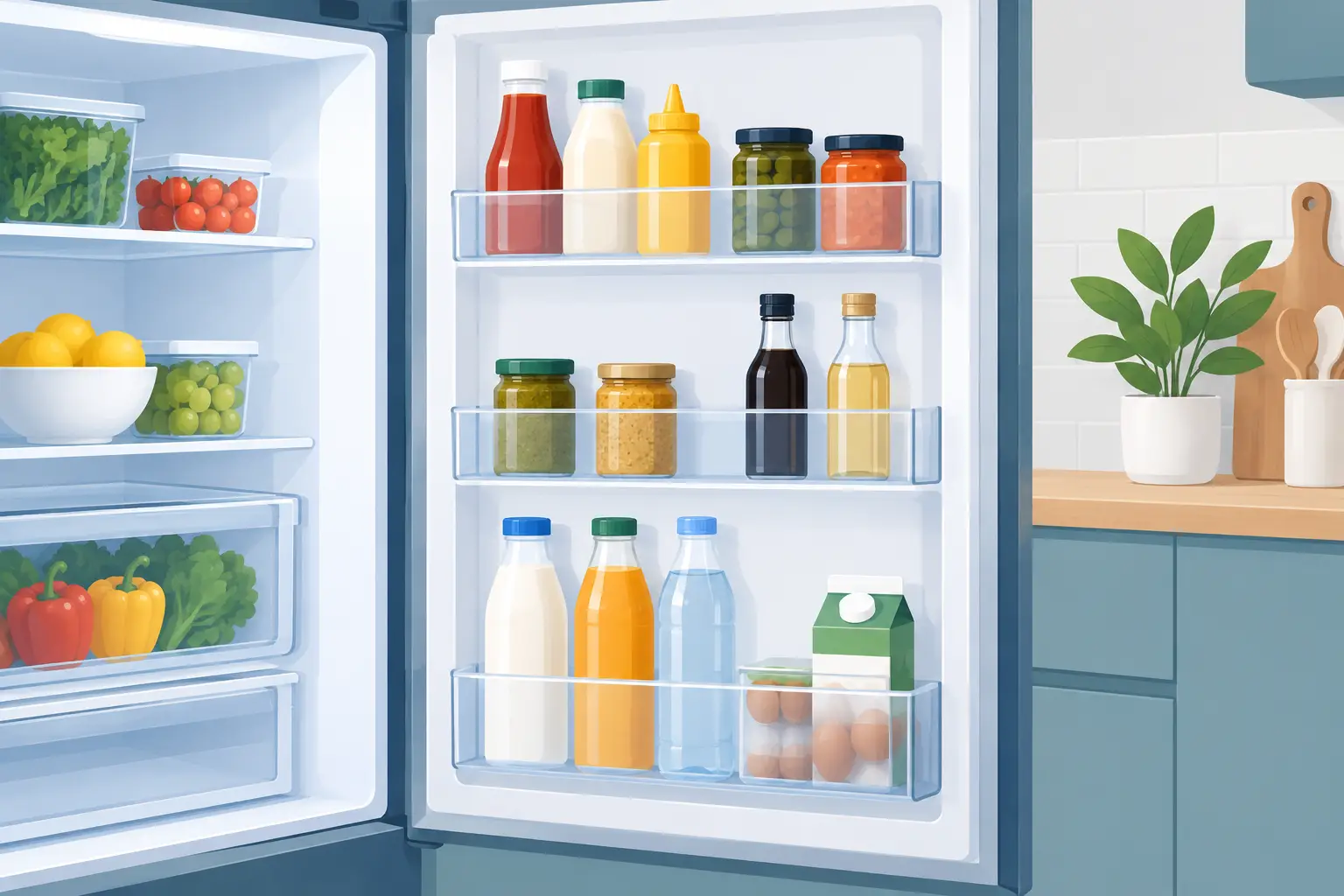
The easiest system is based on how often you use an item, not on a strict category that no one in the house will follow. Put daily-use items at eye level, occasional items higher up, and kid-friendly drinks or snacks where they can reach them safely.
Use the top shelf for occasional condiments
The top door shelf is often a good home for items you do not reach for every day: specialty sauces, horseradish, capers, cooking wine, and small jars of condiments. Group similar items together so you can scan the shelf quickly instead of moving six bottles to find soy sauce.
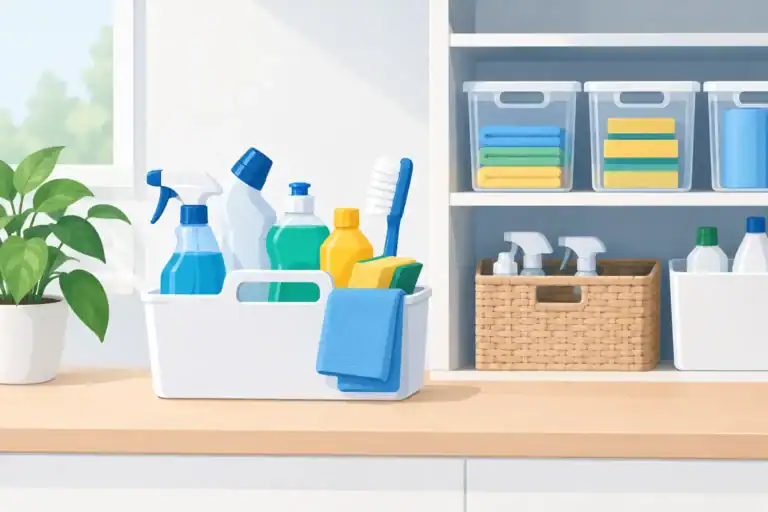
This is also a smart place for a narrow, clear handled bin if the shelf tends to become a jumble. One bin can hold small bottles and packets that would otherwise fall behind taller items. Do not overfill it. You should be able to lift it out, find what you need, and return it with one hand.
Keep everyday sauces at eye level
Your most-used condiments deserve the easiest spot. Think ketchup, mustard, mayonnaise, hot sauce, sandwich spreads, salad dressings, and whatever your household reaches for several times a week. Keeping these items together reduces the familiar dinner-time search through a crowded door.
There is no need to organize every bottle by height or label color. A useful rule is to keep the tallest bottles at the back or ends of the shelf and shorter jars where their labels remain visible. If you have a deep shelf, place less-used versions behind the everyday favorites, but limit this to two rows. Anything hidden in a third row is likely to be forgotten.
Give tall bottles a stable lower shelf
The bottom door shelf usually has the most clearance, making it the natural spot for juice, bottled water, sparkling water, iced coffee, and tall condiment bottles. Keep the heaviest bottles toward the hinge side when possible. This can make the door feel less strained and helps reduce the chance of a bottle shifting when the door swings open.
If your family goes through several drinks at once, designate one area for open bottles only. Unopened extras often fit better in a pantry, garage beverage shelf, or another storage area. The refrigerator door should support what you are currently using, not serve as long-term beverage storage.
Make the butter compartment earn its space
If your fridge has a covered butter compartment, use it for butter or soft spreads you use regularly. It can also work for small packets, but do not turn it into a mystery drawer for sauce packets and takeout extras. Those packets are easy to forget, hard to clean around, and rarely worth the space.
Not every refrigerator keeps this compartment at the same temperature, so follow your appliance manual and the food label when deciding what belongs there. When in doubt, store items that need consistently colder temperatures on an interior shelf instead.
Keep Temperature-Sensitive Foods Off the Door
A refrigerator door is convenient, but it is not the best place for everything. Every time the door opens, the temperature changes more quickly than it does in the center of the fridge. For that reason, it is generally better to keep milk, raw meat, leftovers, yogurt, and other highly perishable foods on interior shelves.
Egg storage depends on your refrigerator’s design and your household routine, but the original carton on an interior shelf is usually the safer, more protective choice than a door egg tray. The carton helps prevent odors from transferring and makes the date easy to check. If your appliance manual gives specific storage guidance, follow that first.
This is one of those cases where convenience and food quality can compete. A door shelf may look like the obvious home for milk because it is easy to grab, but a more stable interior shelf is typically the better choice. A functional fridge organization system should make daily life easier without creating avoidable food waste.
Use Containers Only Where They Solve a Real Problem
Door shelves are already built-in storage, so they do not need an organizer inside every inch of them. Extra containers can make narrow shelves harder to use if they are too wide, too tall, or impossible to clean. Add one only when it fixes a specific issue: tiny bottles falling over, snack pouches scattering, or a group of similar items constantly getting mixed together.
Clear plastic bins work well because you can see what is inside. Slim bins with handles are especially useful for small condiment bottles, tube-style products, or kids’ drink pouches. Choose a bin that leaves enough room for air circulation and does not catch on the shelf above it when you pull it out.
A small lazy Susan can be helpful on some wide, flat door shelves, but measure carefully first. Many refrigerator door shelves have a raised front lip or limited depth, which makes a spinning organizer more frustrating than useful. If it wobbles, blocks tall bottles, or forces you to remove items to spin it, skip it.
Label the Zone, Not Every Single Bottle
Labels can help if several people share the kitchen, especially in a busy family fridge. Keep them simple: “everyday sauces,” “drinks,” “kids’ snacks,” or “specialty condiments.” A small removable label on a bin or shelf edge is enough to show where things belong.
Avoid labeling individual positions for ketchup, ranch, and mustard unless your household truly enjoys maintaining that level of detail. Refrigerator contents change constantly. A flexible category system is more likely to survive a grocery run, a houseguest, or a week when everyone is eating differently.
Build a Five-Minute Maintenance Habit
The best refrigerator door system is one you can reset while waiting for coffee to brew. Once a week, take a quick look before grocery shopping. Wipe up drips, recycle empty bottles, move nearly empty duplicates together, and check whether any tall bottles have migrated into the wrong zone.
When you bring groceries home, use a simple one-in, one-out mindset for condiments. If you buy a new bottle of ranch, check whether there is already an open one hiding in the back. Finish that first whenever possible. This small habit cuts down on clutter and prevents the door from becoming a collection of half-used bottles.
If your refrigerator door still feels packed after organizing, the answer may not be another organizer. It may be fewer open condiments, a better spot for backups, or a quick family rule about returning items to their zone. A door that holds only what your household actually uses makes every meal feel a little less hectic.