
8 Decluttering Tips for Beginners That Really Work
The junk drawer that will not close, the chair covered in clean laundry, the pantry shelf where nothing is easy to find – clutter usually becomes a problem because it slows down ordinary life. These decluttering tips for beginners are not about owning 30 things or making your home look staged. They are about making the items you use easier to reach, put away, and maintain.
If you feel behind before you even begin, start smaller than you think you should. A clear bathroom counter or one empty kitchen drawer creates proof that the process works. That early win matters more than an ambitious plan you abandon halfway through Saturday. That’s the whole point of decluttering tips for beginners — small proof that keeps you going, not a flawless system.
This post contains affiliate links. As an Amazon Associate, I earn from qualifying purchases at no extra cost to you. See our full disclosure here.
| Product | Best For | Shop |
|---|---|---|
| Vtopmart Clear Drawer Organizer Set | Messy Drawers | Check Price |
| Vtopmart Clear Stackable Bins | Pantry Storage | Check Price |
| Aimeaihe Over-Door Organizer | Vertical Space | Check Price |
| DENJA & CO Woven Storage Basket | Entryway Shoes | Check Price |
| MyPerfectClassroom Clear Label Bins | Shared Spaces | Check Price |
Decluttering Tips for Beginners: Start With One Easy Zone
Avoid beginning with sentimental storage, a packed garage, or a closet you have avoided for years. Those spaces ask you to make a lot of decisions at once. Start with a contained, low-emotion area such as a coffee table, a single drawer, one bathroom shelf, or the front-seat area of your car.
Choose a zone that you can finish in 15 to 30 minutes. Bring a trash bag and a donation bag, then remove obvious trash, empty packaging, expired products, duplicates, and items that belong in another room. Put those out-of-place items in a small return basket rather than leaving the room every two minutes. You can return them when the zone is finished.
The goal is not to create a perfect organizing system before dinner. The goal is to make one part of your home work better today. Once you can open a drawer without digging, the next drawer feels far less intimidating.
Empty the Space Before You Organize It
For a drawer, shelf, cabinet, or small closet section, take everything out first. Seeing the full amount is useful because clutter often hides in layers. You may think you have a few batteries, for example, until you find three half-used packs, loose batteries, and two chargers that no longer fit anything you own.
Wipe down the empty space, then sort what came out into simple groups. Kitchen tools with kitchen tools. Charging cords with charging cords. Hair products with hair products. Keep your categories broad at first. Overly detailed sorting can turn a manageable task into a labeling project.
Then ask a practical question: would you look for this item here? If the answer is no, it needs a different home. Decluttering is not only about getting rid of things. It is also about placing the things you keep where they make sense.
Use Simple Decisions, Not Perfect Rules
Beginners often get stuck because every item feels like a major decision. A more realistic approach is to use a few repeatable questions. Do you use it? Does it fit your current life? Would it be easy and affordable to replace if you needed it later? Is it taking up space that you need for something more useful?
An item can be perfectly good and still not earn a place in your home. Maybe the sweater fits but is never chosen. Maybe the serving platter is nice but you host once a year. Maybe the extra set of measuring cups is functional, yet it makes the drawer harder to use every day. Let your actual routines guide the decision.
Be honest about “just in case” items. Keeping a spare light bulb is sensible. Keeping six mismatched phone cases for devices you no longer own is usually not. The difference is whether the item solves a likely problem or simply postpones a decision.
Try the Keep, Donate, Trash, Relocate Method
As you work through a small area, place each item in one of four groups: keep, donate, trash, or relocate. This prevents the common habit of moving clutter from one surface to another.
The keep group should contain items that are useful, loved, or genuinely needed. Donations should be clean, usable items someone else can use. Trash includes broken, expired, stained, or incomplete items that are not worth repairing. Relocate is for anything useful that belongs somewhere else in your home.
Set a boundary for the “maybe” pile. A small bin or one shopping bag is enough. If you keep every uncertain item in a large pile, you have simply created delayed clutter. Date the container and revisit it in 30 to 60 days. If you did not need or miss what is inside, letting it go becomes easier.
Declutter Before Buying Storage Products
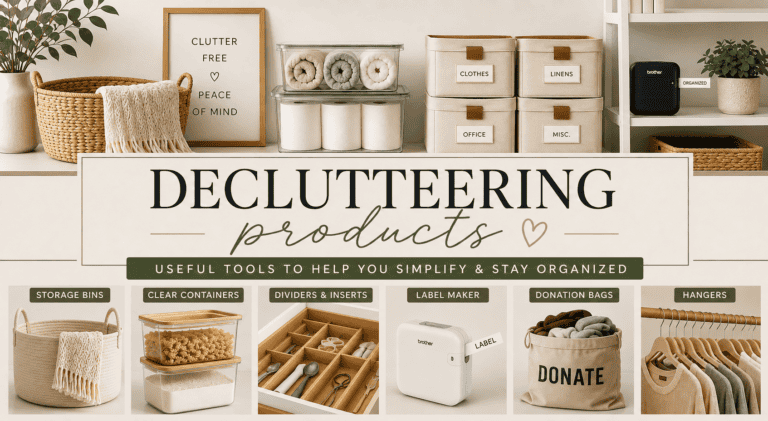
Bins, drawer dividers, baskets, and shelf risers can make a real difference, but they cannot fix an overcrowded space on their own. Buying containers before you know what you are keeping often leads to more stuff, more spending, and bins full of things you still do not use.
First reduce what is expired, duplicated, broken, or no longer relevant. Then measure the space and choose storage that solves a specific problem. A shallow drawer organizer is helpful when makeup, office supplies, or utensils slide into one messy pile. Clear pantry bins make sense when snacks disappear behind taller boxes. Over-the-door hooks can reclaim vertical space in a small bathroom or closet.
Match the tool to the habit. If family members toss shoes by the entryway, a large open basket may work better than individual labeled cubbies. If you live alone and prefer a more polished look, a closed cabinet or lidded bin may be worth the extra step. The best system is the one people will actually use on a rushed weekday morning.
Work Room by Room, Not House by House
Trying to declutter an entire home in one weekend can create a bigger mess than the one you started with. A room-by-room approach gives each space a clear purpose and lets you build momentum without pulling every possession into the open.
Start with areas that affect your daily routine most. For many households, that means the kitchen, bathroom, entryway, or bedroom. Clearing these spaces can make mornings and evenings feel noticeably easier.
In the kitchen, focus on expired pantry food, duplicate utensils, chipped dishes, and appliances that have not been used in a year. Keep everyday items near where you use them. Coffee supplies belong close to the coffee maker; lunch containers should be easy to grab when packing meals.
In the bathroom, discard expired medications according to local disposal guidance, old cosmetics, dried-out samples, and products you do not like. Give daily essentials the easiest-to-reach space, and move backstock to a separate bin or cabinet shelf.
In the bedroom, begin with surfaces and laundry rather than every piece of clothing. Clear the nightstand, put dirty clothes in a hamper, and fold or hang clean items. A packed closet may need a separate session, especially if seasonal clothing or sentimental pieces are involved.
Give Everything You Keep a Real Home
A home for an item is not just a place where it can fit. It is a place where you would naturally think to put it back. If the return step is inconvenient, clutter will collect on counters, desks, and floors again.
Store items close to where they are used, group like items together, and make frequently used things easy to access. Put rarely used items higher up, lower down, or farther back. This is especially helpful in small apartments, where every shelf and cabinet has to work harder.
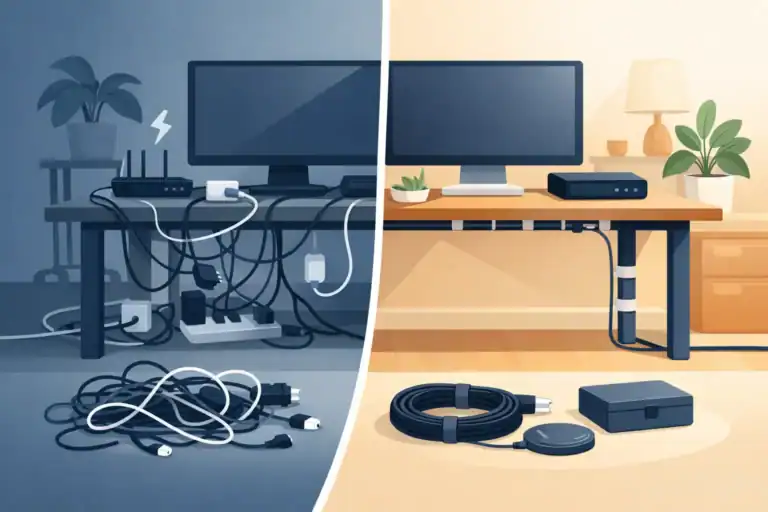
You do not need labels everywhere. Labels help when several people share a space, when containers are opaque, or when categories are easy to mix up. A family snack bin, cleaning-supply basket, and cable box can benefit from clear labels. A single-person bedside drawer probably does not need them.
Build a Small Reset Into Your Routine
Decluttering once can improve a room. A short reset keeps it from slowly returning to chaos. Try a five-minute evening pickup in the spaces that get messy fastest: the kitchen counter, coffee table, entryway, or bathroom vanity.
During that reset, return items to their homes, toss obvious trash, and deal with one small backlog such as mail or water bottles. Do not use the time to start a new project. The purpose is maintenance, not another marathon.
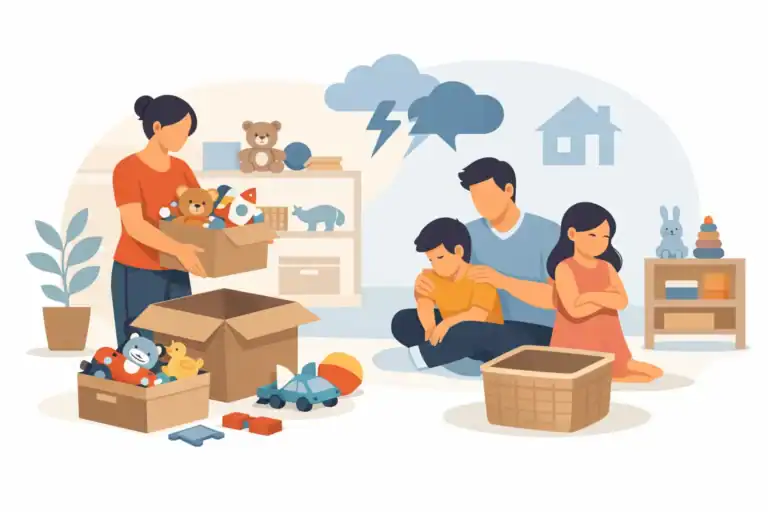
It also helps to use a one-in, one-out rule for categories that tend to multiply, such as mugs, throw blankets, beauty products, kids’ toys, or storage containers. This does not have to be rigid. If you buy a new winter coat, you may not need to donate one immediately. But when a category starts overflowing, it is a useful signal to pause before adding more.
A calmer home rarely comes from one dramatic purge. It comes from small choices repeated often enough that putting things away becomes easier than leaving them out. Pick one drawer, finish it, and let that clear space show you where to go next. Whatever you tackle first, these decluttering tips for beginners work because they focus on progress, not perfection.
About The Storage Society
We’re passionate about turning cluttered spaces into calm, functional ones — one room at a time. Every product we recommend is researched for real usefulness, not just trends. Read more on our About page.
6 Comments
Comments are closed.