Storage Ottomans That Make Small Rooms Work
A coffee table that collects mail, blankets piled over the arm of the sofa, shoes gathering by the door – these are small messes that can make a room feel constantly unfinished. Storage ottomans solve several of those everyday problems in one compact piece: they offer a seat, a footrest, an extra surface, and a hidden place to put things away.
That versatility is what makes them especially useful in apartments, family rooms, bedrooms, dorms, and other spaces where every piece of furniture needs to earn its footprint. The catch is that not every ottoman is equally useful. A beautiful upholstered cube with a shallow lid may not help much if your actual problem is a growing collection of throw blankets or kids’ toys. Choosing the right one starts with knowing what you need it to hold and how the room needs to function.
Why Storage Ottomans Work So Hard
Most storage solutions take up space solely to hold stuff. An ottoman is different because it sits in a spot you may already need to furnish. In a living room, it can replace a traditional coffee table. At the end of a bed, it provides a landing spot for tomorrow’s clothes and stores extra linens. Near an entry, it gives people somewhere to sit while pulling on shoes.
The hidden compartment also makes daily resetting easier. You do not need a complicated organizing system to put away a blanket after movie night or clear the floor before guests arrive. When the contents are used often and belong in that room, a lift-top or removable-lid ottoman gives them a convenient home.
Still, hidden storage is not a free pass to toss everything inside. An overstuffed ottoman becomes a mystery box, and then it stops being useful. Think of it as active storage for a defined category, not a long-term holding zone for items you have not decided what to do with.
Choose a Storage Ottoman by Its Real Job
Before comparing fabrics or colors, decide on the ottoman’s primary role. This one choice narrows down the right size, shape, construction, and storage layout.
For living rooms: blankets, games, and everyday clutter
A larger rectangular ottoman works well as a coffee-table substitute, particularly in homes with young children where hard corners are a concern. Look for a stable, upholstered top that can handle a tray for drinks, remotes, or snacks. A removable tray is usually more practical than trying to balance items directly on a cushioned lid.
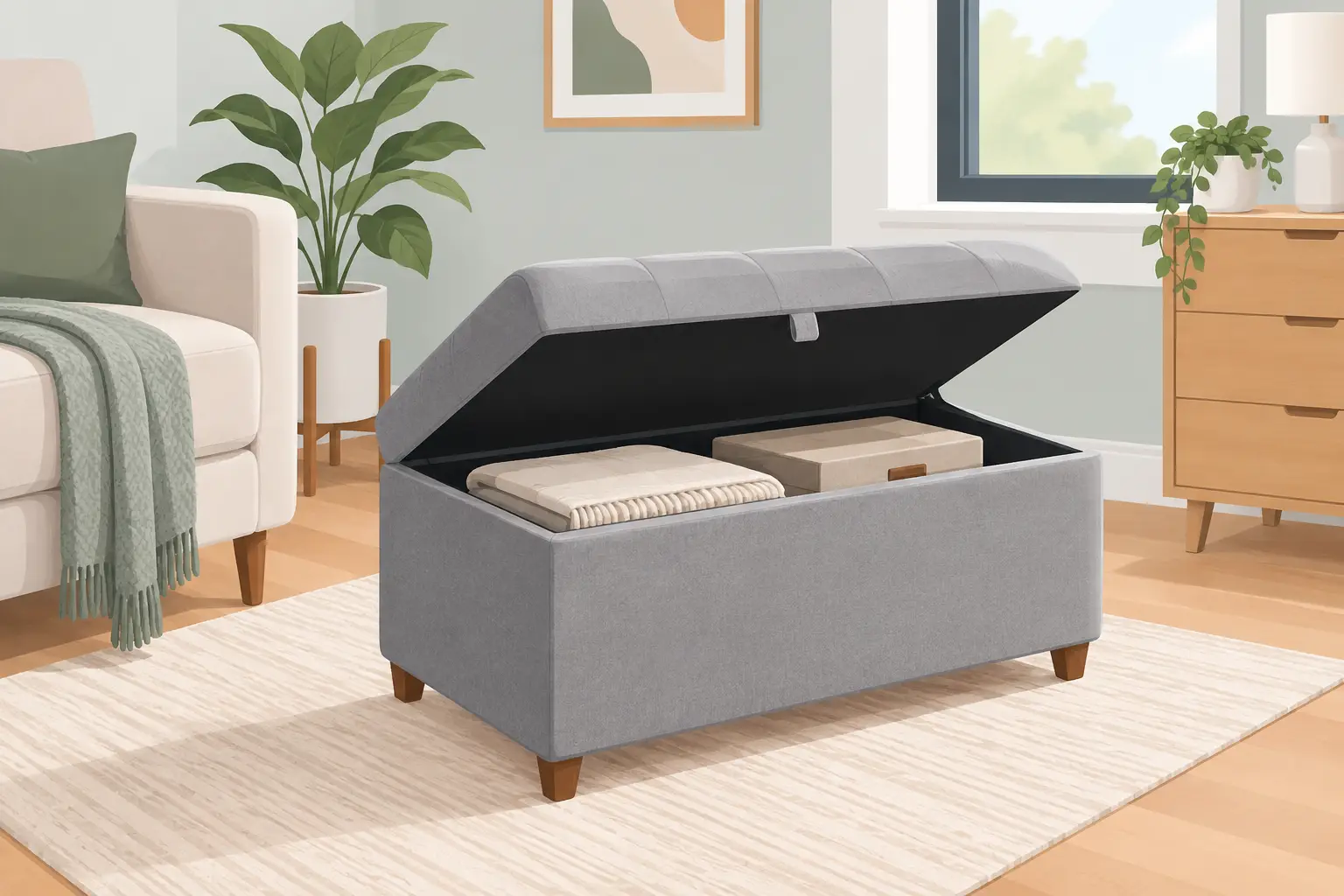
For storage, measure the interior, not just the outside. A wide ottoman may look roomy but have a shallow compartment. If you plan to store bulky throws, board games, or couch pillows, depth matters as much as width. Hinged lids are convenient because they stay attached, while split lids let someone grab a blanket without clearing everything off the top.
For bedrooms: linens and the clothing in between
An upholstered bench ottoman at the foot of the bed is one of the simplest ways to make a bedroom feel more pulled together. It can hold spare sheets, lightweight quilts, pajamas, or seasonal bedding. It is also helpful for the in-between clothes that are clean enough to wear again but do not belong on the floor or draped over a chair.
Choose a bench that is a little narrower than the bed rather than one that stretches wall to wall. You need comfortable clearance to walk around it and open drawers or closet doors. In a tight bedroom, a pair of smaller storage cubes may be more flexible than one large bench. They can be moved apart, used as bedside seats, or tucked under a console when the layout changes.
For entryways: shoes, bags, and the exit routine
In an entry or mudroom, an ottoman with storage can reduce the pileup that happens near the front door. It is best for slippers, dog-walking gear, reusable bags, hats, gloves, or a few pairs of frequently worn shoes. Avoid using it for every shoe in the household. That usually creates a cluttered drop zone with no clear limits.
Wipeable faux leather, performance fabric, or a tightly woven fabric is a smart choice here. Entryways see wet umbrellas, muddy paws, and bags set down in a hurry. A pale linen-look upholstery may be attractive, but it can be frustrating if the furniture has to survive the busiest part of the house.
For small spaces: flexible seating with a hidden reserve
Round storage ottomans, small cubes, and nesting designs are useful in studios, dorm rooms, and compact home offices. They can sit under a desk or console until extra seating is needed. Their compartments are naturally smaller, so reserve them for compact categories such as chargers, notebooks, craft supplies, controllers, or a cozy throw.
Do not buy a tiny ottoman expecting it to contain a room’s worth of clutter. Small storage works best when it supports a simple habit: put the items you use in that exact spot back when you are done.
Size, Shape, and Safety Details That Matter
A few inches can make the difference between furniture that fits and furniture that interrupts the room. Use painter’s tape to mark the ottoman’s footprint on the floor before ordering. Then walk around it, sit on the sofa, open nearby drawers, and notice whether the route still feels easy.
In front of a sofa, leave enough space to pass through comfortably while keeping the ottoman close enough to use as a footrest. A round shape softens a narrow traffic path and is easier to navigate around. A rectangular shape generally provides more usable storage and works better with long sofas or at the end of a bed.
Weight capacity deserves attention if the ottoman will regularly be used as seating. Decorative options may be intended only as footrests, while sturdier models are built to support an adult. For households with children, a soft-close hinge or a lid that stays safely open is worth looking for. Pinched fingers are not a worthwhile trade-off for hidden storage.
Also check how the lid opens. A hinged top needs clear space behind it. A fully removable lid needs a clean nearby surface where you can set it down. If the ottoman is used as a coffee table, split lids or tray-top sections create less disruption than one large lid.
Make the Inside Easy to Use
The best storage ottomans are organized lightly. The goal is not to turn a small compartment into a miniature closet. It is to make putting things away so easy that the system survives a busy week.
Start by giving the ottoman one job. A living room ottoman might hold two folded throws, a basket of remotes and chargers, and a few favorite games. A bedroom bench might hold one set of backup sheets and an extra blanket. Keeping categories limited prevents the compartment from becoming a catchall.
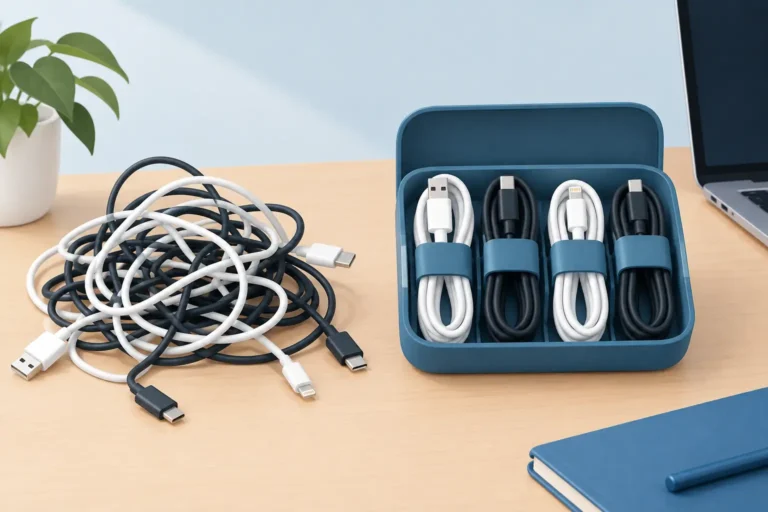
Soft-sided bins can help inside larger ottomans, especially if different people use the same space. One bin for kids’ games and one for electronics is easier to maintain than a loose mix of both. Choose low bins that do not waste vertical space or make the lid difficult to close. For small items, a zip pouch or lidded container keeps cables, batteries, and game pieces from settling at the bottom.
Build in a quick reset. Once a week, lift the lid, return wandering items to their actual homes, and refold anything that has been shoved inside. This takes a few minutes and keeps the storage useful instead of becoming one more clutter project for later.
Common Mistakes to Skip
Buying based on the exterior alone is the most common mistake. A stylish ottoman can still disappoint if it is too small for the items you planned to store, too tall for the sofa, or too flimsy to sit on. Check the interior dimensions, seat height, lid style, and weight capacity before making a decision.
Another mistake is choosing upholstery that does not fit real life. Velvet may suit a low-traffic bedroom, while a family room with snacks, pets, and children may be better served by easy-clean fabric or faux leather. If you love a more delicate material, use a tray and keep it out of the home’s messiest zone.
Finally, do not make an ottoman carry storage it cannot handle. Heirlooms, paperwork, heavy books, and seasonal items are usually better in a closet, cabinet, or labeled bin. The ottoman should make the room easier to live in today, not quietly store decisions for months.
A good storage ottoman does more than hide clutter before company arrives. It gives the things that constantly drift through a room a realistic place to land, so your home can feel calmer without asking you to live with less than you need.