How to Clear Kitchen Countertops for Good
A crowded counter rarely happens because you are careless. It happens because the kitchen is the home’s busiest landing zone: mail arrives there, water bottles dry there, groceries wait there, and small appliances never quite make it back to a cabinet. Learning how to clear kitchen countertops is less about owning fewer things overnight and more about giving everyday items a workable home.
The goal is not a photo-ready kitchen where nothing is allowed to exist. A clear counter should still support the way you cook, make coffee, pack lunches, and feed people on a Tuesday night. The best setup leaves room to work while keeping the items you truly use close by.
Start by clearing one counter at a time
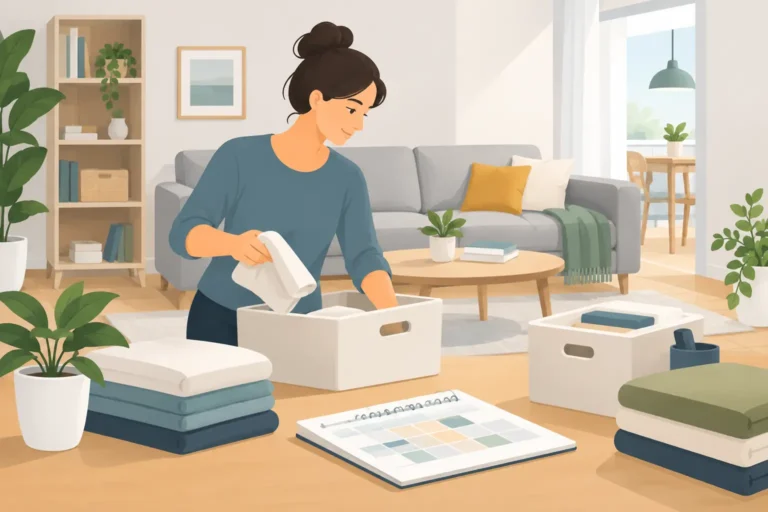
Trying to reorganize the entire kitchen at once can turn a frustrating problem into a full-day project. Pick the counter that causes the most stress, whether it is the space beside the sink, the island, or the area where papers collect. Set a timer for 20 minutes and move everything off that one surface.
Do not start putting items into new containers yet. First, look at what landed there. Most countertop clutter falls into a few predictable groups: food and cooking items, dishes, papers, personal items, and things that belong somewhere else.
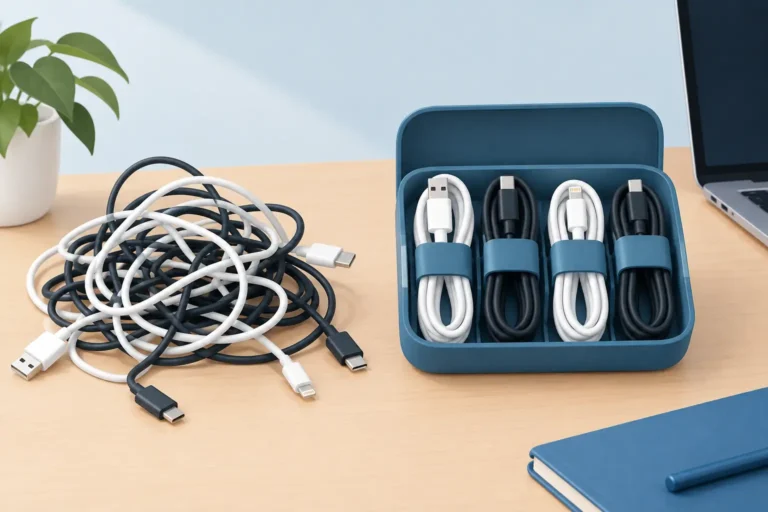
Make quick decisions as you sort. Dirty dishes go in the dishwasher or sink. Pantry items go back to the pantry. Mail goes to one temporary paper spot, not five different piles. Random items such as chargers, school papers, and sunglasses should leave the kitchen entirely if they do not serve a kitchen task.
If an item has no obvious home, put it in a small “decide later” bin rather than returning it to the counter. You can deal with that bin after the surface is usable again. This keeps one uncertain item from stalling the whole reset.
Decide what earns countertop space
A counter is prime real estate. Anything that stays there should either be used often, be difficult to store elsewhere, or make a daily task noticeably easier. If it does none of those things, it is probably taking up work space without earning its spot.
For many households, a coffee maker, toaster, knife block, fruit bowl, and a few cooking utensils make sense. But it depends on your kitchen and routines. Someone who makes smoothies every morning may want the blender out. Someone who bakes once a month probably does not need the stand mixer permanently stationed near the outlet.
A useful test is this: if you did not use the item in the past week or two, would putting it away make the kitchen harder to use? If the answer is no, store it. This is especially helpful with bulky appliances, duplicate utensil crocks, decorative trays, and oversized canisters.
Be honest about visual clutter, too. Even useful items can make a small kitchen feel packed when there are too many of them. Keeping only your most-used tools out often makes cooking feel easier because you have more open space for chopping, unloading groceries, and setting down a hot pan.
Create homes near the task, not wherever there is room
The fastest way for counters to fill back up is to put items in storage that is inconvenient. A lid that belongs in a faraway cabinet, a lunch container stored on the highest shelf, or coffee pods tucked across the room will eventually migrate to the nearest counter.
Build storage zones around the tasks you do most. Keep coffee supplies together near the coffee maker, cooking oils and everyday spices near the stove, and food storage containers close to where you pack leftovers. This does not require a cabinet makeover. Often, a simple shelf riser, turntable, drawer organizer, or handled bin is enough to make an existing cabinet work better.
Vertical space helps when cabinets are crowded. Add an over-the-door rack to a pantry door, hooks inside a cabinet for measuring cups, or a slim wall-mounted rail for frequently used tools. The point is not to fill every inch of wall space. It is to move useful items off the counter while keeping them easy to reach.
If you rent or have a small apartment kitchen, prioritize removable options such as adhesive hooks, countertop appliance garages, and stackable cabinet shelves. A small change inside one cabinet can free up more usable counter space than buying a larger organizer for the surface itself.
Set up a paper and drop-zone solution
Kitchen counters are often cluttered by items that have nothing to do with cooking. This is why clearing appliances alone does not always solve the problem. You also need a plan for the household traffic passing through the kitchen.
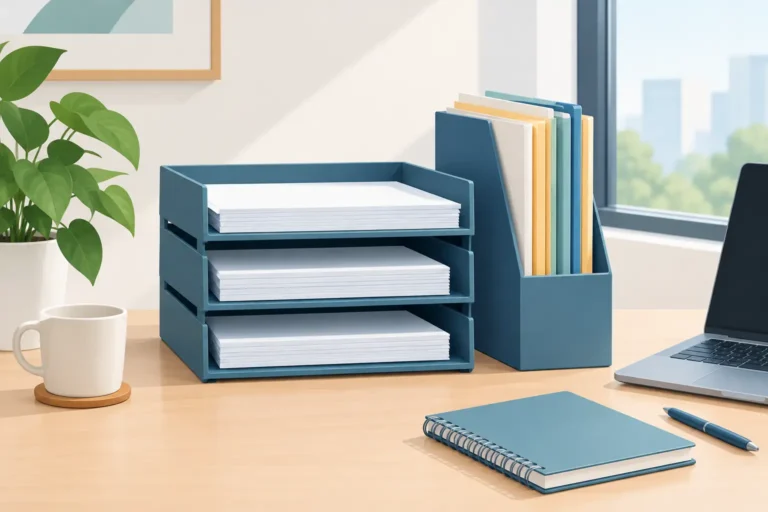
Choose one small spot for incoming papers. It could be a wall-mounted file, a narrow tray inside a nearby cabinet, or a basket on a shelf just outside the kitchen. The right option is the one everyone can reach and will actually use. Keep only current mail, forms, and papers that require action there. Recycle junk mail immediately instead of letting it join the pile.
For keys, earbuds, backpacks, and water bottles, create a drop zone near the entry or wherever your household naturally comes in. Hooks, a small bench with bins, or a dedicated shelf can prevent these items from traveling all the way to the kitchen island.
A kitchen counter should not become the default storage place for things you plan to handle later. When later never comes, the counter becomes a holding area for the entire house.
Make your daily-use items easier to put away
Sometimes countertop clutter is a signal that the current storage setup has too much friction. If putting something away requires moving three other items, opening a jammed drawer, or finding a matching lid, it makes sense that it stays out.
Look for the small annoyances that slow you down. Store food storage containers with lids in a separate nearby bin if matching them is a daily struggle. Use a divided drawer organizer for utensils that usually end up in a crock. Put a tray under your coffee setup to contain the necessary items and make wiping around them simpler.
You do not need matching containers or a perfectly labeled pantry to make this work. Clear bins can be useful because they show what you have, while opaque bins can make a cabinet look calmer. Choose the option that helps you maintain the system, not the option that looks best in a staged photo.
How to clear kitchen countertops without a weekend overhaul
Once the main reset is done, maintenance should take minutes, not motivation. Build a short closing routine into the end of dinner or your evening kitchen cleanup. Load or soak dishes, return food to the pantry or refrigerator, wipe the counter, and put stray items in their designated homes.
If you share a home, keep the routine simple enough for everyone to follow. A complicated system that only one person understands will not last. Clear labels can help for family bins, but they are not required if the zones are obvious.
A few habits make the biggest difference:
- Put away groceries before starting another task, including bulk items and reusable bags.
- Do not leave small appliances out just because they were used once that day.
- Clear mail when it enters the house, not when the pile becomes irritating.
- Run the dishwasher regularly so clean and dirty dishes do not compete for counter space.
- Do a two-minute counter check before bed, especially around the sink and island.
Expect the counter to get messy again. A kitchen is a working room, and a little temporary clutter is normal. The difference is having a reset that is fast enough to do before clutter becomes the permanent background of your day.
Keep a little empty space on purpose
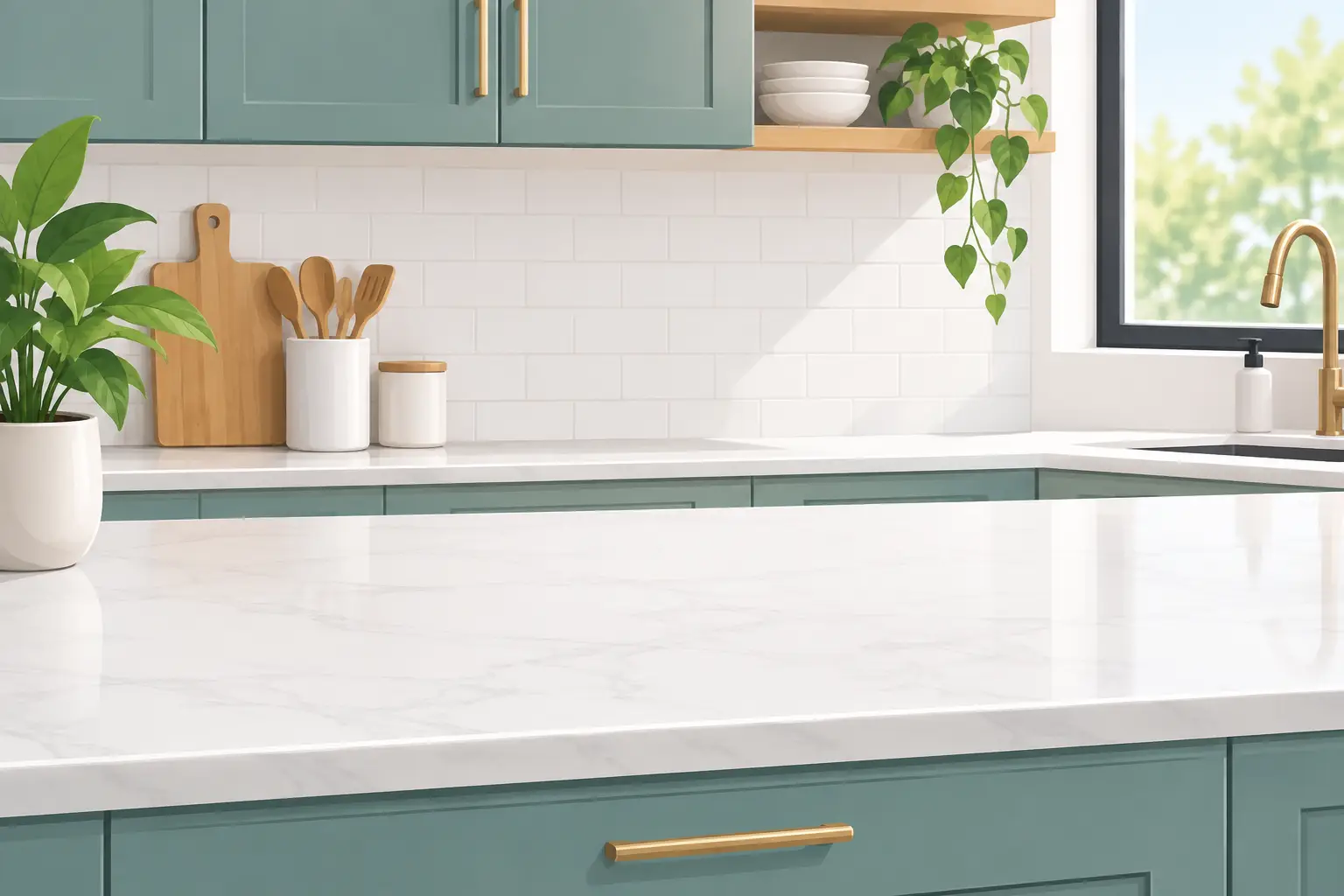
One practical rule can protect all your hard work: do not organize every square inch of the counter. Leave a clear landing area near the sink or main prep zone. That empty space is what absorbs real life, whether you are unpacking takeout, setting down a lunch bag, or helping with homework while dinner cooks.
When your kitchen has room to function, it also feels calmer. You do not need a bigger kitchen or a strict minimalist routine to get there. Start with one surface, make storage easier than leaving things out, and let your counters support your life instead of collecting it.