15 Dorm Room Storage Ideas That Actually Work
A dorm room can go from move-in day tidy to floor-covered chaos in one busy week. The issue is rarely that students bring too much stuff. It is that a shared, compact room has almost no built-in place for the things used every day. These dorm room storage ideas focus on the overlooked space around your bed, desk, closet, and door so your room works harder without feeling crammed.
Start With the Space You Can Actually Use
Before buying bins, take a quick inventory of your room’s fixed features. Measure the clearance under the bed, count closet shelves, check whether the desk has drawers, and confirm what your residence hall allows on walls and doors. A great storage solution that does not fit, damages a surface, or blocks a roommate’s path is just more clutter with a price tag.
Think in zones rather than trying to organize everything at once. Your bed is for sleep and backup storage, the desk is for school supplies and technology, the closet handles clothing, and the door can hold lightweight daily essentials. This approach makes it easier to decide where an item belongs when the room starts getting messy.
1. Raise the bed only when it creates usable space
Bed risers can turn a few inches of clearance into room for storage drawers, luggage, or low bins. They are most useful when the bed frame is sturdy and the extra height allows you to slide containers out easily. Do not raise the bed just because you can. If you have to kneel and reach blindly for everything, the storage becomes inconvenient fast.
Choose risers designed for the type of bed leg in your dorm, and make sure they are stable before loading the space underneath. Store off-season clothes, extra bedding, or rarely used supplies there, not the charger or sweatshirt you need every morning.
2. Use lidded bins under the bed
Low, clear, lidded bins are a practical under-bed choice because they protect items from dust and let you see what is inside. Clear sides are helpful for finding an extra towel or a winter coat without opening three containers. Labels still help, especially if you share the room or store similar-looking bins.
Soft-sided zip bags can hold more clothing, but they tend to slump and are harder to pull out from a tight space. They are better for bulky comforters than for things you need to access regularly.
3. Give your bedside basics a home
Dorm beds often have no nightstand, which is why phones, water bottles, glasses, and headphones end up on the floor. A bedside caddy that tucks under the mattress keeps those essentials within reach. Look for one with a separate pocket for a phone and charger so cords do not become a tangled mess near your pillow.
This small addition also prevents the familiar late-night search for an ID, lip balm, or remote. Keep it limited to bedtime items. If it becomes a catchall, it loses its usefulness.
Make the Closet Do More Than Hold Clothes
The dorm closet may be small, but it usually has more vertical potential than students realize. The goal is not to pack every inch tightly. It is to create an easy way to find clean clothes, laundry supplies, and shoes without making the closet impossible to use.
4. Add a hanging shelf organizer
A hanging fabric organizer creates shelves where there may only be one clothing rod. It works well for folded T-shirts, jeans, pajamas, and small bags. Choose a version with reinforced shelves, since flimsy styles sag under even a modest stack of sweatshirts.
This is also a good roommate-friendly solution because it stays entirely on your side of the closet. Put frequently worn clothes at eye level and use the highest or lowest compartments for backup items.
5. Use slim hangers and a few vertical hooks
Matching slim hangers take up less rod space than bulky plastic or wooden ones and make a small closet feel less crowded. Add a few hanger connectors or cascading hooks if you have lightweight tanks, scarves, or caps. Use restraint here. Hanging too many heavy items vertically can make clothes difficult to grab and can strain the closet rod.
6. Keep shoes off the floor
A narrow shoe rack, stackable shoe boxes, or a vertical shoe organizer keeps the closet floor from becoming a pile of sneakers and sandals. Open racks are easiest for daily pairs. Clear boxes make more sense if you are storing special shoes or want to protect them from dust.
If floor space is tight, an over-the-door shoe organizer may work, provided your dorm permits it and the door still closes properly. The pockets can also hold hair tools, cleaning cloths, snacks, or school supplies.
7. Separate laundry from clean clothes
A collapsible hamper with handles is far easier to carry to a communal laundry room than a rigid basket. Choose one with a lid if dirty clothes will sit in a shared bedroom, especially after workouts. Keep a small laundry pouch inside with detergent pods, stain remover, and quarters or a laundry card so wash day does not require a room-wide hunt.
Build a Desk That Can Handle Real School Life
Your desk has to support late-night studying, video calls, snacks, chargers, and sometimes meals. The best setup gives your most-used items a visible home while keeping the actual work surface as clear as possible.
8. Use drawer dividers for small supplies
Desk drawers become junk drawers quickly when pens, batteries, sticky notes, and adapters are loose. Expandable dividers or small modular trays create simple categories. One section for writing tools, one for technology accessories, and one for personal items is usually enough.
Avoid buying a large organizer before seeing how deep the drawer is. A shallow tray that fits well is more useful than a complicated system that wastes half the space.
9. Add vertical desk storage instead of a bigger desktop bin
A compact desktop shelf or riser uses the air above your desk for notebooks, textbooks, and a small clock. It can also lift a monitor or laptop stand to a more comfortable height. This is a better choice than stacking books directly on the desk, which creates a wobbly pile and shrinks your usable workspace.
If your desk is very narrow, a slim rolling cart beside it may be more practical. Use the top shelf for active school materials and lower shelves for backup paper, snacks, or cleaning supplies.
10. Get cords under control early
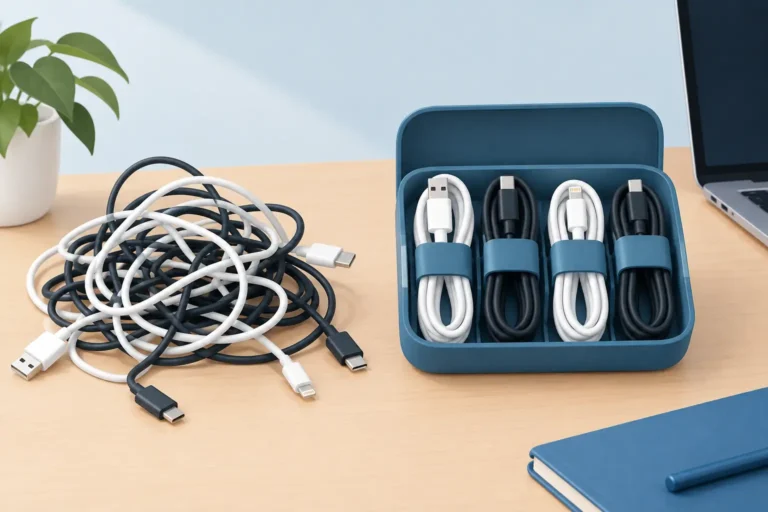
Chargers multiply in a dorm room, and tangled cables make an otherwise organized desk look chaotic. Use a power strip with surge protection where allowed, then add adhesive cable clips or a cord sleeve to guide cords along the desk edge. A small labeled pouch or divided case keeps spare charging cables, earbuds, and adapters together.
Check your school’s housing rules before bringing extension cords, power strips, or adhesive products. Safety requirements vary, and approved equipment is worth the extra attention.
Use Doors and Walls Carefully
Vertical storage is valuable in a dorm, but walls are not always yours to drill into. Removable hooks, tension-based products, and over-the-door organizers can help, yet each has limits. Always follow your residence hall’s rules and weight guidelines.
11. Put an over-the-door organizer to work
An over-the-door organizer is one of the most flexible dorm room storage ideas because it can change jobs as your needs change. Use it for toiletries near a sink, pantry-style snacks near the entry, or accessories in the closet. Clear pockets make it easier to spot what is running low.
Do not overload it with large bottles or heavy cans. Doors need to open and close freely, and lightweight items are less likely to cause damage.
12. Create a tiny drop zone by the door
Keys, student IDs, headphones, and umbrellas need a predictable landing spot. A removable hook, shallow wall pocket, or small tray on a nearby shelf can handle this job. The point is not to build a full entryway in a dorm room. It is to stop small essentials from disappearing into bedding and laundry.
13. Use removable hooks for bags and towels
Hooks make use of dead wall space for backpacks, tote bags, jackets, and damp towels. Place them where they will not block a roommate’s movement or knock into the door. One hook per purpose works better than a crowded cluster, especially in a small room where hanging items can quickly look messy.
Store Shared Items Without Starting Roommate Friction
Shared dorm rooms work best when storage boundaries are obvious. You do not need matching bins or a color-coded command center. You do need a clear agreement about what is communal and where it goes.
14. Give shared supplies one designated bin
Keep cleaning wipes, paper towels, a small first-aid kit, and other shared basics in one portable bin or handled caddy. It makes supplies easy to find and easy to carry to the bathroom or laundry room. A simple label prevents the common problem of one person buying duplicates because no one can find the first bottle.
15. Use a rolling cart for flexible storage
A narrow rolling cart is especially useful when the room layout changes during the semester. It can hold snacks, coffee supplies, beauty products, or study materials, then roll out of the way when friends visit or when you need floor space. Pick one with locking wheels if it will sit near the bed or desk.
A cart is not the right answer for every dorm. In a very tight room, it can become another obstacle. If there is no clear parking spot for it, skip it and focus on under-bed and closet storage instead.
Keep the System Easy Enough to Maintain
The smartest storage setup is one you can reset in five minutes before bed. Leave a little empty room in bins and drawers, because storage packed to the limit is hard to maintain during a busy semester. Keep a donation bag or small box tucked away for clothes and supplies you no longer use, then take it home or donate it at the end of term.
You do not need a picture-perfect dorm room to feel more settled. A place for your backpack, laundry, chargers, and daily essentials can make the room feel calmer the moment you walk through the door.