How to Organize Your Shoe Collection Easily
The pile by the front door usually is not a shoe problem. It is a decision problem. When everyday sneakers, work shoes, gym pairs, sandals, and special-occasion heels all compete for the same small patch of floor, putting them away takes more effort than dropping them there. Learning how to organize a shoe collection means giving each pair a realistic home based on how often you actually wear it.
You do not need a walk-in closet, matching containers, or a tiny wardrobe to make this work. A better shoe setup starts with fewer daily obstacles: pairs that stay together, clear paths through the entryway, and storage that lets you see what you own without digging through a messy stack.
Start by seeing the full collection
Pull shoes from the closet floor, entryway, under-bed bins, gym bag, mudroom, and any mystery boxes. Seeing every pair in one place can feel a little confronting, but it prevents you from buying another version of something you already own.
Make quick decisions as you go. Set aside shoes that are damaged beyond repair, uncomfortable, the wrong size, or untouched for years. Be honest about fantasy shoes, too. A pair does not have to earn its place by being expensive or stylish if it never works with your life.
Keep the shoes you wear, love, or genuinely need for specific occasions. If a pair only needs a cleaning, new laces, or a trip to the cobbler, put it in a separate action pile rather than returning it to storage unfinished. This step matters because no organizer can make an overstuffed collection feel easy to manage.
Organize shoes by how you use them
The most practical shoe storage system is not always organized by color or style. It is organized by frequency. Your most-worn pairs need the easiest access, while rarely used shoes can live higher, lower, or farther from your daily routine.
Create a daily-drop zone
Choose a small area near the door for the shoes that come on and off most often. This could be a low shoe rack, an open basket, a bench with shelves, or a tray that protects the floor from wet soles. Limit this zone to the number of pairs your household can realistically manage, usually one or two pairs per person.
An entryway shoe zone is especially useful for families, roommates, and apartment dwellers. Without a limit, it quickly becomes the place where every shoe in the house lands. When the rack is full, put away one pair before adding another.
Give seasonal shoes a separate home
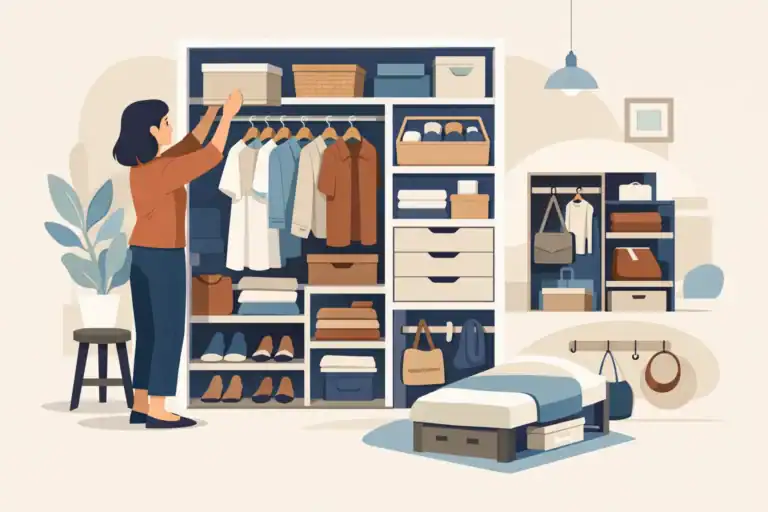
Winter boots, pool slides, hiking shoes, and dressy sandals do not all need prime closet real estate year-round. Store off-season pairs on high closet shelves, in labeled under-bed bins, or in a designated storage tote. Clean and fully dry them first, particularly boots and athletic shoes that may hold moisture or dirt.
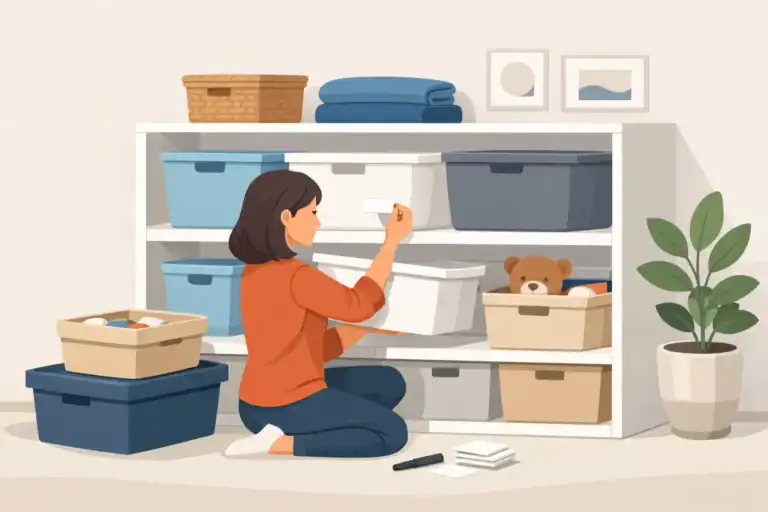
Clear bins make it easier to spot what you need, while opaque bins look tidier if visual clutter bothers you. Either option works if the label is specific. Write “summer sandals” or “snow boots,” not simply “shoes.”
Keep occasion shoes visible enough to use
Formal shoes, heels, interview shoes, and specialty footwear often get buried because they are not worn weekly. Put them together in one section of a closet or storage shelf so they are easy to find before a wedding, work event, or dinner out. For delicate materials, individual shoe boxes or fabric shoe bags can help prevent scuffs.
Match the organizer to your space
The best way to organize a shoe collection depends on your closet layout, floor space, and the kinds of shoes you own. Before buying anything, measure the area you plan to use. A shoe rack that looks compact online can still block a closet door or crowd a narrow hallway.
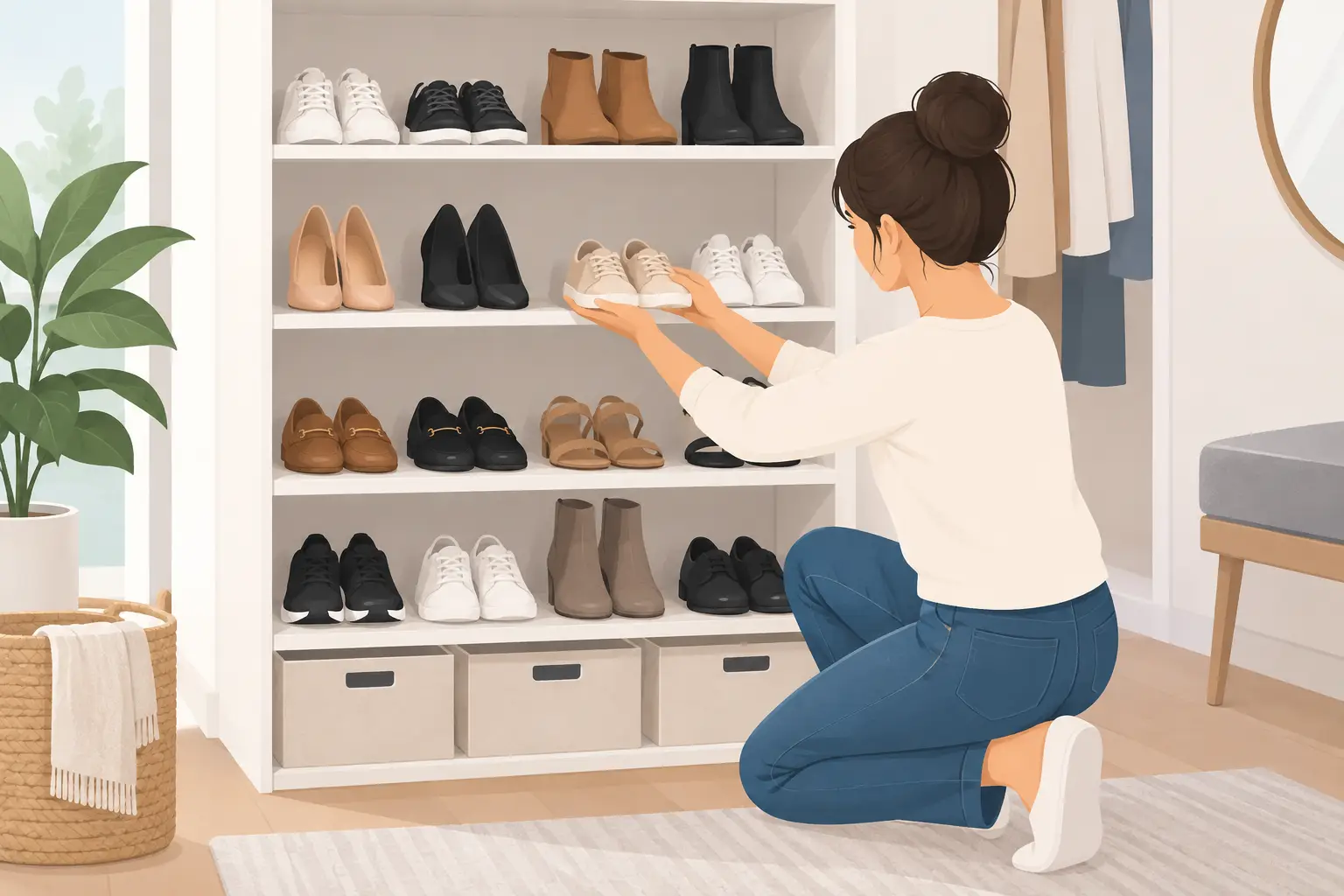
Open shoe racks are a simple choice for sneakers, flats, and everyday shoes. They make every pair visible and encourage quick put-away habits. The trade-off is that open racks can look busy, so they work best when you keep the selection limited and line shoes up consistently.
Stackable clear shoe boxes are helpful for collectors, people who want to protect special pairs, and closets with usable vertical space. Look for front-opening boxes if you do not want to unstack containers every time you need a pair. They take more setup than a basic rack, but they can turn an awkward closet shelf into organized storage.
Over-the-door organizers are useful in rentals, dorms, and small closets where floor space is scarce. Pocket-style versions work well for flip-flops, flats, and lightweight sandals. Avoid stuffing heavy boots or bulky sneakers into pockets that sag or strain the door.
Under-bed storage is a smart option for off-season shoes, especially in small bedrooms. Choose low-profile containers with handles and a secure lid. This is not the best location for shoes you wear every morning, since a system that requires kneeling and sliding a bin out will not stay convenient for long.
For tall boots, use boot shapers, rolled towels, or empty bottles to help them hold their shape. Store them upright when possible. If you must lay them down, avoid sharply folding the shafts, which can create permanent creases.
Make pairs easy to identify
A shoe collection gets chaotic when matching a pair takes longer than putting it away. Store shoes heel-to-toe or side by side, depending on the shelf depth. Keeping both shoes facing the same direction makes shelves look calmer and lets you scan your options faster.
If you use boxes, add a simple label or a small photo of the pair. This is particularly useful for black dress shoes, seasonal footwear, and kids’ shoes that change sizes quickly. You do not need a label maker for this. Masking tape and a marker are enough.
Try to keep shoes off the closet floor when possible. The floor becomes a catch-all for laundry, bags, and stray items, which makes shoes harder to access and easier to forget. Even a short two-tier rack or a few clear bins can create a boundary between footwear and everything else.
Avoid the shoe-storage mistakes that create clutter
Shoe piles usually come back because the storage system asks too much of you. If every pair must be wiped, boxed, labeled, and stacked after each wear, the system may look good for a week but fail on a busy Tuesday.
Do not store damp shoes in closed containers. Let them air out first, then remove loose dirt before putting them away. For athletic shoes, occasional cleaning and odor absorbers can keep the rest of the closet fresher.
Also resist buying organizers before editing the collection. Storage products can make a crowded closet look more controlled, but they cannot create space that is not there. Start with what you own, measure your available area, then choose the organizer that solves the specific problem.
Finally, leave a little breathing room. A shelf packed edge to edge looks efficient, but it is frustrating to use. A bit of open space makes it easier to grab shoes, return them, and accommodate a new pair without restarting the whole system.
Keep the system working with a small reset
Once a month, take five minutes to return stray shoes to their zones, wipe down the entryway rack, and check whether seasonal pairs should rotate. If children are involved, review sizes at the same time and remove shoes that no longer fit.
The goal is not a picture-perfect closet. It is walking out the door without hunting for a matching shoe, tripping over sneakers, or wondering where to put the pair you just took off. When your storage fits your real routine, keeping shoes organized becomes one less thing to think about.