Renter Friendly Storage Guide for Small Spaces
A rental can become cluttered fast because the storage you need is rarely the storage you get. One shallow linen closet, a few awkward kitchen cabinets, and a bedroom closet with a single rod have to carry a lot of daily life. The goal of this renter friendly storage guide is not to make your apartment look like a showroom. It is to make getting dressed, cooking dinner, finding towels, and leaving the house feel less chaotic – without drilling into every wall or risking your security deposit.
The most useful renter storage solutions do one of two things: they add capacity to furniture and closets you already have, or they use vertical space without permanent installation. Before buying a bin, take a quick look at what is actually causing the backup. Is the problem too much stuff, poor categories, no place for frequently used items, or simply empty space above and below what you already store? The answer helps you spend on the right fix.
Start With Storage That Moves With You
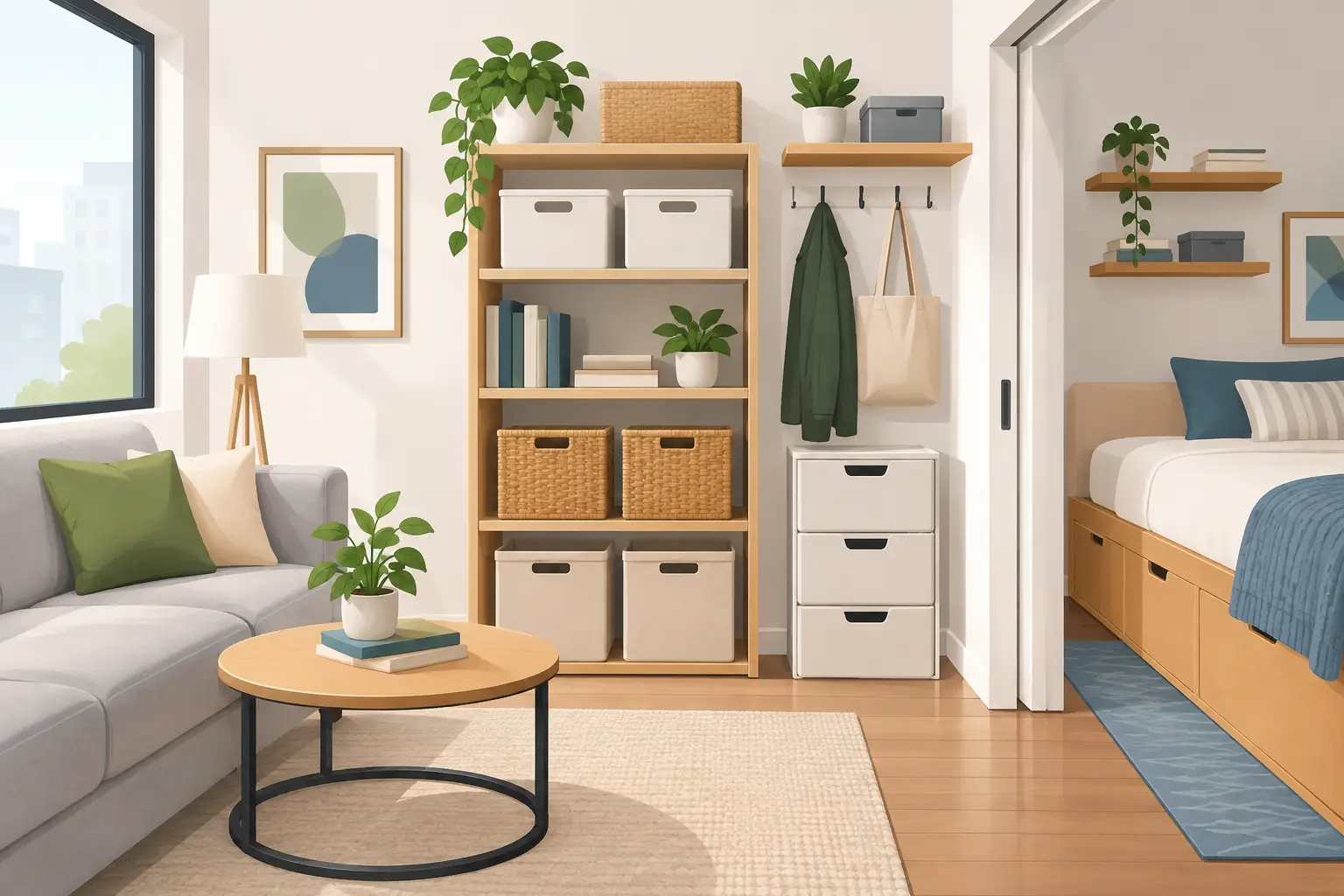
Renters get the best return from storage pieces that are portable, adjustable, and useful in a future home. Freestanding shelving, stacking drawers, over-the-door racks, rolling carts, and modular bins can solve an immediate problem without becoming something you have to leave behind.
Measure first, especially in closets and under sinks. A slim rolling cart might look ideal online but be too wide for the gap beside your washer. Likewise, stackable drawers only work if cabinet shelves have enough clearance above them. Keep measurements in your phone before you shop, including the width of door frames if you are considering a larger shelf or cabinet.
It also helps to avoid organizing around a fantasy routine. If the entryway collects shoes, bags, mail, and dog supplies every day, give those things a home near the door. A beautiful shoe system in the bedroom will not fix an entryway drop zone you actually use.
Renter Friendly Storage Guide: Use Walls Without Damage
Walls are often the biggest missed opportunity in a small rental, but adhesive solutions need a little judgment. Removable hooks, picture-hanging strips, and adhesive caddies can be genuinely useful when the surface is smooth, clean, and dry. They are less reliable on textured paint, humid bathroom walls, dusty surfaces, and wallpaper.
Always check the listed weight limit and give adhesive products time to bond before loading them. A hook meant for a hand towel is not the right place for a heavy backpack. When it is time to move, follow the removal instructions slowly rather than pulling straight out. That small detail can make the difference between a clean wall and a peeled patch of paint.
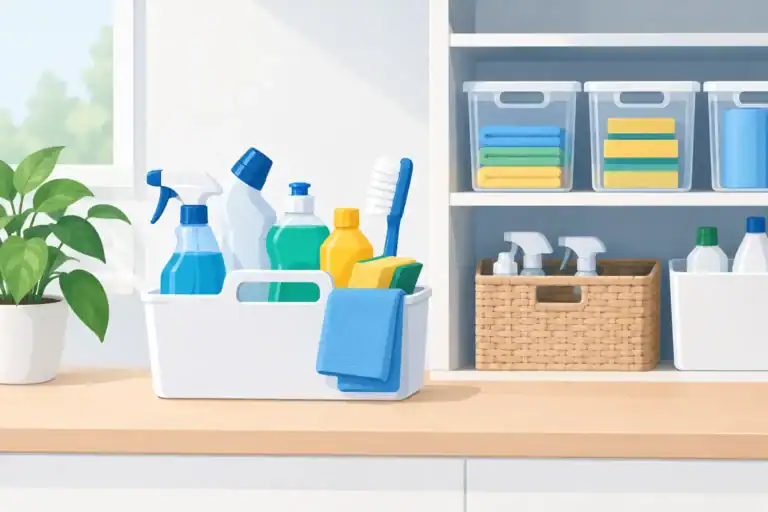
For heavier items, use tension instead of adhesive. Tension rods can create an instant cleaning-supply station under the sink, add a second hanging row in a closet, or hold lightweight curtains in a window. Tension shelves and tension-pole systems can also work in corners, though they are best for lighter household items and should be checked occasionally for stability.
Over-the-door organizers are another rental staple. Use them on pantry doors for snacks and foil boxes, bathroom doors for hair tools and toiletries, bedroom doors for accessories, or closet doors for shoes. Look for versions with padded hooks or add felt pads where the organizer touches the door, especially if it swings or rattles.
Make Existing Closets Work Harder
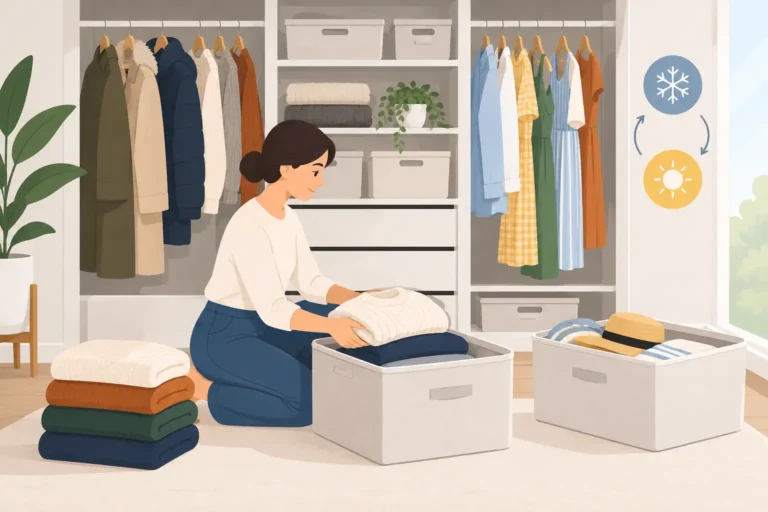
Most rental closets are designed for basic hanging, not for real households. A single closet rod leaves a large amount of usable space below shirts and above hanging clothes. Start by dividing the closet into zones: everyday clothing, shoes, folded items, bags, and seasonal pieces.
A double-hang rod is one of the simplest upgrades for shorter garments such as shirts, skirts, and folded pants. Keep dresses, coats, and longer items on one side so they are not crammed against the floor. Slim matching hangers can also recover surprising space, but do not buy them just for a uniform look. Their real value is preventing bulky plastic and wire hangers from eating up the rod.
For folded clothes, small drawer units or fabric bins on the closet floor can be more practical than towering stacks on a shelf. Choose open-top bins for things you reach for weekly, like workout clothes or pajamas. Use labeled lidded bins for off-season items and less frequent extras. Labels do not need to be fancy. Clear, specific words such as “swimsuits,” “winter scarves,” or “extra sheets” are enough.
If your closet has a high shelf, store only lightweight, occasional-use items there. A few matching bins look calmer, but clear bins can be smarter for things you forget you own. It depends on whether visual calm or easy visibility is the bigger problem in your space.
Reclaim Kitchen Cabinets and Pantry Space
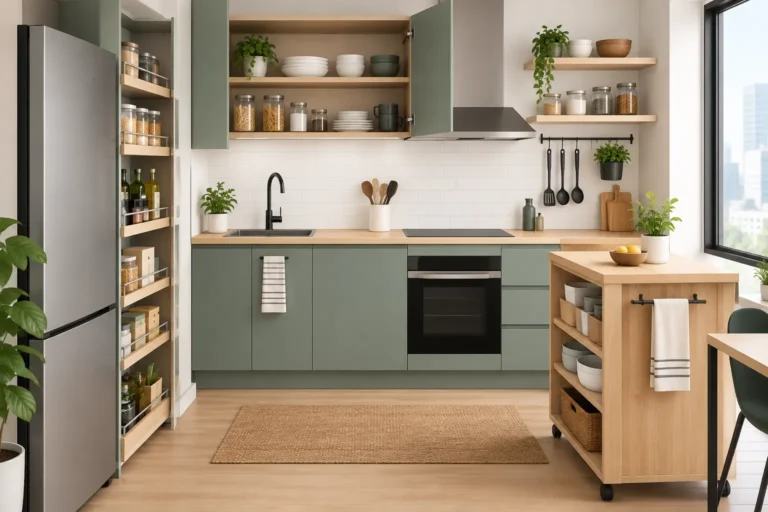
Rental kitchens are notorious for deep lower cabinets and short upper shelves. The issue is not always a lack of cabinet space. It is often that one layer of items blocks everything behind it.
Add shelf risers to upper cabinets for mugs, bowls, and plates. Use pull-out bins or handled baskets in deep cabinets so you can bring categories forward instead of digging through them. Under-sink storage works best when it accounts for pipes first. A narrow two-tier organizer, a small open bin for sponges, and a tension rod for spray bottles can turn an awkward cabinet into a functional cleaning zone.
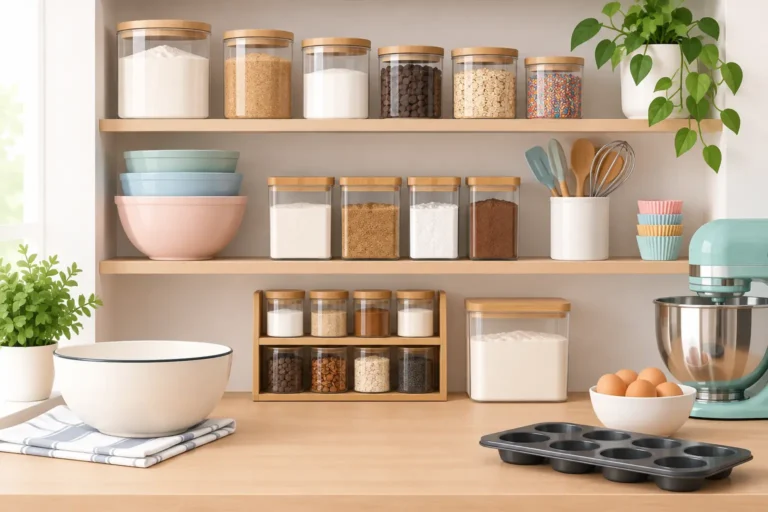
If your pantry is a cabinet rather than a walk-in space, group food by how you use it: breakfast, lunchbox snacks, baking supplies, dinner staples, and quick snacks. Decanting can help with messy bags and oversized boxes, but it is optional. Clear bins and simple categories will improve a packed pantry even if every item stays in its original packaging.
Do not overlook the refrigerator. A few clear fridge bins can stop yogurt, lunch ingredients, and snacks from spreading across every shelf. Give each bin a job, then leave some breathing room. Overfilling a container only creates a smaller version of the same clutter problem.
Add Bathroom Storage Without a Remodel
A tiny bathroom needs products that handle moisture and daily use. Skip cardboard containers and delicate fabric bins near sinks or tubs. Plastic, acrylic, coated metal, and washable materials are usually safer choices.
Use drawer dividers for makeup, dental items, and first-aid supplies so the drawer does not become a pile of small loose products. If there is no vanity storage, a narrow rolling cart can hold hair products, extra toilet paper, and skincare. A shower caddy that hangs from the showerhead or uses tension can add room without permanent hardware.
Keep only the items you use regularly within arm’s reach. Backups, extra soap, and bulk purchases can live in a labeled bin under the sink or on a high closet shelf. The bathroom feels more orderly when the counter holds less, not when every product is placed in a matching container.
Create Flexible Storage in Living Areas and Bedrooms
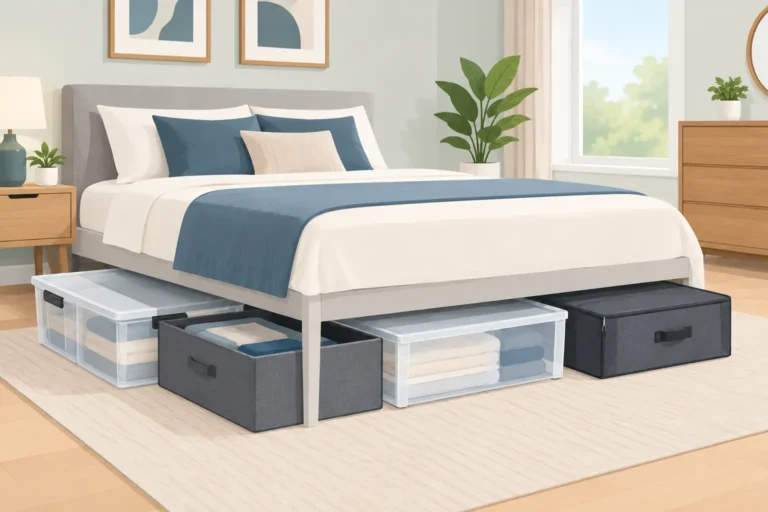
Small-space storage often works best when it is disguised as regular furniture. Storage ottomans can hold blankets, board games, or kids’ toys. A bed with enough clearance underneath can handle low-profile bins for extra linens or out-of-season clothing. A console table with baskets can create an entryway landing spot even when you do not have a true foyer.
Be honest about what needs to stay visible. A basket beside the sofa is a reasonable home for throw blankets and charging cords. A closed cabinet may be better for paperwork, electronics, or visual clutter that makes a room feel busy. Open storage is convenient, but it asks you to keep categories tidy. Closed storage is more forgiving when life is full.
For a work-from-home corner, use a desktop file holder, cable box, and small drawer organizer before buying a larger desk. Cords, papers, and chargers create a lot of visual noise in a small area. Giving each one a contained spot can make the workspace feel calmer by the end of the day.
Avoid the Common Renter Storage Mistakes
The biggest mistake is buying storage before editing what you own. Bins can contain clutter, but they cannot make unused items useful. Start with one trouble zone, remove what does not belong, and then choose a container based on the remaining category.
The second mistake is choosing products that are hard to reset. If a system requires careful folding, perfect labels, or moving three containers to reach one item, it probably will not last through a busy week. Favor solutions that make putting things away easier than leaving them out.
Finally, do not turn every empty wall into storage. More shelves and hooks can help, but too many can make a rental feel crowded. Use vertical space where it solves a real daily problem, then let the rest of the room breathe.
A renter-friendly home does not need permanent upgrades to feel organized. Pick the one spot that slows you down most – the packed closet, the under-sink cabinet, or the pile by the front door – and make that space easier to use this week. Small, removable changes have a way of making the whole home feel more manageable.