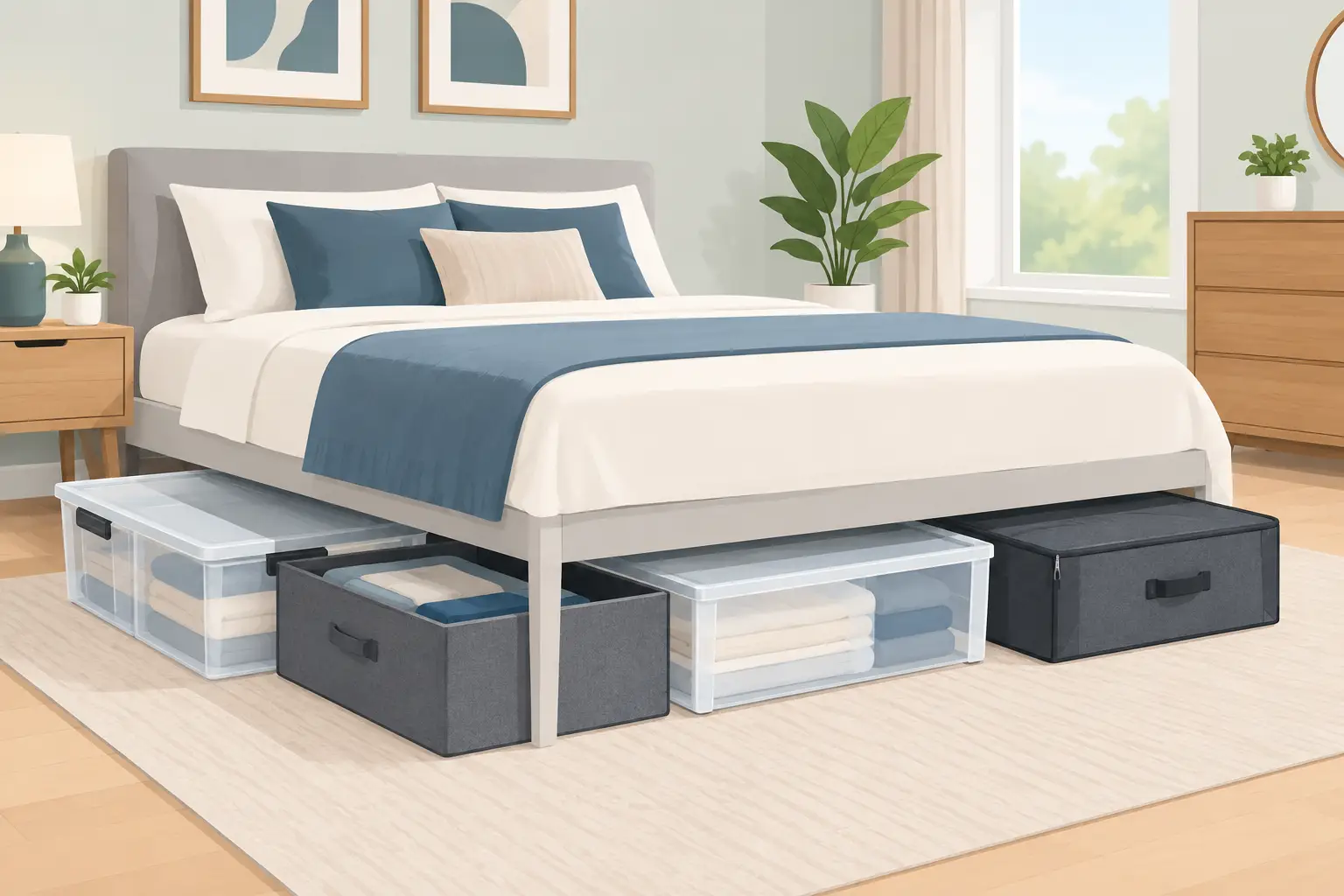
8 Best Under Bed Containers for Real-Life Storage
That unused strip of space beneath the bed can either collect dust bunnies or solve a very real storage problem. The best under bed containers make seasonal clothes, extra bedding, shoes, and guest-room supplies easy to put away and easy to retrieve – without turning the bedroom into a cluttered holding zone.
The right choice is less about finding the biggest bin and more about matching the container to your bed clearance, what you are storing, and how often you need to access it. A low-profile box that slides out smoothly may be far more useful than a deep tote you have to wrestle from under the frame.
What Makes the Best Under Bed Containers?
Before shopping, measure the floor-to-bed-frame clearance at the lowest point. Do not assume the height at the side of the bed matches the space near a center support bar. Leave at least half an inch of clearance so the container does not scrape, snag, or get stuck every time you pull it out.
Length and width matter too. A container that technically fits but leaves several awkward inches around the edges wastes valuable space. If your bed sits close to a wall, think about which side you can realistically access. Containers with handles on both short ends work well when you need to pull them out from the foot of the bed.
Material is the next decision. Fabric bags are flexible and lightweight, while hard plastic bins offer better protection from dust, spills, and curious pets. Wood or woven drawers can look more polished in an open-frame bed, but they are usually heavier and less practical for long-term storage. There is no single best material for every home. It depends on what is going inside and whether the container will be visible.
The 8 Best Under Bed Container Types
1. Clear lidded plastic bins for seasonal clothing
For clothes you rotate a few times a year, clear plastic bins with secure lids are hard to beat. You can see what is inside without opening every box, and a fitted lid helps keep dust away from sweaters, swimwear, and out-of-season basics.
Choose a low, flat style rather than a standard storage tote. Clothing should lie loosely enough that the lid closes without forcing it down. Overpacking can create wrinkles, strain zippers or latches, and make the bin frustrating to use later.
2. Wheeled bins for heavy or frequently used items
Rolling containers are a smart pick beneath larger beds, especially for families storing spare blankets, kids’ clothes, or bulk linens. Wheels reduce the awkward lifting that comes with reaching into a low space, and they are helpful on carpet where a filled bin may otherwise drag.
Check the wheel placement before buying. Recessed wheels preserve more interior space, but small wheels can struggle on thick carpet. On hardwood or low-pile rugs, almost any rolling bin will feel easier to manage.
3. Fabric zippered bags for soft linens
Fabric under-bed bags work best for items that are already soft and lightweight: comforters, throw blankets, pillow covers, guest towels, and extra sheets. They fold down when empty, which is a real advantage in smaller apartments or dorm rooms where every storage tool needs to earn its place.
Look for a structured fabric bag with reinforced sides and a clear top panel. Flimsy bags can sag, catch on the bed frame, and make it difficult to stack folded linens neatly. A zipper closure is useful for dust control, but do not rely on a thin fabric bag to protect items from a damp basement floor or a spill nearby.
4. Divided shoe organizers for pairs that pile up
Bedroom closets get crowded fast when shoes spread across the floor. A divided under-bed organizer gives each pair a designated spot, making it easier to protect dress shoes, sandals, flats, and seasonal footwear without building a shoe mountain near the door.
These organizers are usually fabric with individual compartments and a zippered cover. Measure your tallest shoes first. They are great for low-profile styles, but ankle boots, hiking shoes, and sneakers with bulky soles may need a taller plastic container instead.
5. Drawer-style containers for everyday access
If you plan to reach for the contents weekly, drawer-style under-bed storage can feel much more functional than a lidded bin. These containers pull open from one side, so you do not have to remove the entire box to grab pajamas, workout clothes, or backup toiletries.
They are particularly useful in studio apartments, shared bedrooms, and rooms with limited dresser space. The trade-off is that drawer systems need open clearance at the front. They are not a good fit if the bed is against a wall or another piece of furniture blocks the pull-out side.
6. Vacuum storage bags for bulky comforters
For oversized comforters, puffy winter coats, and guest bedding, vacuum bags can dramatically reduce the amount of space needed. They are most useful when bulky textiles are clean, fully dry, and unlikely to be used for several months.
Use them thoughtfully. Natural fibers and down items can become compressed for too long, and a vacuum bag will not fix an overstuffed storage plan. Reserve this option for truly bulky pieces, then place the sealed bags inside a protective under-bed bin or structured bag to prevent punctures.
7. Shallow open bins for kids’ rooms
In a child’s room, storage has to be simple enough to use on a rushed school morning. Low, open bins can hold dress-up clothes, plush toys, art supplies, or toy sets that do not need airtight protection. A child can slide the bin out, find what they need, and push it back in without dealing with latches or zippers.
Open containers are not ideal for delicate items or long-term storage because dust will settle inside. But for active categories that need a quick home, they can be more realistic than a perfectly labeled system nobody uses.
8. Wood or upholstered rolling drawers for visible beds
Some platform beds leave the under-bed area fully exposed. In that case, wood, bamboo, or upholstered rolling drawers can make the space look intentional while adding storage for clothes, books, or linens. They are a good option for primary bedrooms and guest rooms where appearance matters as much as capacity.
Expect to pay more and store less than you would with plastic bins. These drawers are best for a few thoughtfully chosen categories, not for hiding every extra household item you own.
How to Choose the Right Size and Setup
Start by measuring, then decide what deserves this space. Under-bed storage is valuable because it is hidden, but it is not effortless to access. Put seasonal, occasional, or backup items here – not the things you use every day unless you have drawer-style containers.
A queen or king bed may fit several containers, but avoid filling every inch automatically. Leave a little room around the bins so you can pull one out without shifting the rest. In a small bedroom, this small buffer prevents your new storage solution from becoming another source of daily irritation.
It also helps to keep categories narrow. One bin for summer clothes is easier to use than one giant bin labeled “miscellaneous bedroom.” Add a simple label to the end that faces outward, even if the container is clear. Six months from now, you will be glad you did.
For families, give each person their own bin where possible. This reduces the familiar problem of everyone digging through the same container looking for one item. In a guest room, store a spare sheet set, light blanket, and extra pillowcases together so overnight visitors do not send you searching through multiple closets.
Common Under-Bed Storage Mistakes
The biggest mistake is buying containers before measuring. The second is using under-bed storage as a place for anything you do not want to decide about. If a bin is full of broken cords, random paperwork, and clothes that no longer fit, it is not creating calm – it is just moving the decision out of sight.
Avoid storing food, candles, valuable documents, or anything sensitive to temperature swings. Bedrooms are generally better than garages or sheds, but the area under a bed can still collect dust and may be vulnerable to spills, pet accidents, or humidity. Choose lidded plastic bins when protection matters.
Finally, do not make every container too heavy. A packed bin may fit perfectly, but if you cannot pull it out comfortably, you will stop using it. Smaller containers are often the more practical choice, especially for renters, students, and anyone who may need to move.
A calm bedroom does not require a picture-perfect closet or expensive built-ins. It can start with one measured space, one useful container, and a better home for the things that keep ending up on the floor.