Over Sink Drying Rack Review: Is It Worth It?
A dish rack can make a small kitchen feel permanently crowded. It takes up the exact stretch of counter you need for chopping, setting down groceries, or helping with homework while dinner cooks. This over sink drying rack review looks at whether moving your dish-drying setup above the sink actually fixes that problem – and when it simply creates a new one.
For the right kitchen, an over-sink rack is one of those small organization upgrades that makes a daily routine feel noticeably easier. But it is not a universal win. Fit, faucet clearance, sink style, and how you wash dishes all matter more than a polished product photo suggests.
What an Over Sink Drying Rack Actually Solves
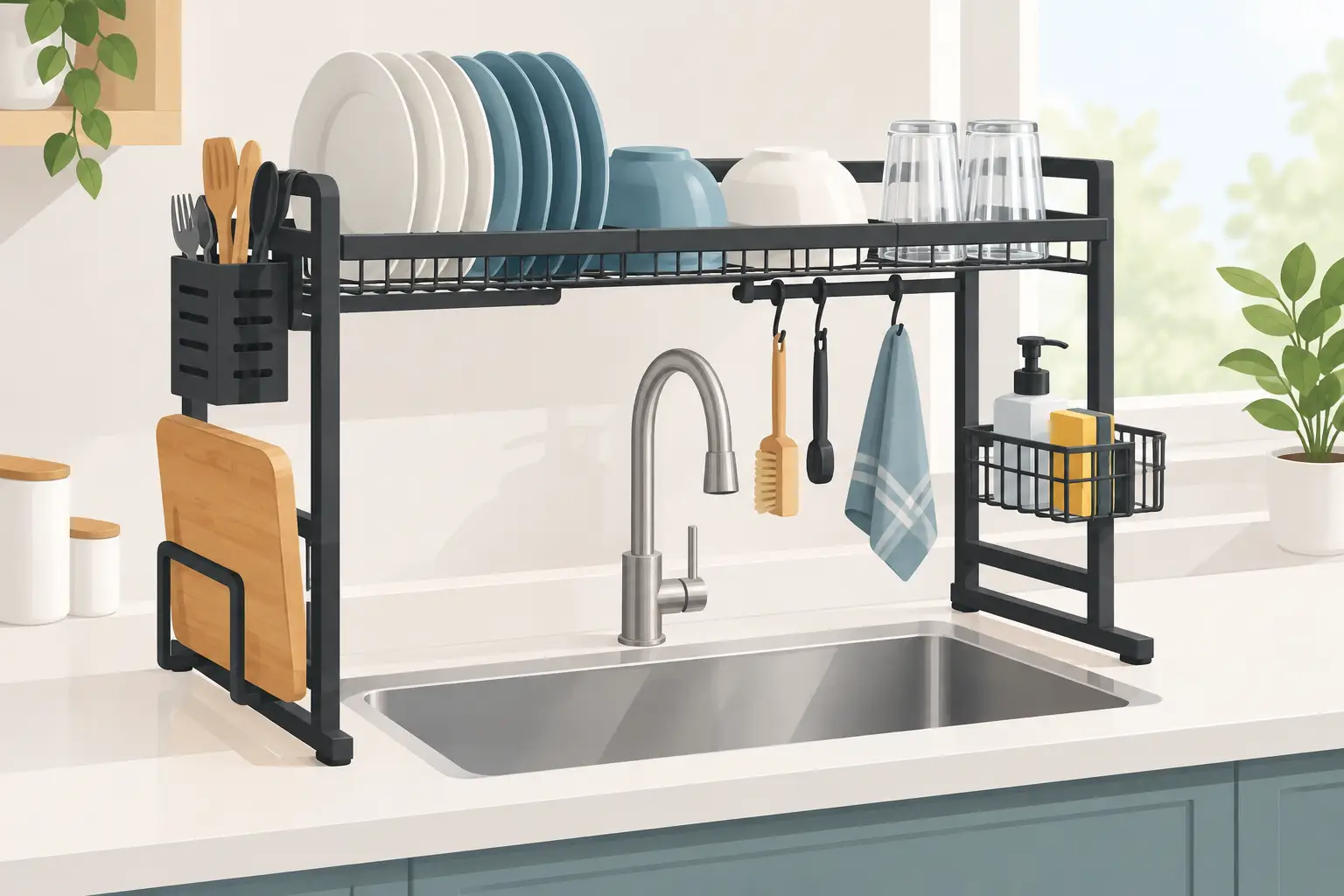
The main appeal is simple: it uses vertical space that is already part of your cleanup zone. Instead of letting wet plates, cutting boards, and utensils spread across the counter, you place them over the sink so water drips directly into the basin.
That can be a major improvement in apartments, galley kitchens, dorms, RVs, and older homes with limited prep space. A family kitchen can benefit too, especially if the sink sits beside a cramped landing area where dishes tend to pile up. The rack creates a defined home for clean, air-drying items instead of turning a dish towel into a damp, temporary storage zone.
It also encourages a more contained dish routine. Plates go in the rack, utensils go in the caddy, and cookware gets put away once dry. That will not magically make everyone unload the rack, of course, but it removes one common source of counter clutter.
Over Sink Drying Rack Review: The Honest Verdict
An over-sink drying rack is worth considering if your counter space is tight and your sink area has enough open clearance. Its biggest strength is not that it holds more dishes than every other rack. It is that it returns usable counter space without requiring a cabinet renovation or a complicated organizing system.
The trade-off is visual and physical bulk. A two-tier rack can dominate the sink area, particularly in a small kitchen with upper cabinets or a window close above it. If you prefer a clear, open-looking counter, a large metal frame may feel like clutter even when it is doing useful work.
The best designs tend to be adjustable, stable, and modestly sized for the household using them. A rack that fits over your sink but leaves no room to reach the faucet comfortably will become annoying fast. Similarly, a huge rack for a one- or two-person home may invite dishes to sit out longer than they should.
Think of it as a functional storage station, not a place to hide a backlog of dishes. Used that way, it can make cleanup smoother. Used as permanent dish parking, it can make a kitchen look more chaotic.
Measure Before You Shop
This is the step that prevents the most disappointing purchase. “Over sink” does not mean every rack works over every sink.
Start by measuring the outside width of your sink, including the lip if the rack will rest on it. Then measure the depth from the back edge to the front edge. Compare those numbers with the rack’s adjustable range, not just its maximum width. A rack that barely stretches to fit can feel unstable, while one with a little adjustment room is easier to position securely.
Next, measure vertically. Note the distance from the sink rim to the bottom of any upper cabinet, shelf, window frame, or light fixture. Two-tier models need more height than most people expect, especially once you add plates or tall glasses. Check your faucet too. A high arc faucet may fit beneath a rack frame, but the handle or pull-down hose still needs room to move freely.
Pay attention to the sink itself. A single-basin sink generally gives you the most flexibility. With a divided sink, make sure the rack does not block the side you use for rinsing or filling pots. Farmhouse sinks, undermount sinks, and sinks with thick edges can all work, but they need more careful measuring.
Finally, consider what sits around the sink. If you keep a soap dispenser, sponge holder, water filter, or dish brush there, make sure the rack does not force those essentials into an awkward spot. An organization tool should reduce friction, not make every hand wash feel like a puzzle.
Which Rack Style Fits Your Kitchen?
The tall, freestanding two-tier rack is the most familiar option. It usually spans the sink with legs on both sides and includes a plate rack, utensil holder, cup hooks, and sometimes a cutting-board slot. This style offers the most capacity and works well for households that hand-wash a steady number of dishes.
Its downside is its footprint above the sink. Even though it saves counter space, it is still a prominent fixture. Look for non-slip feet, a corrosion-resistant finish, and a frame that does not wobble when you remove a heavy plate or skillet.
A roll-up rack is a much simpler alternative. It is typically made of parallel steel rods joined by flexible silicone ends and rolls out across the sink. It is excellent for rinsed produce, a few glasses, or a cutting board, then rolls up into a drawer when you need a clear sink. For minimalists and renters, that flexibility is hard to beat.
However, roll-up racks are not a replacement for a full dish rack if you regularly wash plates, bowls, and utensils by hand. Items can tip more easily, and there is no built-in caddy to keep flatware contained.
There are also compact single-level racks designed to sit directly across part of the sink. These are a practical middle ground. They hold more than a roll-up mat but feel less imposing than a tall tower. If you live alone, have a dishwasher, or mainly need a place for hand-washed cookware, this is often the most realistic choice.
Features That Matter More Than Extras
A long list of attachments can make a rack look like a bargain, but basic construction matters first. Prioritize stability, drainage, and a layout you will actually use.
Stainless steel is a strong choice because a wet sink area is hard on cheaper finishes. Even stainless steel can show water spots or eventually develop rust if the coating is poor, so wipe the frame occasionally and do not ignore chips or peeling spots. Powder-coated metal can also work well, but inspect it regularly where water collects.
A removable utensil holder is genuinely useful. It lets you carry forks and spoons to a drawer instead of sorting them one at a time at the sink. A designated slot for cutting boards or pot lids is helpful too, since those items dry awkwardly on a flat counter rack.
Cup hooks, knife holders, and produce baskets are more dependent on your routine. Hooks are handy if you air-dry mugs, but they can get in the way in a narrow kitchen. A knife holder should keep blades separated and secure, not leave them exposed where someone reaching for a dish can get nicked. If an attachment makes the rack harder to clean or blocks access to the sink, skip it.
The Downsides to Consider First
Over-sink racks are not always the cleanest option. Everything drips into the basin, which is efficient, but the rack sits directly above a zone that sees food scraps, soap residue, and splashing water. It needs regular cleaning. Remove dishes, wipe the frame, rinse the utensil caddy, and clean around the sink edges at least weekly. A neglected rack can quickly look grimy.
They can also make it harder to wash oversized cookware. If you frequently scrub sheet pans, stockpots, or large baking dishes, a fixed rack may limit your elbow room. A removable or foldable style is a better match in that case.
Height is another concern. Shorter users may find a tall rack uncomfortable to load, while taller users may bump into it when leaning toward the sink. Households with young children should also consider whether knives, glassware, or heavy dishes will be stored too high or too accessibly.
Finally, if you have a dishwasher and run it regularly, assess whether you need much drying capacity at all. A slim roll-up rack plus a drying mat for occasional hand-washed items may keep the kitchen calmer than a large permanent structure.
A Practical Setup That Keeps It From Becoming Clutter
Once you choose a rack, give each section a job. Use the main rack for plates and bowls, the caddy for utensils, and the board slot for cutting boards and lids. Avoid stacking clean items on top of each other just because the rack has room. Airflow is what makes the setup work.
Unload it as part of a natural kitchen reset, such as after breakfast or before starting dinner. This keeps the rack from turning into an open cabinet full of yesterday’s dishes. If you want the counter to feel calmer, the goal is not to store more in plain sight. It is to make the items you use every day easier to wash, dry, and put away.
The best over-sink drying rack is the one that fits your actual sink, your dish habits, and your tolerance for visual clutter. Measure carefully, choose only the capacity you need, and let it earn its place by giving your counter back to you.