
Garage Storage That Makes Room for Real Life: 6 Genius Tips
A garage storage system works when it makes room for real life — not when every bin matches and the floor looks empty. The garage becomes a catchall for a very understandable reason: it is where things go when there is no time to decide where they belong. Holiday bins, sports gear, half-used paint cans, yard tools, and the box from that purchase you might need to return all land in the same place.
The most useful setup starts with how your household actually uses the garage. A family with bikes, cleats, and camping gear needs a different system than a homeowner who uses the space as a workshop. Start with the daily friction, then build storage around it.
This post contains affiliate links. As an Amazon Associate, I earn from qualifying purchases at no extra cost to you. See our full disclosure here.
| Products | Best For | Shop |
|---|---|---|
| FLEXIMOUNTS Garage Shelving | Wall-Mounted Storage | Check Price |
| HORUSDY Wall Hooks | Entry Drop Zone & Outdoor Gear | Check Price |
| Wall Control Pegboard Kit | Small Tools & Vertical Space | Check Price |
| Sterilite Industrial Tote, 4-Pack | Seasonal/Bulk Storage | Check Price |
| ZTSXLLIM Cord Holder | Cord Management | Check Price |
Start Garage Storage With a Realistic Reset
Before buying shelves or matching bins, clear enough floor space to see what is really there. You do not need to empty the whole garage in one exhausting day. Work one wall, one corner, or one category at a time. The goal is to stop storing mystery piles.
Make quick decisions as you go. Keep items you use, donate usable items that no longer fit your life, and safely dispose of broken or expired supplies. Old chemicals, paint, batteries, and electronics often need specific disposal methods, so set those aside for local drop-off rather than tossing them in household trash.
Then separate what remains into broad groups: automotive supplies, tools, lawn and garden gear, sports equipment, seasonal decor, household overflow, and project materials. These categories do not have to be perfect. They simply give every item a logical neighborhood.
A common mistake is organizing by container before organizing by purpose. Ten clear bins will not solve a problem if each one holds a random mix of cords, pool toys, and extension cords. Give categories a home first. Choose containers second.
Build Zones Around How You Move Through the Space
This is where a garage storage system either works or falls apart. Think about the path from the driveway to the door. Items used every day should be easy to grab without opening multiple cabinets or digging behind a lawn mower. Less-used items can go higher, lower, or farther from the entrance.
Keep the floor clear for vehicles and walking
The floor is the most valuable real estate in the garage, especially if you want to park inside. Mark out where cars, doors, and walkways need to go before placing shelves. A deep storage rack may hold a lot, but it can make the garage harder to use if it narrows the path to the house.
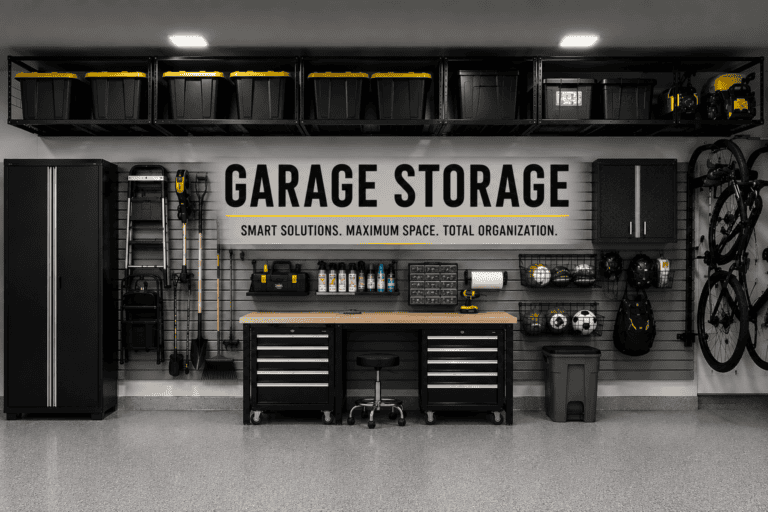
Wall-mounted shelves, tall shelving units, and ceiling racks can help reclaim floor space. The trade-off is access. Heavy, frequently used items should stay between knee and shoulder height. Save high shelves and overhead racks for lightweight, seasonal items like artificial wreaths, empty coolers, or labeled holiday decor bins.
Create a drop zone near the door
A simple garage entry zone prevents everyday gear from spreading into the kitchen or laundry room. A row of sturdy hooks can hold backpacks, dog leashes, bike helmets, and reusable bags. Add a narrow shoe tray or boot mat below if muddy shoes are a regular issue.
If your household comes in through the garage after school, practice, or work, this zone often does more for daily calm than a large storage cabinet. Keep it intentionally small. If it becomes a dumping ground for everything, it stops working.
Give outdoor gear a fast-return home
Rakes, shovels, brooms, and garden tools tend to lean in a corner until they fall over. A wall-mounted tool rack or individual utility hooks keeps them upright and visible. Choose hooks with enough weight capacity for the tools you own, particularly if you are hanging a string trimmer or heavier equipment.
For sports equipment, use an open bin, ball rack, or low shelf that kids can reach. A system that requires perfectly packing each soccer ball into a closed tote will not last through a busy week. Open storage works best for active gear because returning it takes seconds.
Use Vertical Space Without Creating a Climbing Hazard
Most garages have more usable wall space than people realize. Pegboard, slatwall panels, rails, and heavy-duty hooks can hold tools, cords, ladders, folding chairs, and cleaning supplies. They also make it much easier to see what you already own.
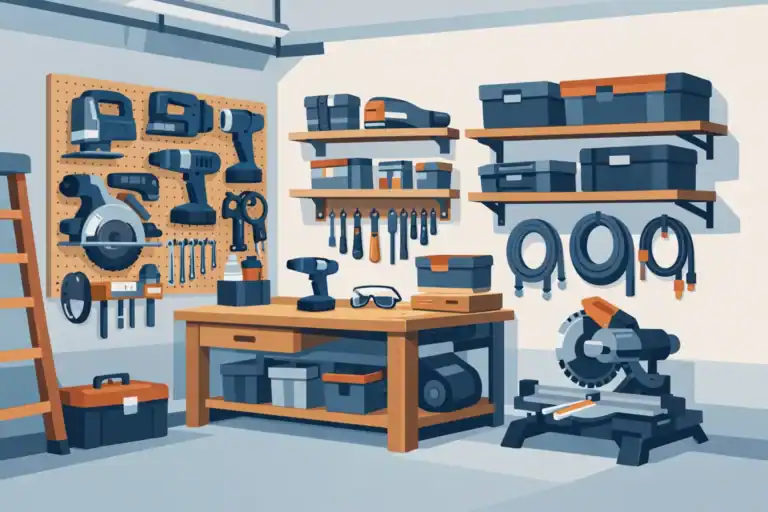
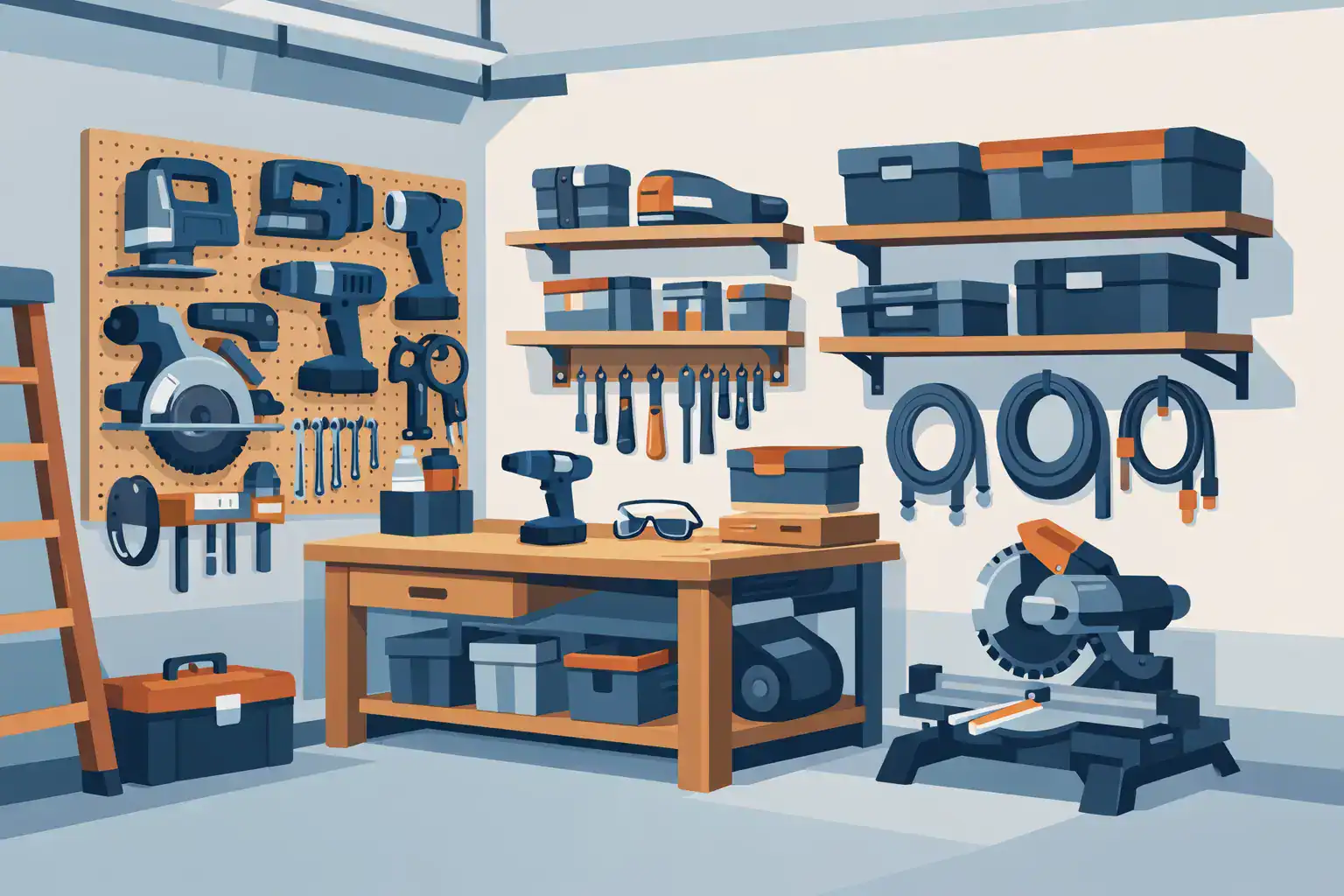
Pegboard is especially helpful for smaller hand tools and project supplies. Outline the rough category of each area rather than trying to make every hook look perfectly arranged. Put screwdrivers together, keep painting tools nearby, and leave room for the tools that are often in use.
Ladders deserve extra attention. A ladder left on the floor becomes an obstacle, while one loosely balanced overhead can be dangerous. Use dedicated wall hooks or a rated ceiling-mounted ladder system, following the product instructions and confirming that your wall or ceiling structure can support the load.
Avoid storing anything heavy directly above where you park or walk. Overhead garage storage is excellent for bulky but lighter seasonal items. It is not the place for large toolboxes, bags of soil, or bins you need every month.
Choose Containers That Fit the Job
A good garage storage system depends as much on the right containers as it does on wall space. Clear plastic bins are useful for garage storage, but they are not automatically the best choice for every category. For seasonal decor, camping supplies, and backup household items, lidded bins protect contents from dust and make stacking easier. For frequently used equipment, open-top bins, baskets, or wall hooks are usually more practical.
Buy bins in one or two stackable sizes when possible. Mixed container shapes waste shelf space and create unstable piles. That said, do not replace perfectly usable bins just to make the garage look coordinated. A readable label matters more than matching colors.
Label bins on the front, not only on the lid. Once containers are stacked, top labels disappear. Use specific names such as Fall Decor, Car Wash Supplies, or Kids’ Bike Gear instead of vague labels like Miscellaneous. If a bin needs a miscellaneous label, it is often a sign that its contents need another pass.
For products that can leak or corrode, such as automotive fluids, fertilizer, and cleaning chemicals, use a low, contained shelf area away from children and pets. Keep them in their original labeled containers and avoid placing them over cardboard boxes or fabric items.
Make a Home for Cords, Hardware, and Project Leftovers
Small garage items create outsized clutter. Extension cords become tangled, loose screws multiply, and leftover project materials slowly take over a shelf. A few simple boundaries make these categories much easier to manage.
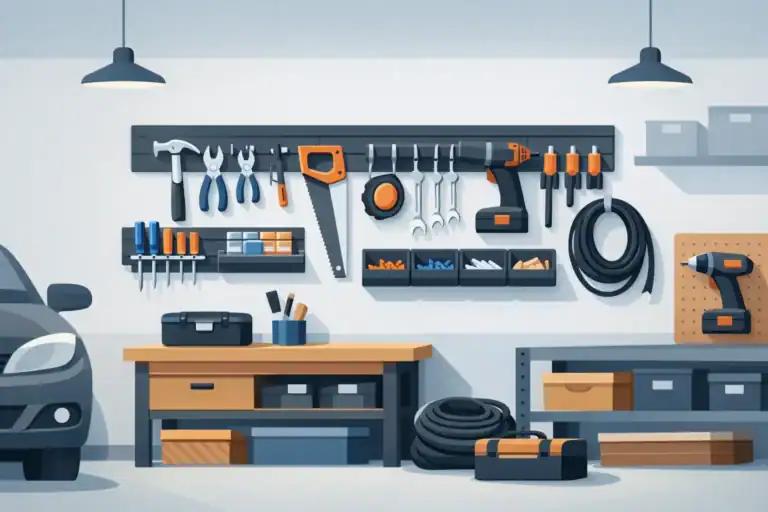
Wind extension cords onto cord reels, wall hooks, or hose-style hangers. Store power-tool accessories in a small divided organizer so drill bits and blades are not lost in a larger toolbox. Clear drawer organizers or labeled jars can work for hardware, but only if you are willing to sort it by type. If not, one labeled hardware bin is more honest and still far better than a scattered workbench.
Project leftovers need limits. Keep a small amount of extra tile, paint, flooring, or hardware for repairs, then let go of the rest when the project is truly finished. It depends on the item: a labeled touch-up paint can is useful, while twelve mystery wood scraps usually are not.
Set Up a Garage Storage System You Can Maintain
A garage rarely stays organized because someone bought the right shelf. It stays functional because returning items is easier than leaving them on the floor. Give the most-used categories the simplest possible homes, and avoid creating systems with too many steps.
Once your zones are in place, spend five minutes after a yard project, road trip, or holiday cleanup putting equipment back where it belongs. A quick monthly reset can catch the drift before it becomes another full-day task. During seasonal changes, move the upcoming season’s gear within reach and send the off-season items to higher shelves.
You do not need a renovation, custom cabinets, or a perfectly styled wall to make the garage work better. One clear walkway, a reliable tool rack, and labeled bins for the things you actually use can make the space feel noticeably lighter. The best garage is not the one that looks untouched. It is the one that helps your household get out the door, finish the job, and come home without adding one more pile to deal with later. A garage storage system like this holds up because it matches how your household actually moves through the space.
About The Storage Society
We’re passionate about turning cluttered spaces into calm, functional ones — one room at a time. Every product we recommend is researched for real usefulness, not just trends. Read more on our About page.
One Comment
Comments are closed.