
15 Genius Studio Apartment Storage Ideas That Work
A studio can feel cluttered fast because every part of life happens in one room: cooking, sleeping, working, getting dressed, and trying to relax. The best studio apartment storage ideas do not require a major renovation or an empty, minimalist-looking home. They give the things you use every day a logical place to go, so your space is easier to reset at night.
The goal is not to fill every inch with bins. It is to create useful storage where it counts most, keep visual clutter under control, and make sure frequently used items stay easy to reach.
This post contains affiliate links. As an Amazon Associate, I earn from qualifying purchases at no extra cost to you. See our full disclosure here.
| Product | Best For | Shop |
|---|---|---|
| Utopia Bedding Adjustable Bed Risers | Under-Bed Storage | Check Price |
| Yecaye Under-Bed Rolling Storage | Seasonal Items & Linens | Check Price |
| ZOBER Over-the-Door Shoe Organizer | Closet Doors | Check Price |
| SONGMICS Round Storage Ottoman | Dual-Purpose Furniture | Check Price |
| Amazon Basics 3-Tier Rolling Cart | Flexible Layouts | Check Price |
Start With the Storage You Already Have
Before buying another shelf or storage basket, take a close look at what is already working hard – and what is not. A studio apartment often has more usable space than it appears at first glance, especially inside closets, under the bed, above cabinets, and behind doors.
Clear out expired pantry food, duplicate cleaning supplies, clothes that no longer fit your life, and mystery cords that belong to devices you no longer own. This is not about getting rid of everything. It is about avoiding the common small-space problem of buying storage for items that do not need to stay.
Then assign broad zones. Your entry needs a landing spot for keys, shoes, and bags. Your kitchen needs room for food prep and cookware. Your sleeping area needs a place for laundry, bedding, and clothes. When one cabinet or closet is expected to hold everything, it quickly becomes a packed closet you avoid opening.
Studio Apartment Storage Ideas for Every Zone
1. Use vertical space before taking up more floor
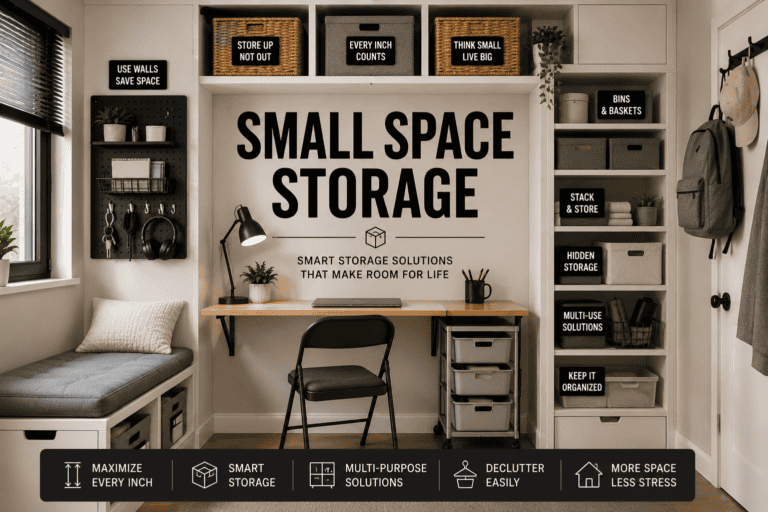
Floor space is usually the most limited resource in a studio. Tall bookcases, wall-mounted shelves, and narrow ladder shelves can hold a surprising amount without making the room feel crowded.
Choose storage that goes upward rather than outward. A tall shelving unit beside a desk can hold office supplies, books, and a small lamp. In a kitchen, a slim freestanding pantry rack can turn an unused wall into a practical food-storage zone. Keep heavier items on lower shelves, and use matching baskets or bins higher up for less frequently used items.
Renters who cannot drill holes can still use tension-rod shelving, over-the-door organizers, and sturdy freestanding units. Just measure carefully. A shelf that blocks a walkway or extends too far into a doorway creates a daily annoyance, no matter how much it holds.
2. Make the bed do double duty
Under-bed storage is one of the most useful studio apartment storage ideas because a bed occupies so much square footage. If your current bed frame sits low to the ground, bed risers can create space for shallow bins, soft zippered bags, or rolling drawers.
Store seasonal clothing, extra linens, guest blankets, and less-used shoes underneath. Clear containers make it easy to see what is inside, while fabric bins can look softer in a studio where the bed is visible from the living area. Use lidded containers if dust is a concern.
A storage bed with drawers can be a smart choice when replacing furniture, but it is not always the best fit. Drawers need room to open, so they can be frustrating in a tight layout. Lift-up storage beds or pull-out bins tend to work better when the bed sits close to a wall.
3. Create an entry drop zone, even without an entryway
A studio does not need a formal foyer to benefit from one. The area immediately inside your door is where shoes, mail, jackets, and bags can begin to pile up. Give those items a home before they spread across the room.
A narrow shoe cabinet, wall hooks, and a small tray for keys may be enough. If you have only a few inches of wall space, try a vertical hook rail and a slim basket underneath for umbrellas or reusable shopping bags. A lidded bench can also provide seating for putting on shoes while hiding seasonal accessories.
Keep this zone limited to items that genuinely come and go. It should make leaving the house easier, not become a catchall for random clutter.
4. Add a small divider with a storage job
In a studio, a room divider can create visual separation between your sleeping and living areas. The most useful versions also hold something. An open bookcase, cube organizer, or low shelving unit can define a zone while providing storage for books, baskets, plants, and everyday supplies.
Avoid using a solid, oversized divider unless you have plenty of natural light. It may create privacy, but it can also make the apartment feel darker and smaller. Open-backed shelves keep the space feeling more connected while still giving your bed area a sense of boundary.
5. Use closed storage for the messiest categories
Not everything needs to be displayed. Closed cabinets, drawer units, storage ottomans, and lidded baskets are especially helpful for cords, workout gear, paperwork, toiletries, and cleaning products.
Open shelving works best for items you can keep visually calm, such as a small group of books, dishes, or matching containers. If every shelf is crowded with mismatched packaging and loose belongings, the whole apartment can feel busy. Use a few closed-storage pieces to give your eyes a break.
6. Turn closet doors into useful space
Closet doors are often overlooked, but they can hold a lot of lightweight items. Over-the-door organizers work well for shoes, accessories, cleaning supplies, hair tools, and pantry snacks, depending on where the closet is located.
Inside the closet, add a second hanging rod if your clothing is mostly shirts, skirts, and folded pants. Shelf dividers can keep stacks from collapsing, while labeled bins make the top shelf less of a black hole. Store off-season pieces in the highest or hardest-to-reach spots and keep current favorites at eye level.
7. Organize kitchen cabinets in layers
A small kitchen becomes frustrating when every cabinet is a pile. Instead of stacking items deep in a cabinet, add simple layers with shelf risers, turntables, drawer organizers, and pull-out bins.
Shelf risers create a second level for mugs, bowls, or canned goods. A turntable keeps oils, sauces, and spices from disappearing behind each other. Narrow pull-out bins are helpful for snack packets, foil, food-storage bags, and cleaning products.
Be realistic about what your kitchen can hold. If you rarely bake, a large stand mixer may not deserve prime cabinet space. If you make coffee every morning, keep that setup accessible and give less-used serving pieces a higher shelf or under-bed bin.
8. Put wall space to work in the kitchen
Kitchen drawers and cabinets fill quickly, especially when counter space is limited. Wall-mounted rails, adhesive hooks rated for the right weight, and magnetic strips can move selected tools off the counter.
Hang potholders, measuring cups, or frequently used utensils near your prep area. A magnetic knife strip can free up a drawer, but only use one if it can be installed securely and is safely out of reach of children. For renters, a countertop utensil crock may be the better trade-off if wall mounting is not allowed.
9. Choose furniture with a clear storage purpose
In a compact home, every larger piece of furniture should earn its footprint. A coffee table with drawers, a storage ottoman, a media console with cabinets, or a desk with built-in file storage can reduce the need for extra bins around the room.
That does not mean every piece needs hidden compartments. Too much bulky storage furniture can make a studio feel cramped. Prioritize one or two hard-working pieces for the clutter categories you struggle with most. If paper piles are your issue, a desk with drawers may matter more than a storage bench.
10. Give paperwork a small, strict home
Mail can take over a studio in a matter of days. Create one compact paper station near your entry or desk with a tray for incoming mail, a folder for action items, and a small file box for documents you need to keep.
Recycle junk mail as soon as you bring it inside. If a paper does not need action, filing, or shredding, it does not need to sit on the counter. A simple weekly paper reset prevents one of the most common sources of visual clutter.
11. Use rolling storage for flexible layouts
A rolling cart is useful when the same area needs to serve different purposes. It can be a coffee station in the morning, a bathroom supply cart near a tiny vanity, or a craft and work-from-home station that rolls out of sight after use.
Choose a cart with a defined purpose. An empty cart tends to collect miscellaneous clutter. Add small bins or drawer inserts so pens, chargers, toiletries, or snacks do not become one messy pile.
12. Store cleaning supplies close to where you use them
Keeping cleaning products in one faraway location makes quick cleanup less likely. In a studio, a compact caddy under the kitchen sink or in a bathroom cabinet can hold the basics: an all-purpose cleaner, dish soap, cloths, a small brush, and trash bags.
A slim broom-and-mop holder behind a door can prevent awkward tools from leaning in a corner. The easier it is to wipe down a counter or sweep a small floor area, the easier it is to keep the apartment feeling calm between deeper cleans.
13. Use the space above cabinets carefully
The top of kitchen cabinets can hold infrequently used items, such as serving bowls, seasonal decor, or extra paper towels. It is a good storage zone only if you can access it safely and keep it contained.
Use matching lidded bins or baskets rather than placing loose items up high. Label the front so you know what is there. If the area becomes a dumping ground, it will add visual clutter instead of solving it.
14. Corral cords before they spread
Studios often have visible cords because your desk, TV, charging station, lamps, and bed are all close together. Cable clips, cord sleeves, adhesive cord channels, and a small charging drawer can make a noticeable difference.
Keep only the chargers you use regularly within reach. Label spare cords and store them in a small divided box. It is a small project, but it removes the tangled-cord look that can make an otherwise tidy room feel chaotic.
15. Build a five-minute reset into your evening
No storage system stays useful if it is never reset. Before bed, put dishes in the dishwasher or wash them, return shoes and bags to the entry zone, clear the coffee table, and put dirty clothes in a hamper.
This is not a full cleaning routine. It is a quick way to stop small messes from becoming a weekend project. Keep your hamper, trash can, and most-used storage containers close enough that putting things away is the easiest option.
Make Your Storage System Easy to Maintain
The best storage systems are not the ones with the most containers. They are the ones you can use when you are tired, busy, or heading out the door. If a bin is too high to reach, a drawer is too crowded to close, or an item requires three steps to put away, adjust the system.
Start with one problem area that affects your day most – the overflowing kitchen counter, the clothing chair, or the pile near the front door. A few practical changes in the right spot can make your studio feel far more functional, without asking you to live with less comfort or more rules.
About The Storage Society
We’re passionate about turning cluttered spaces into calm, functional ones — one room at a time. Every product we recommend is researched for real usefulness, not just trends. Read more on our About page.

2 Comments
Comments are closed.