How to Store Seasonal Clothes Without Closet Chaos
That overstuffed closet usually is not a closet problem. It is a timing problem. Heavy sweaters are competing with tank tops, snow boots are taking up room beside sandals, and the items you actually wear are hard to reach. Learning how to store seasonal clothes gives your everyday wardrobe more breathing room without requiring a bigger closet or a strict minimalist makeover.
The goal is simple: keep off-season clothing clean, protected, and easy to retrieve when the weather changes. A few smart containers and a repeatable routine will do more for a packed closet than an expensive built-in system.
Start With a Seasonal Edit, Not Storage Bins
Before folding a single sweater, sort through what you did and did not wear. Seasonal storage is one of the easiest moments to catch clothing that no longer fits, feels uncomfortable, needs repair, or simply does not suit your life anymore. There is no benefit to carefully storing items you already know you will skip next year.
Make three groups: keep, donate or sell, and repair. Be honest about duplicates, especially coats, jeans, holiday outfits, and shoes. You do not need to purge your wardrobe down to a handful of pieces. You are just making sure your storage space is reserved for clothes worth keeping.
Then separate the keep pile by material and item type. Wool, cashmere, denim, swimwear, and shoes each have different storage needs. This small step helps you choose containers based on what you own instead of buying a stack of matching bins that may not actually work.
Wash Everything Before You Put It Away
Clean clothes are less inviting to moths, carpet beetles, and mildew. Even if a sweater looks fine after one wear, body oils, fragrance, food residue, and invisible stains can set over time. The same goes for jackets, scarves, hats, and shoes.
Launder or dry-clean items according to their care labels, and let everything dry completely before packing it away. Any lingering moisture can create a stale smell or, worse, mold. For shoes, wipe the exterior, clean the soles, and allow them to air out for a full day.
If you are short on time, prioritize natural fibers and heavily worn items first. Wool, silk, cashmere, leather, and athletic clothing deserve the most care because they are more vulnerable to pests, odors, or damage from improper storage.
Choose the Right Place for Seasonal Clothes
The best storage location is cool, dry, dark, and reasonably temperature-stable. A bedroom closet shelf, a clean under-bed area, or a hallway linen closet often works better than a garage, shed, attic, or unfinished basement.
Extreme heat can weaken elastic and fade fabric. Humidity encourages mildew. Basements can work if they stay dry, but place containers up on shelving rather than directly on a concrete floor, where moisture can transfer. Attics and garages are usually a last resort for delicate clothing because temperatures can swing dramatically through the year.
For small apartments, look for overlooked real estate: the back of a closet’s top shelf, under the bed, the bottom of a guest-room closet, or a storage bench. The best spot is not necessarily the largest one. It is the spot you can access without pulling everything else out first.
How to Store Seasonal Clothes by Fabric and Item
A one-size-fits-all approach can create problems. Plastic bins are excellent for some items, while breathable storage is safer for others.
Sweaters, wool, and cashmere
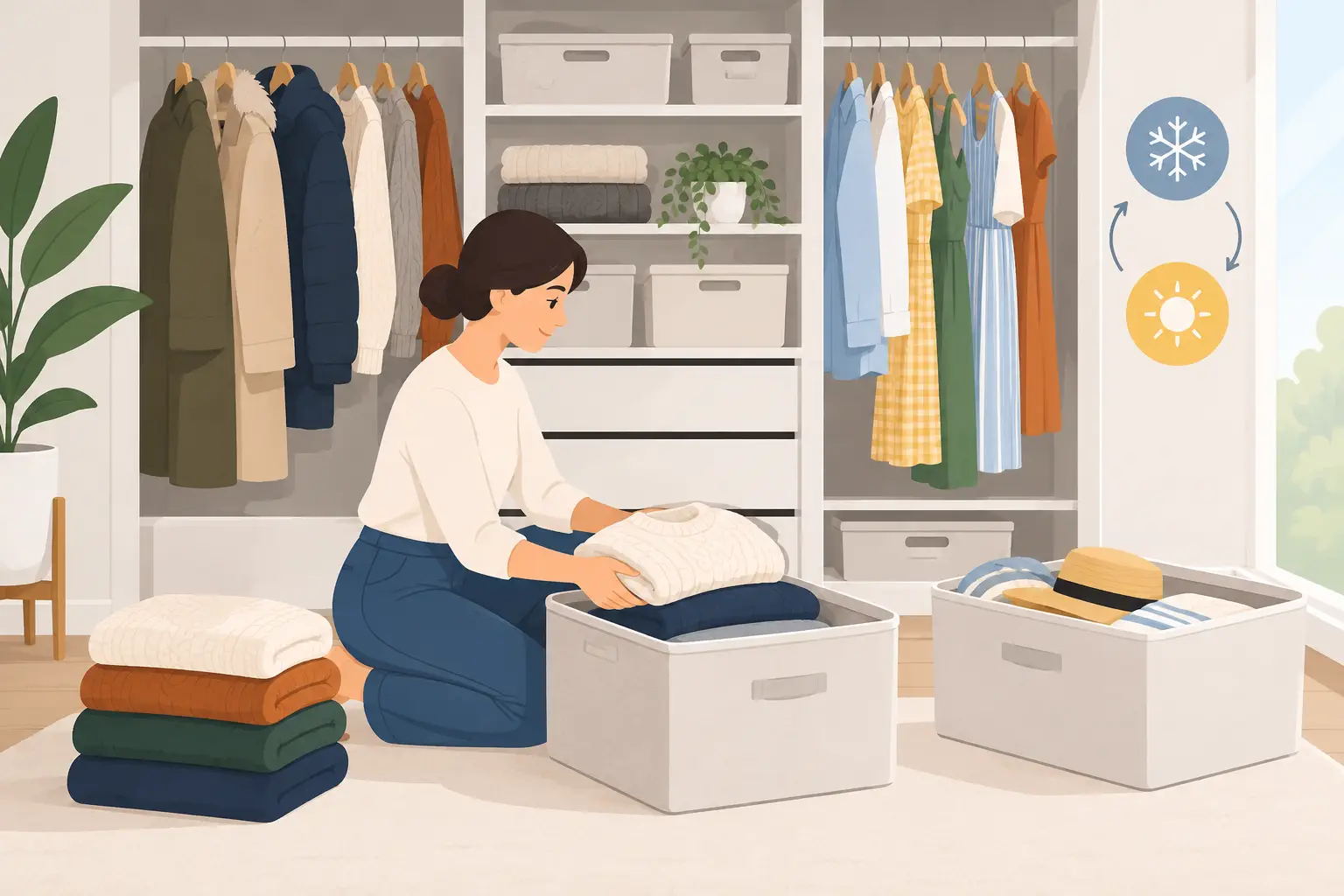
Fold knitwear instead of hanging it. Hangers can stretch shoulders and leave permanent bumps, particularly on heavier sweaters. Store folded pieces in lidded plastic bins or zippered fabric storage bags, adding cedar blocks or lavender sachets if you like. Cedar can help deter pests, but it is not a substitute for clean clothes and a sealed container.
Avoid tossing loose mothballs into bins. Their odor is harsh, and they can be unsafe around children and pets. If you have had a true moth issue, treat the infestation rather than relying on fragrance alone.
Everyday clothing, denim, and workout wear
Clean cotton tees, jeans, leggings, and casual layers do well in clear plastic bins with secure lids. Clear bins make it easier to see what is inside, which matters when a surprise cold snap sends you looking for one fleece jacket in April.
Fold items in simple categories rather than packing every bin as tightly as possible. One bin for jeans and long-sleeve shirts, one for sweaters, and one for cold-weather accessories is easier to manage than a single mystery bin filled to the brim.
Dresses, coats, and structured pieces
Garment bags are useful for formal dresses, blazers, coats, and special-occasion clothes that hold their shape better on hangers. Choose breathable fabric garment bags when possible. Plastic dry-cleaning bags can trap moisture and are not meant for long-term storage.
Keep hanging items in a spare closet or on one end of your main closet rod. If closet space is tight, reserve hanging storage for pieces that truly wrinkle or lose shape when folded. Most casual clothing can be folded and stored elsewhere.
Shoes, boots, and accessories
Shoes need air and shape support. Clean them first, then stuff tall boots loosely with acid-free paper or clean rolled towels so shafts do not collapse. Store shoes in labeled boxes, clear containers, or a divided under-bed organizer.
Avoid packing leather shoes into airtight bags for months at a time. They need a dry environment with some airflow. Small accessories such as gloves, hats, swim goggles, and scarves are easiest to find in a separate labeled bin or zippered compartment bag.
Use Containers That Match Your Space
You do not need a house full of matching organizers. Start with the container style that solves your actual problem.
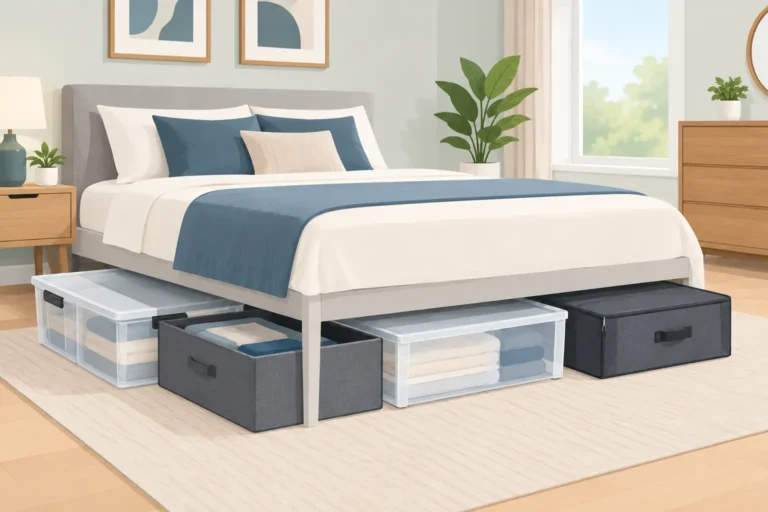
Clear lidded bins are a practical choice for closet shelves, basement shelving, and stackable storage. They protect clothing from dust and make visual inventory easy. Under-bed storage bags or low-profile bins are better for apartment bedrooms, especially if your closet is already packed. Fabric bins work well on high closet shelves for lighter items, though they offer less protection against pests and humidity.
Vacuum storage bags can save a surprising amount of space, but use them selectively. They are helpful for bulky comforters, puffer jackets, and synthetic ski gear. They are less ideal for wool, cashmere, leather, and anything that can be permanently creased or compressed. If you use vacuum bags, do not leave delicate pieces compressed for an entire year.
Label for the Person You Will Be Next Season
Future you should not have to open six containers to find swimwear. Label bins on two sides, especially if they will be stacked. Use broad labels that make sense at a glance, such as “Summer Tops,” “Winter Accessories,” or “Guest Bedding.”
A label is more useful than a detailed inventory for most households. If you have a large wardrobe or store clothes in multiple areas, keep a quick note on your phone listing where each category lives. This is especially helpful for kids’ clothing, hand-me-downs, and holiday outfits that only come out once a year.
Put the least likely-to-be-needed items in the hardest-to-reach spots. Keep transitional pieces, like light jackets and cardigans, closer to the front. Weather does not always follow the calendar, and a flexible setup prevents the seasonal switch from becoming another chaotic closet reset.
Build a Simple Seasonal Swap Routine
Plan the swap when the forecast has been consistently warm or cold for a couple of weeks, not on the first unusually hot or chilly day. Keep a small transition group available until you are confident the season has changed.
As you bring the new season forward, do a quick check for stains, missing buttons, loose hems, or shoes that need conditioning. It is far less frustrating to handle a repair before you need the item for work or a family event.
Set aside one hour for sorting and cleaning, then another for packing and resetting your closet. Trying to do everything in one exhausting afternoon often leads to unlabeled bins and clothing shoved wherever it fits. A practical system is one you can repeat, even during a busy week.
A calmer closet does not come from owning perfect organizers or folding every shirt the same way. It comes from making the clothes you wear now easy to see, while giving the rest a clean, protected home until their season returns.