Small Bathroom Storage Guide for Real Life: 9 Genius Tips
The sink counter becomes a drop zone fast: toothbrushes, skin care, hair tools, extra toilet paper, and the products everyone swears they use every day. This small bathroom storage guide is built for that real-life mess. The goal is not to make a tiny bath look like a showroom. It is to give the items you actually use a reliable home, so getting ready feels less cramped and cleaning takes less time. That’s the whole point of a small bathroom storage guide like this
This post contains affiliate links. As an Amazon Associate, I earn from qualifying purchases at no extra cost to you. See our full disclosure here.
| Product | Best For | Shop |
|---|---|---|
| mDesign Steel Wire Door Organizer | Back-of-Door Storage | Check Price |
| REALINN 2-Tier Pull-Out Organizer | Under-Sink Cabinets | Check Price |
| GOODUSCN Adjustable Tension Rods | Hanging Spray Bottles | Check Price |
| DRAWER DADDY Adjustable Dividers | Bathroom Drawers | Check Price |
| Rectangle Bathroom Vanity Tray | Countertop Essentials | Check Price |
Start With What the Bathroom Needs to Hold
Small bathrooms often feel short on storage because they are asked to hold too much. Before buying bins or shelves, pull everything out of the medicine cabinet, vanity, drawers, and linen shelf. Group items by how they are used: daily grooming, shower supplies, first aid, hair care, makeup, backstock, and guest items.
Be honest about duplicates and expired products. Three half-used lotions, old travel-size toiletries, and styling tools that no longer work take up the same valuable space as the things you reach for every morning. Toss what is expired, donate unopened items you will not use, and move bulk refills elsewhere if you have a hall closet or laundry shelf available.
Then assign each category a storage priority. Daily essentials deserve the easiest access. Weekly items can live in a drawer or cabinet. Backstock should go high, low, or outside the bathroom entirely. This one decision prevents a common problem: keeping extra shampoo within arm’s reach while your toothbrush has nowhere to go.
Use Vertical Space Before Taking Over the Floor
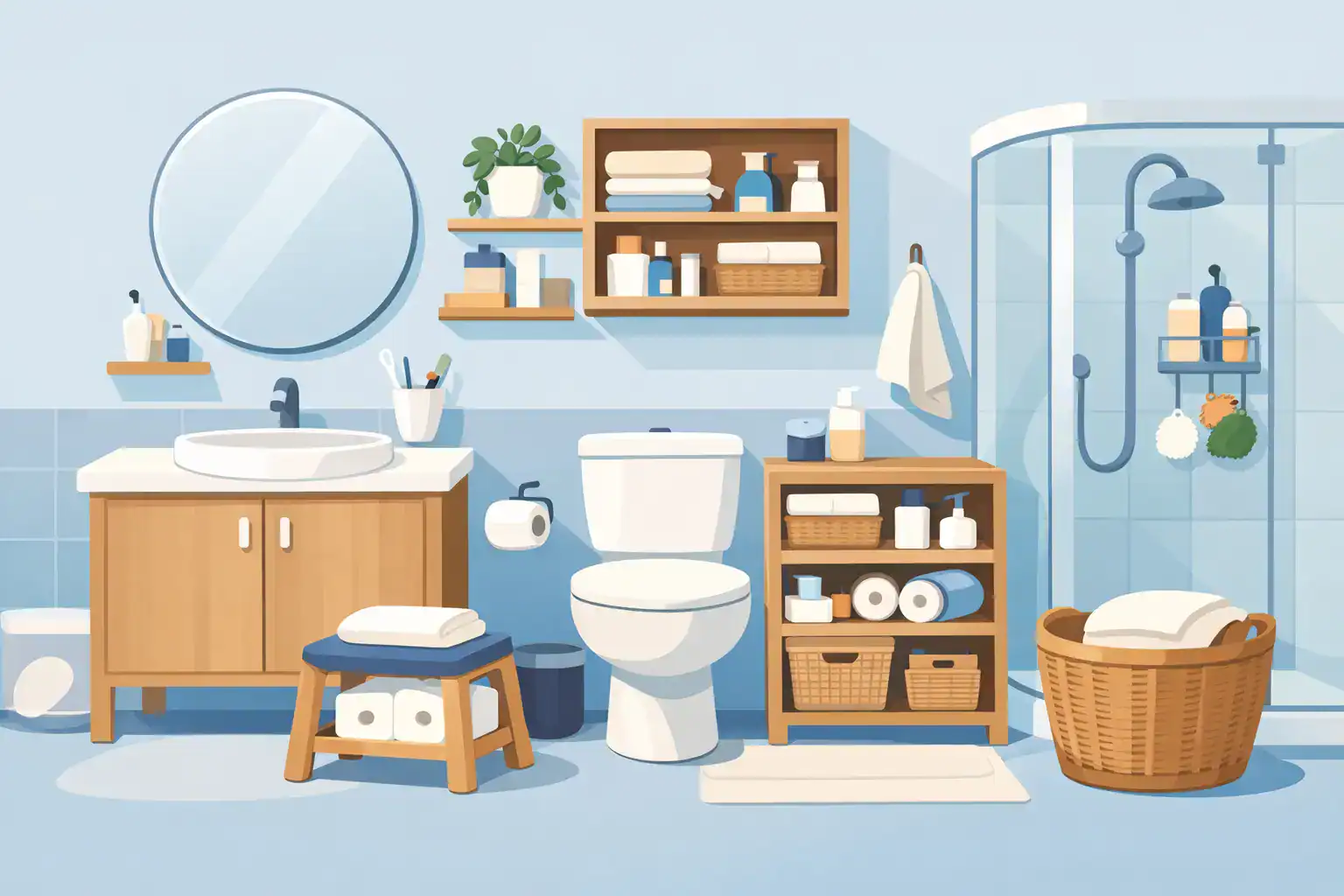
In a compact bathroom, floor space is usually the most expensive real estate. A freestanding cabinet may add storage, but it can also make opening a vanity or moving around the toilet harder. Look up first.
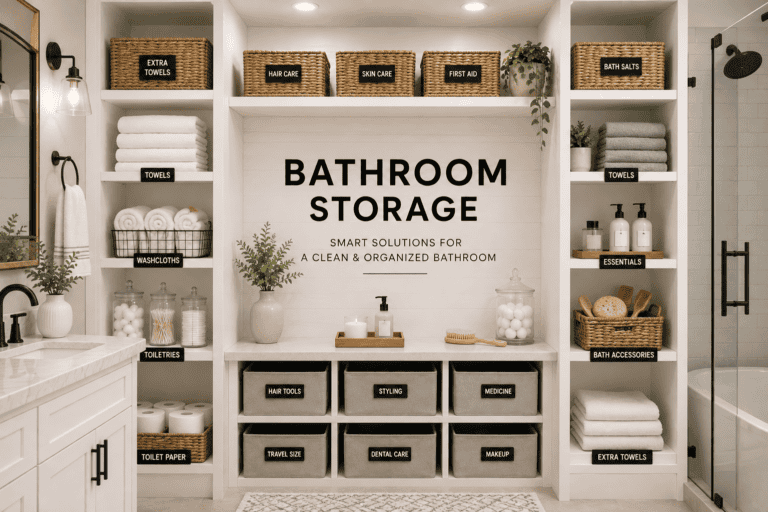
A narrow wall cabinet, recessed medicine cabinet, or shallow shelf above the toilet can hold toilet paper, folded washcloths, and a few everyday extras without crowding the room. Choose shelves with a raised edge or small bins so items do not slide off when someone bumps the wall. Open shelving looks light and useful, but it requires a little editing. Use it for attractive, frequently used supplies rather than a random mix of packaging and backup bottles.
The back of the door is another hardworking spot. An over-the-door organizer can hold hair tools, brushes, cleaning cloths, or extra toiletries. For renters, adhesive hooks and removable wall-mounted caddies can create storage without drilling. Check the weight limit, though. A hook that handles a robe may not be strong enough for a loaded basket of bottles.
Make the Over-Toilet Area Earn Its Keep
The space above the toilet is useful, but it is not a place to pile every spare item in the house. Keep supplies contained in matching bins, lidded baskets, or clear handled containers. Labeling is especially helpful if several people share the bathroom.
Reserve the lower shelf for items you grab often, such as toilet paper or hand towels. Put less-used backstock on the top shelf. If the bathroom gets humid, avoid storing medications, delicate cosmetics, or paper products in open containers directly beside the shower. A closed cabinet is the better choice when moisture is a concern.
Make Under-the-Sink Storage Easier to Reach
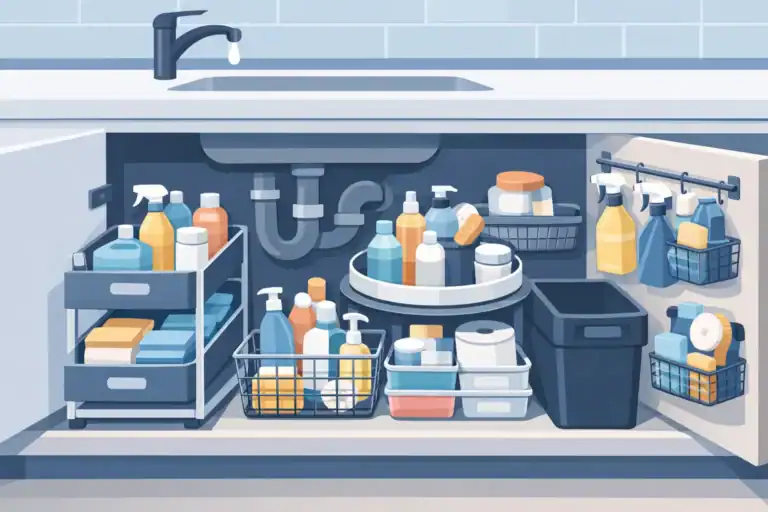
The cabinet under the sink can look roomy until pipes, drain lines, and a garbage disposal claim half of it. The fix is not one giant bin. Large bins turn the cabinet into a deep cave where small items disappear.
Instead, use a few narrow pull-out organizers or handled bins that fit around plumbing. Measure the cabinet’s width, depth, and the clearance beneath pipes before ordering anything. Measure with the cabinet doors fully open, too. This small step saves you from buying a drawer system that technically fits but cannot slide out.
Place your most-used items in front. A shallow bin for contact solution, dental care, or daily skin care keeps small bottles from spreading across the cabinet floor. Use a taller bin for cleaning sprays and a separate container for sponges or gloves. If you store a hair dryer or curling iron under the sink, use a heat-safe holder only after the tool has completely cooled.
A tension rod can also create a simple hanging zone for spray bottles. It works best when the cabinet is wide enough and the rod is sturdy. This is a low-cost solution, but it is not ideal for heavy bottles or cabinets with awkward plumbing. In those cases, a pull-out caddy is more dependable.
Organize Small Bathroom Drawers by Routine
Bathroom drawers become frustrating when every item is loose. The answer is not necessarily a complicated drawer system. Start with simple adjustable dividers or shallow trays, then organize by the order you use things.
For example, keep dental products together, then face care, then grooming tools. Store tweezers, nail clippers, and bobby pins in a small lidded container so they do not get buried. A long, narrow tray is useful for toothbrushes, makeup brushes, or razors.
Avoid filling every inch simply because it is available. Leave a little breathing room so items can go back easily on rushed mornings. If several family members share a drawer, give each person one clearly defined section. A small label can prevent the familiar argument over whose products are taking over the bathroom.
Keep the Counter Almost Empty
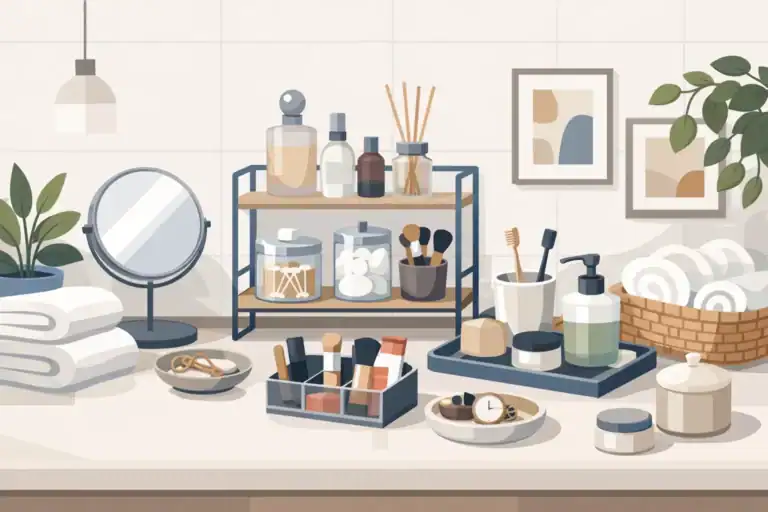
A clear counter makes a small bathroom feel noticeably larger, even when the room itself has not changed. Keep only the products used every day out in the open, ideally on a tray or in one compact countertop organizer. The tray creates a boundary, making it obvious when the counter has started collecting clutter again.
If you do not have a medicine cabinet, a mirrored wall cabinet can solve two problems at once. If installation is not possible, a slim rolling cart may work in a bathroom with enough clearance. It is helpful for renters and can move where needed, but skip it if it blocks the door swing, toilet access, or shower entry. Storage that creates an obstacle is not really useful storage.
Choose Containers That Fit the Room, Not Just the Trend
Clear acrylic organizers make it easy to see what you own, especially in drawers and deep cabinets. They are great for cosmetics, dental supplies, and small grooming products. Baskets soften the look of open shelves and hide visual clutter, but they are less practical for tiny items unless you add smaller containers inside.
For a humid bathroom, choose materials that can be wiped clean. Plastic, coated wire, and moisture-resistant finishes are usually easier to maintain than untreated natural fibers. If you love the look of woven baskets, use them for dry items such as extra washcloths or sealed toilet paper rather than damp towels.
Before purchasing anything, write down your measurements and decide what each container will hold. The Storage Society approach is simple: buy storage to solve a specific problem, not because a bin looks organized on its own. One well-sized pull-out organizer is more useful than five mismatched containers that waste cabinet space.
A Small Bathroom Storage Guide for Shared Spaces
A shared bathroom needs a little more structure because it has more routines happening in the same few square feet. Give each person a portable caddy, drawer section, shelf bin, or hook. Kids can use low baskets for bath toys and their own towels, while adults can keep personal care products in labeled bins higher up.
For households with guests, create one small guest-ready bin with travel-size basics, extra toothpaste, and a spare toothbrush. Keep it tucked in a cabinet until needed. This is more practical than permanently giving up a whole shelf for items that only get used a few times a year.
Shared spaces also benefit from a simple restock routine. Once a week, check toilet paper, hand soap, tissues, and the supplies that run out without warning. It takes a few minutes and prevents the cabinet from becoming an emergency stash of half-empty bottles.
Maintain the System Without Turning It Into a Project
Good bathroom storage should be easy to reset. After a shower or busy morning, return items to their assigned zone instead of leaving them on the counter “for later.” Keep a small laundry hamper or hook nearby for used towels, because damp towels draped over every surface make even an organized bathroom feel chaotic.
Once a month, wipe down containers, remove empties, and check whether a category has outgrown its space. If it has, do not immediately add another organizer. First ask whether there are too many products, too much backstock, or a better place for the category.
A small bathroom will never have unlimited room, and that is okay. When the counter is clear, the cabinet is easy to reach, and the supplies you need are where you expect them to be, the room starts working with you instead of against you. A small bathroom storage guide is really just a plan for making peace with the space you have.
About The Storage Society
We’re passionate about turning cluttered spaces into calm, functional ones — one room at a time. Every product we recommend is researched for real usefulness, not just trends. Read more on our About page.