Lazy Susan Review: Is It Worth the Cabinet Space?
A crowded cabinet has a predictable problem: the item you need is almost always behind three items you do not. This lazy susan review looks at whether a simple rotating turntable actually fixes that frustration, where it works best, and when another organizer will serve you better. The short answer is that a good lazy Susan can make a hard-to-reach shelf feel useful again, but only if its size, sides, and materials fit the things you store.
For a small, affordable organizer, it can make a noticeable difference in the daily rhythm of a kitchen, bathroom, or laundry room. It brings the back of a deep cabinet forward with one spin instead of forcing you to unload half the shelf. That said, a turntable is not a magic answer for every messy space. The wrong one can waste vertical room, slide around, or create a new pile of mismatched bottles.
Lazy Susan Review: What This Organizer Does Well
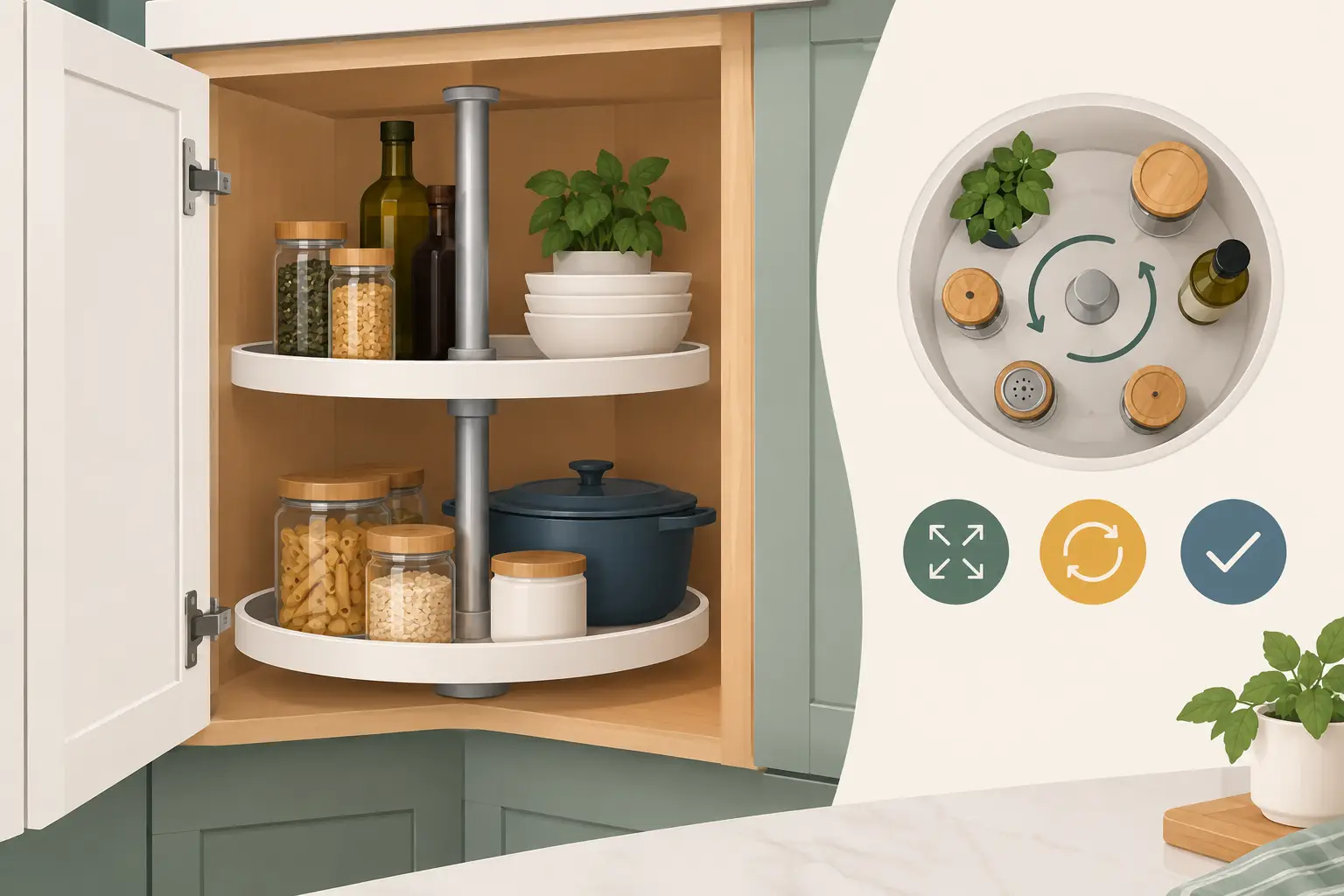
A lazy Susan is a round or sometimes D-shaped tray that rotates on a bearing. Most versions are plastic, bamboo, wood, wire, or clear acrylic. You place frequently used items on the tray, then turn it to reach what you need.
Its best feature is access. Deep shelves create what many households know as the cabinet black hole: extra cooking spray, an unopened jar, or a cleaning product disappears at the back until you buy a duplicate. A turntable keeps the full shelf within reach. It is especially helpful for shorter adults, kids, or anyone who does not want to bend, stretch, and shuffle containers every time they make dinner.
It also gives loose categories a home without requiring a complicated system. Cooking oils, vinegars, hot sauces, baking extracts, vitamin bottles, and hair products are all easy to group on a tray. Instead of lining every item up perfectly, you can return it to the right zone and let the turntable do the work.
The convenience is real, but the item itself does not create a category. If a tray holds coffee syrups, medicine, random packets, and a screwdriver, it will still look chaotic after a spin. The best results come from using one tray for one clear group of items.
Where a Turntable Is Actually Worth Buying
Lazy Susans earn their space in cabinets and shelves that are deep enough to hide items but not so tall that stacking bins makes more sense. A 10- to 12-inch round model is often a practical starting point for standard kitchen cabinets, though measuring first matters more than following a general rule.
Pantry shelves and upper kitchen cabinets
Pantry turntables are excellent for small bottles, jars, and packets that tend to get buried. Think sauces, seasoning blends, sandwich spreads, baking decorations, or snack bars standing in a small container on the tray. In upper kitchen cabinets, they are particularly useful for oils and frequently used condiments.
Choose a model with a raised rim or non-slip surface for bottles. A flat, rimless tray may look clean at first, but a tall glass bottle can tip during a quick spin. Clear plastic makes it easy to see what is low, while bamboo can feel warmer and more polished on open shelving. For a busy pantry, plastic is usually the easier, more forgiving choice.
Bathroom cabinets and linen closets
The bathroom is one of the strongest use cases because it collects many small, awkwardly shaped products. Put skincare, daily medications, contact lens supplies, hair accessories, or backup toothpaste on separate trays. It is much easier to see what you own when products are not stacked in front of one another.
Look for a washable plastic or acrylic option near sinks. Bamboo can be attractive, but repeated moisture and product spills require more care. A lazy Susan also works well in a linen closet for smaller first-aid supplies or travel-size toiletries, especially when those items otherwise drift across a wide shelf.
Laundry rooms and cleaning cabinets
Detergent pods, stain removers, dryer sheets, and smaller cleaning sprays can benefit from a turntable, particularly in a shallow utility cabinet. A high-sided model is safer if you store bottles that could leak. Keep harsh products out of reach of children, and do not rely on a rotating tray as a safety feature.
Under the kitchen sink is more complicated. A turntable can help in an open, roomy cabinet, but plumbing pipes often interfere with a round tray. In many under-sink setups, a pull-out bin or narrow caddy uses the space more effectively.
The Downsides to Know Before You Organize
The biggest trade-off is shape. Round trays leave unused corners inside a square cabinet. That may not matter on a wide shelf, but in a narrow cabinet every inch counts. A D-shaped lazy Susan, with a flat side that sits against the cabinet wall, can recover some of that lost space.
Height is the next concern. Lazy Susans work best for relatively short items. Tall oil bottles, oversized shampoo containers, and cereal boxes can make spinning awkward or impossible. Measure the shelf height, including any hinges or cabinet lips that reduce clearance. Leave at least an inch above your tallest item so it can move without scraping.
Weight matters, too. A lightweight tray may spin smoothly with spice jars but drag or wobble under several heavy glass bottles. Check the product’s stated weight limit when available, and reserve heavy cans or appliances for sturdy shelf risers or pull-out drawers. If the base feels flimsy when you press down on it, it is unlikely to improve once it is loaded.
Finally, turntables can encourage overbuying if you treat them as overflow storage. They make a category easier to reach, not smaller. If your condiment collection has expanded beyond what you use, reduce duplicates and expired items before deciding you need a larger tray.
How to Choose the Right Lazy Susan
Start by measuring the inside width and depth of the shelf, not just the cabinet door. Then account for the items you plan to store. A tray should have enough breathing room to turn freely without knocking against walls or other bins.
For most homes, these are the features that make the biggest difference:
- A non-slip base and raised edge for bottles, jars, and bathroom products.
- Easy-clean plastic or acrylic for pantries, bathrooms, and anywhere spills are likely.
- A D-shape or double-decker design when cabinet dimensions and vertical clearance support it.
- A smooth, quiet bearing that turns easily under the weight you expect to store.
A two-tier lazy Susan can double storage in a tall pantry or bathroom cabinet, but it is not automatically better. The upper tier can block your view of lower items, and tall bottles may not fit. It works best for short containers such as supplements, spice jars, cosmetics, or small snacks.
Wood and bamboo versions are a good fit for countertops, open shelves, and dining areas where appearance matters. They are less ideal for messy cooking zones unless the finish is well sealed and you are comfortable wiping them down promptly. Clear plastic is less decorative, but it is practical, lightweight, and simple to clean.
A Simple Setup That Stays Useful
Before loading a lazy Susan, empty the shelf and group similar items together. Toss expired food, dried-up beauty products, and cleaning bottles you no longer use. This step takes a few extra minutes, but it prevents the tray from becoming a rotating holding zone for clutter.
Place the tallest and heaviest items near the center when possible, where they are more stable. Keep daily-use products at the front of the category, even though everything is technically reachable. For example, place your everyday olive oil and cooking spray together, while specialty oils sit behind them on the same tray.
Do not pack the tray to its edge. A little open space makes it easier to turn, wipe down, and see what needs replacing. If items begin falling over, that is usually a sign to split the category across two zones or switch to a bin with higher sides.
So, Is a Lazy Susan Worth It?
For the right shelf, yes. This is one of the simplest organizers for making a deep, frustrating cabinet easier to use every day. It is not a replacement for decluttering, and it will not solve every awkward cabinet layout. But for compact bottles, jars, and small household supplies, it can turn a forgotten back corner into one of the most functional spots in the room.
Choose a size that leaves room to spin, match the material to the mess level of the space, and give each tray one job. A calm home rarely comes from buying more organizers. It comes from choosing a few tools that make putting things back feel almost effortless.