How to Store Wrapping Paper Without the Chaos
A bent roll of wrapping paper is one of those small household annoyances that turns gift-giving into a bigger project than it needs to be. If you are figuring out how to store wrapping paper, the goal is not a picture-perfect craft closet. It is a simple setup that keeps paper uncrushed, supplies together, and birthday gifts from starting with a frustrating search.
The best spot depends on how much you keep and how often you use it. A family that wraps gifts every month needs faster access than someone who pulls out paper mainly in December. Start by choosing a storage method that fits your available space, then keep the whole gift-wrap category in one home.
Start by editing your gift-wrap stash
Before buying a container, gather every roll, gift bag, ribbon spool, tag sheet, tissue pack, and stray bow from drawers and closets. This step matters because wrapping supplies multiply quietly. You may find five half-used rolls of the same holiday print, dried-out tape, and gift bags that are too wrinkled to reuse.
Keep rolls you would genuinely use, plus a modest mix of all-occasion paper, birthday paper, and seasonal designs. Toss torn sheets and damaged rolls that will fight you later. Recycle plain paper cores and paper that is free of glitter, foil, or plastic coating when local rules allow.
Gift bags are worth keeping when they are clean, sturdy, and easy to flatten. Tissue paper can be saved in a folder or zippered pouch, but do not let a handful of crumpled scraps take over the bin. A smaller, usable collection is easier to store and easier to remember.
How to store wrapping paper by available space
There is no single best wrapping-paper organizer. A tall closet, a shallow under-bed area, and a small apartment each call for a different approach. Choose the option that protects rolls without making the supplies so hard to reach that they migrate back to the floor.
Use a vertical organizer in a closet
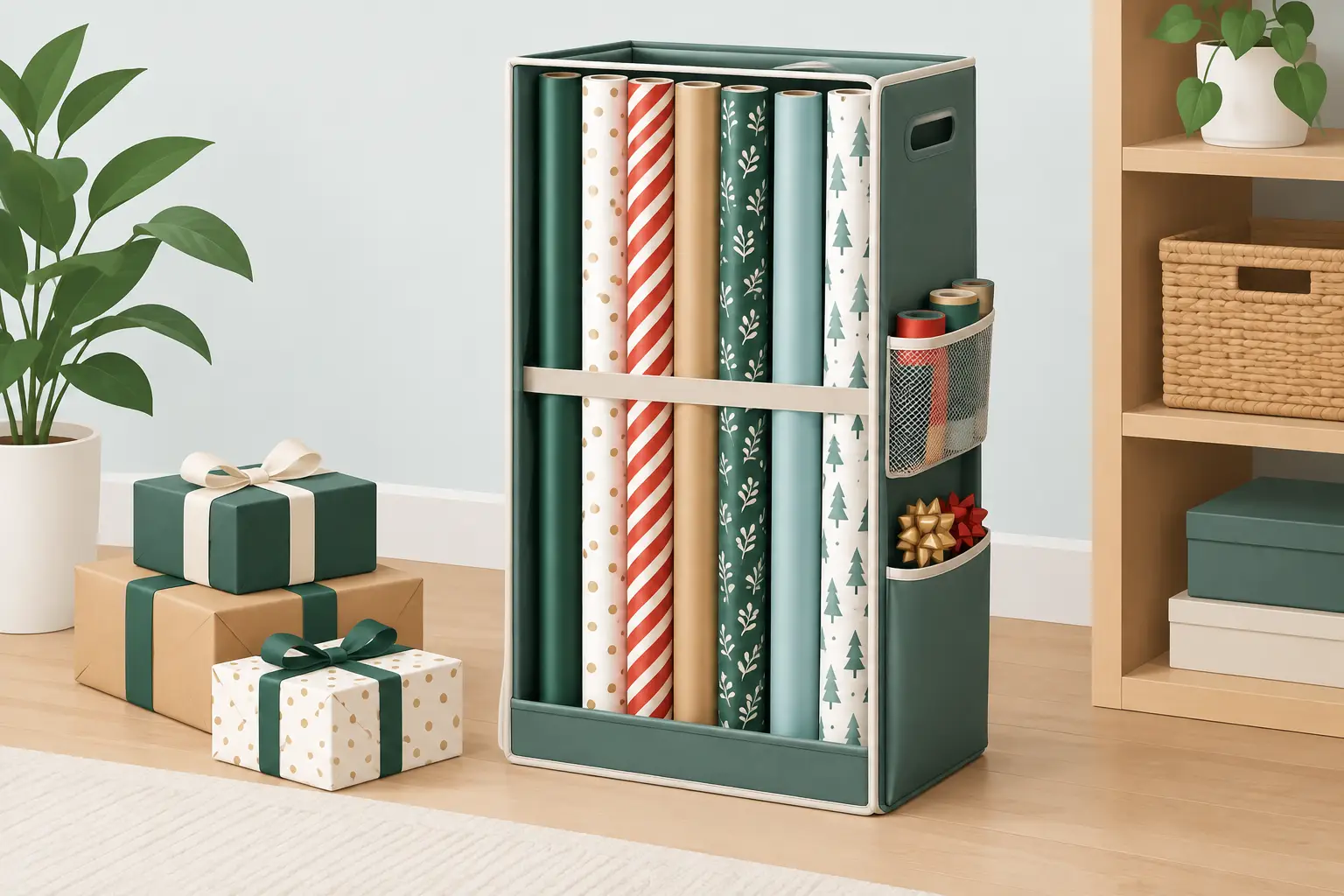
A vertical wrapping-paper organizer is a practical choice if you have an open stretch of closet wall or a spare corner. These tall, narrow containers keep rolls standing upright, often with pockets for scissors, tape, bows, and gift tags. They work especially well in a hall closet, guest-room closet, or utility closet.
Look for a version with a clear front or clear pockets so you can see what you own. Fabric organizers are lightweight and flexible, while plastic containers offer more protection from dust and moisture. The trade-off is that vertical storage can be awkward for very long rolls, so measure your tallest roll before choosing one.
If you do not want a dedicated organizer, a clean tall hamper or narrow plastic bin can do the same basic job. Stand rolls on end and secure loose ones with reusable hook-and-loop straps. Put a small caddy beside the bin for tools rather than letting tape and scissors disappear between the rolls.
Slide flat storage under a bed
Under-bed storage is ideal for apartments, dorm rooms, and homes where closet space is already packed. A low, zippered wrapping-paper bag or lidded under-bed bin protects long rolls while using space that is often wasted.
This approach works best for seasonal paper or backstock. Keep a few everyday supplies in a nearby drawer or cabinet if you wrap gifts often. Otherwise, pulling a large container out from under the bed every time you need a birthday bag can become another annoying chore.
Choose a container that is long enough for your paper to lie flat without bending. Avoid overfilling it. A stuffed bag can crease rolls when you zip it closed, defeating the purpose of storing them carefully.
Use a door organizer for frequent use
An over-the-door organizer can turn the back of a closet or pantry door into a small gift-wrap station. It is particularly helpful for renters or anyone who cannot add built-in shelving. Deep pockets can hold rolls, gift bags, ribbon, tags, and cards in one visible place.
Check the door clearance before committing. Thick pockets may keep a door from closing smoothly, and lightweight door hooks can shift if the organizer is overloaded. This is a good solution for a smaller collection, not a place to cram every holiday supply you have owned since 2012.
Store rolls in a drawer or cabinet
A deep drawer, low cabinet, or shelf can work beautifully if the rolls fit without being forced. Lay paper horizontally and add simple dividers to keep it from rolling around. A tension rod inside a cabinet can also help corral rolls, especially when the cabinet is otherwise empty.
This option feels clean and hidden, but it requires some discipline. Store wrapping paper away from leaky pipes, humid basements, and direct sunlight. Heat and moisture can warp paper, fade colors, weaken adhesives, and make ribbon look tired before you ever use it.
Keep rolls from unrolling and getting crushed
Once rolls are contained, solve the two problems that create most wrapping-paper messes: loose paper and flimsy ends. Save the cardboard or plastic sleeves that come around new rolls, or use reusable hook-and-loop bands to hold the paper in place. A wide elastic band also works, though it can dent delicate paper if pulled too tightly.
Do not use tape directly on the roll. It can tear the outer layer when removed and leave you with a damaged first sheet. If a roll has a bent end, trim off the crushed section now. It is less wasteful than struggling with it during a last-minute wrapping session.
For paper stored horizontally, place heavier rolls at the bottom and lighter or partly used rolls on top. For upright storage, avoid packing rolls so tightly that you have to tug one out. A little breathing room is what keeps the paper round and usable.
Give the smaller supplies a simple home
Wrapping paper is only half the category. The real time drain is usually hunting for tape, scissors, tags, and the ribbon spool that rolled behind a shelf.
Keep the tools in a handled caddy, clear shoebox-size bin, or divided drawer organizer. One pair of sharp scissors, a tape dispenser, a few rolls of tape, a pen, gift tags, and a small stack of cards cover most everyday needs. If children use the station, keep sharp scissors in a higher cabinet and offer child-safe scissors separately.
Ribbon needs slightly different treatment. Store spools upright in a clear bin, or thread several spools onto a dowel inside a container so they do not unwind. Loose bows and tissue paper are better in zippered pouches or shallow bins than mixed in with rolls. That separation prevents the whole collection from turning into a tangle.
Gift bags can stand upright in a magazine file or narrow basket, sorted by size. Slide flattened bags inside larger bags to save room. Keep a small group of neutral bags, such as solid colors or simple patterns, for occasions that pop up unexpectedly.
Create an easy reset routine
A storage system only stays useful if it is easy to reset after each gift. Put the scissors and tape back in the caddy, re-band open rolls, and return leftover paper before moving on to the next task. It takes less than a minute and prevents a temporary wrapping pile from becoming permanent clutter.
Twice a year, usually after the winter holidays and before the busy birthday season, take five minutes to check your supplies. Refill tape, remove damaged paper, and move holiday-only items to the back of the container. You do not need a color-coded inventory unless that genuinely helps you. You just need to know where the basics are when you need them.
If your gift-wrap supplies currently live in three closets and a drawer, start with one container and one category at a time. A wrapping station does not have to be elaborate to make birthdays, holidays, and last-minute celebrations feel a lot less chaotic.