Small Pantry Makeover Ideas That Actually Work
A cramped pantry becomes frustrating long before it becomes truly full. It happens when the pasta is behind three half-empty snack boxes, spices disappear into a dark back corner, and buying another jar of peanut butter feels like a gamble. A small pantry makeover is less about creating a picture-perfect shelf and more about making dinner, grocery day, and weekday mornings easier.
The good news is that a small space can work remarkably hard when every category has a clear home. You do not need custom cabinetry, a full matching set of containers, or a dramatic purge. You need a simple layout that matches how your household actually eats.
Start Your Small Pantry Makeover With What You Use
Emptying the pantry can feel like a big job, but it is the fastest way to see what is taking up valuable shelf space. Set food on a counter or table by broad category: breakfast, snacks, canned goods, baking supplies, grains, sauces, and cooking staples. As you go, check dates and toss anything stale, expired, or unlikely to be used.
Be honest about the items that linger. A specialty flour you bought for one recipe does not need prime shelf space if you have not touched it in a year. That does not mean your pantry has to be minimal. It means the space should reflect your real routines, whether that includes lunchbox snacks, bulk rice, protein bars, or enough coffee to get through a busy week.
Before putting anything back, wipe the shelves and measure them. Write down the usable width, depth, and height of each shelf, including the awkward top shelf and any narrow areas near the door. This small step prevents the common mistake of buying bins that look useful online but do not fit your pantry.
Build Zones Before You Buy Organizers
A pantry works best when you can find an item without moving five other things. Create zones based on use, not on the packaging looking similar. Keep breakfast foods together, group dinner ingredients in another area, and give snacks a dedicated zone where kids or guests can reach them without disrupting everything else.
The most-used foods deserve the easiest access. Place everyday items between waist and eye level whenever possible. This is usually the best spot for cereal, sandwich supplies, pasta, cooking oils, and the snacks that disappear fastest. Heavier items such as canned goods, extra beverages, and large bags of flour belong on lower shelves. Reserve high shelves for backstock, serving items, and occasional ingredients.
This is also where a little flexibility matters. If you cook from scratch most nights, your pantry may need a larger baking and dry-goods zone than a snack zone. If you have young kids, a low snack bin can reduce the daily chorus of “Where are the crackers?” There is no universal pantry layout, only one that reduces the friction in your home.
Give Backstock Its Own Boundary
Backstock is useful, especially for paper goods, family-size snacks, and staples you buy on sale. The problem starts when every shelf becomes backstock. Keep extras in one defined area, ideally a top shelf or a bin at the back. Once that space is full, it is a signal to use what you have before buying more.
A simple rule helps: keep one open item and one backup for regularly used products. Larger households may need more, while a small apartment pantry may only have room for a single replacement. The goal is not to limit your groceries. It is to stop duplicate purchases caused by hidden inventory.
Use Vertical Space Without Making Shelves Harder to Reach
Most small pantries waste vertical space because shelves are tall enough for stacking but not designed for it. A few targeted organizers can fix that, but not every product is worth adding. Choose tools that make items easier to see and grab, not tools that create another layer of maintenance.
Shelf risers are especially helpful for cans, jars, and short bottles. They let you see the back row without pulling everything forward. Expandable risers can be a practical choice for adjustable shelves, while a sturdy tiered riser works well for a fixed canned-food section.
Clear handled bins are useful for loose packages such as granola bars, drink mixes, seasoning packets, and baking decorations. Pull-out access matters more than perfectly uniform containers because it lets you reach the back of a deep shelf in one motion. For a busy household, a labeled snack bin can be far more useful than decanting every item into matching jars.
Turntables are best for smaller bottles, sauces, vinegars, and condiments that tend to get lost in corners. They are not ideal for large, heavy jars or tall bottles that may tip when spun. In a narrow pantry, a slim rolling cart can also make use of an unused gap, but measure carefully and make sure it will still roll once loaded.
Decant Only What Makes Sense
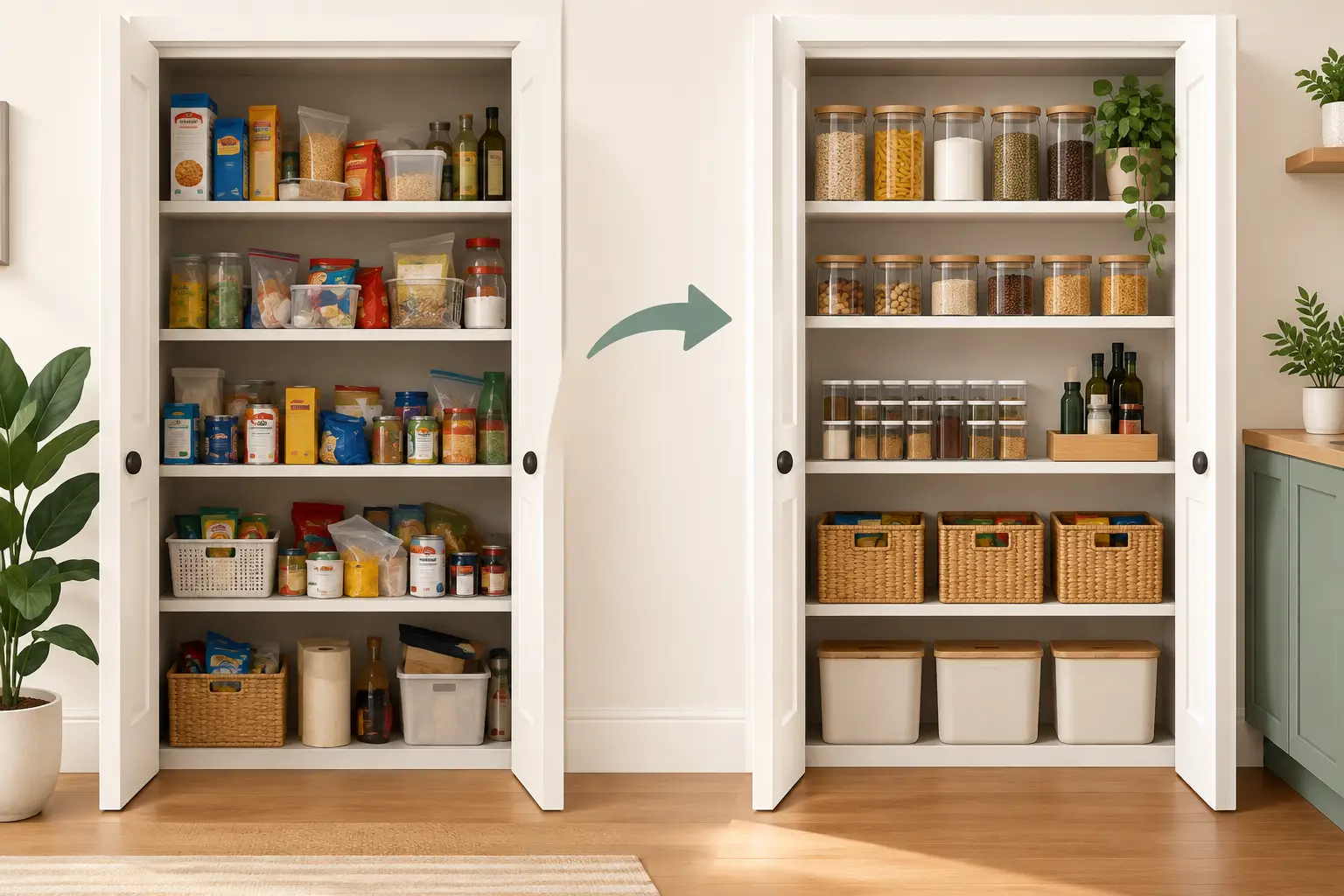
Decanting can make a pantry feel calmer, but it is optional. It makes the most sense for foods you buy repeatedly, such as flour, sugar, rice, oats, cereal, and pasta. Airtight containers can protect those staples from staleness and make it easier to see when you are running low.
Skip the container transfer for items that come in small, frequently changing packages or foods you do not buy often. You do not need to pour every bag of chips, box of tea, and packet of taco seasoning into a new home. Extra containers can consume shelf space, cost money, and create more dishes to wash.
If you decant, keep the expiration date and cooking instructions handy. A small label on the bottom or back of the container is enough. For foods with allergens, retain the original package information until the container is empty.
Make Labels Useful, Not Fussy
Labels are not just for a polished look. They help everyone in the house put groceries back in the right place. Use broad, readable labels such as “Snacks,” “Breakfast,” “Baking,” “Pasta and Grains,” or “Lunch Supplies.” A category label is usually more practical than labeling every individual container.
Choose labels that can change with your needs. Removable chalk labels, erasable labels, or simple adhesive labels work well when a pantry is still evolving. A rigid, permanent system can feel annoying if your family suddenly starts buying different foods or your household size changes.
For a shared pantry, label the shelf edge as well as bins when needed. That makes the reset after a grocery trip much faster, particularly when someone else is helping unload bags.
Solve the Problem Areas First
A realistic small pantry makeover does not need to happen all at once. Start with the category that creates the most daily mess. For many homes, that is snacks. For others, it is a collapsing pile of canned goods, an overcrowded baking shelf, or a jumble of reusable bags and food-storage containers.
If cans are the issue, use a riser or a stackable can organizer and keep like items together. If bags and packets are the problem, assign them to handled bins. If the pantry door is unused, an over-the-door rack can hold lightweight wraps, spices, packets, or snack items. Avoid overloading door racks with glass jars or heavy bottles, especially in rentals where hardware and door clearance may be limited.
Think of organizers as tools for a specific problem, not décor. A basket that hides everything may look tidy for a day but can create a black hole for food. A clear bin is often better for a household that needs a quick visual inventory. On the other hand, opaque bins can make visual clutter feel calmer when they hold predictable categories. It depends on whether your bigger issue is not seeing enough or seeing too much.
Keep the Pantry From Sliding Back Into Chaos
The best pantry systems are easy to maintain on a rushed Tuesday. Build in a two-minute reset after grocery shopping: move older items to the front, put new items behind them, and return food to its labeled zone. This simple first-in, first-out habit helps reduce waste without requiring a spreadsheet.
Once a month, take a quick look at the categories that fill up fastest. Straighten loose packages, combine duplicates, and notice what is nearing its date. If a zone keeps overflowing, do not force it to work because it looked good at first. Adjust the shelf, swap the bin, or give that category more room.
Your pantry does not need to look like a showroom to feel calm. When you can open the door, spot what you need, and put groceries away without playing storage Tetris, the space is doing exactly what it should.