10 Best Kitchen Compost Bins for Less Mess
Banana peels and coffee grounds add up fast, but a compost setup should not turn your counter into another messy drop zone. The best kitchen compost bins make food-scrap collection easy enough to do while cooking, then simple enough to empty before odors, fruit flies, or overflow become a problem.
For most homes, the right bin is not the biggest or most expensive one. It is the one that fits your actual routine: where you prep food, how often you take out compost, and whether you have room on the counter, under the sink, or in the freezer. These practical picks cover the most common kitchen setups.
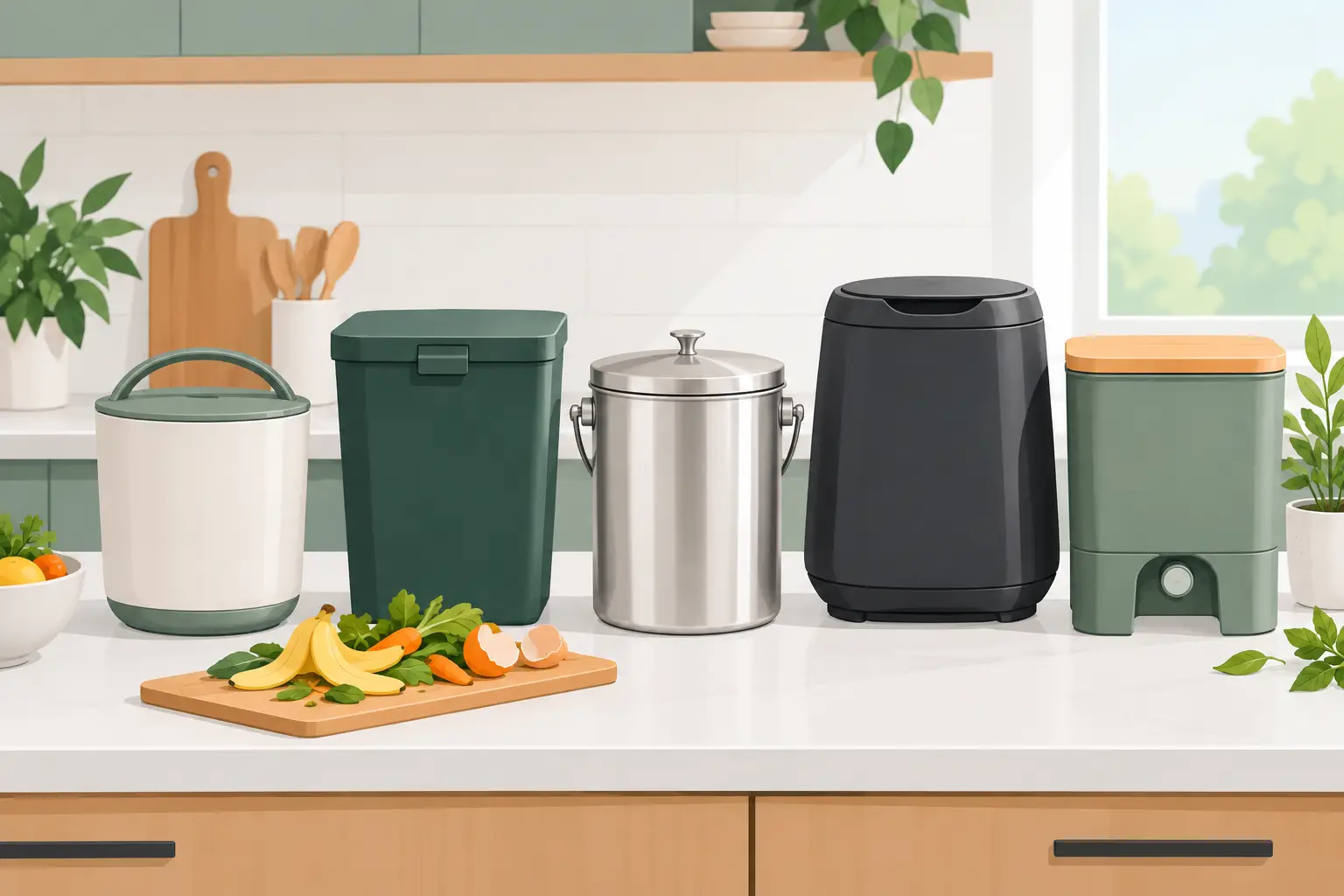
Best Kitchen Compost Bins by Home Setup
1. Best Overall: A 1.3-Gallon Stainless Steel Countertop Bin
A compact stainless steel bin with a snug lid is the most useful all-around choice for many households. It is large enough to hold a day or two of scraps for one or two people, yet small enough to sit near the cutting board without taking over the counter.
Look for a removable inner bucket and a handle. The removable bucket makes trips to an outdoor compost pile or curbside collection container less awkward, while stainless steel tends to resist stains and lingering smells better than thin plastic. A lid with a charcoal filter can help with odors, though it is not a substitute for emptying the bin regularly.
This option works especially well if you cook often and want composting to feel like one simple step in meal cleanup.
2. Best for Small Kitchens: A Slim Under-Sink Bin
If every inch of counter space already has a job, move compost collection behind a cabinet door. A slim plastic bin designed for under-sink storage keeps scraps close to the trash and recycling while leaving your work surface clear.
Measure before you buy. Under-sink cabinets often have plumbing pipes, a garbage disposal, cleaning supplies, or a pullout trash system competing for the same space. A narrow bin that hangs from the cabinet door or mounts to the inside wall can be a smart fix, but make sure the door still closes fully.
Choose a model with a secure lid and smooth interior corners. Compost bits that get trapped around rims and hinges are exactly the kind of small annoyance that can make a new routine disappear.
3. Best for Busy Families: A 2.5-Gallon Bin With a Lift-Out Liner
Families who cook at home usually need more capacity than a small countertop pail can offer. A 2- to 3-gallon bin reduces the number of trips outside while still being manageable to carry when full.
A rigid outer container with a lift-out liner is particularly helpful here. Kids and adults can scrape plates and add scraps without having to wrestle with a compostable bag each time. When it is full, lift the liner or inner bucket, empty it, rinse it, and reset the station.
The trade-off is footprint. This size is better on the floor of a pantry, in a utility area, or tucked beside a pullout trash cabinet than on a crowded counter. If your household produces lots of fruit peels, vegetable trimmings, and eggshells, that extra capacity is worth it.
4. Best for Odor Control: A Vented Bin With Charcoal Filters
A vented bin may sound counterintuitive, but airflow can help moisture evaporate and reduce the damp, sour conditions that create strong odors. These bins typically use a vented lid paired with replaceable charcoal filters.
This style is best for people who empty their bin every few days rather than every night. It is also a practical pick during warm weather, when food scraps can spoil faster. Still, no filter can fully cover up a bin that is too full or has been sitting for a week.
For less mess, line the bottom with a folded paper towel, a sheet of newspaper, or approved compostable paper. It absorbs moisture and makes cleanup easier. Check your local collection rules before adding any liner, since not every compost program accepts compostable bags.
5. Best for Apartments: A Freezer Compost Container
For apartment dwellers without an outdoor compost pile or daily curbside pickup, the freezer is often the calmest solution. A freezer-safe container holds scraps until you are ready to take them to a community drop-off site, farmers market collection, or shared building bin.
Freezing scraps stops odors and eliminates the fruit fly issue almost entirely. A rectangular container with a snap-on lid stacks more neatly than a round bucket, especially in a packed freezer. Keep it near frozen vegetables or ice packs so it becomes part of your normal kitchen flow.
The downside is remembering to bring it along when you leave. Some people solve this by keeping a small countertop cup for daily scraps, then transferring it to the freezer each evening. That two-step system is not for everyone, but it can be a good compromise in a tiny kitchen.
6. Best for Easy Cleanup: A Dishwasher-Safe Plastic Pail
A simple dishwasher-safe plastic pail is not glamorous, but it is often the most realistic choice for a busy home. It is lightweight, inexpensive, and easy to replace if it gets permanently stained or scratched.
Prioritize thick plastic, a tight lid, and a smooth shape with no deep grooves. A dishwasher-safe label matters only if the bin actually fits in your dishwasher, so check the dimensions before assuming cleanup will be effortless.
Plastic can hold onto smells over time more than stainless steel. Rinsing promptly and letting the bin dry completely between uses will help. If odors linger, a baking soda paste can freshen the interior without harsh cleaners.
7. Best for a Pullout Trash Cabinet: A Built-In Compost Caddy
If you are updating an existing pullout trash cabinet, a dedicated compost caddy keeps all waste sorting in one place. Many systems attach to the cabinet frame or sit beside the main trash can, making it easy to separate scraps while clearing plates.
This is one of the best kitchen compost bin options for people who dislike visible countertop containers. It also works well in kitchens where multiple people cook, because the compost spot is obvious and consistent.
Before committing, check the available width and height with the drawer fully closed. Also think about access: a bin that requires pulling out a heavy trash drawer every time you slice an apple may be less convenient than a small countertop container. The best setup is the one you will use without thinking about it.
8. Best for Meal Prep: A Wide-Mouth Countertop Bowl
For serious meal-prep days, a wide-mouth compost bowl makes chopping faster. You can sweep onion skins, herb stems, squash seeds, and carrot ends directly into it without pausing to open a lid.
Use this as a temporary prep tool rather than long-term storage. A ceramic or stainless steel bowl looks tidy on the counter and is easy to wash, but it will not contain odors overnight. At the end of cooking, transfer scraps to your lidded bin, outdoor compost pile, or freezer container.
This small addition is especially useful if composting feels inconvenient only during the busiest part of dinner prep. Removing that friction can make the habit stick.
What to Check Before You Buy
Capacity matters, but daily emptying habits matter more. A one-person household that takes compost out twice a week may need the same size bin as a family that empties it every evening. Start by noticing how much produce waste your kitchen creates over a few days.
Also consider where the bin will live. A countertop model should be compact, stable, and easy to open one-handed. An under-sink model needs enough clearance around plumbing. A freezer container should stack neatly and have a lid that will not pop off when frozen scraps expand.
Liners are another personal preference. Compostable bags can make emptying cleaner, but they add an ongoing cost and sometimes tear when wet. Going liner-free is cheaper and creates less waste, but it means rinsing the bin more often. There is no perfect answer here – choose the option that makes your household more likely to keep composting.
A Simple Routine That Keeps the Bin From Getting Gross
Keep the bin close to where scraps happen, not where you think it looks best. For most kitchens, that means beside the prep area, inside the trash cabinet, or under the sink. If the bin is across the room, scraps will end up in the trash when dinner is hectic.
Empty wet scraps every two to three days, or sooner in hot weather. Wipe the lid and rim when you rinse the container, since those areas collect the residue that causes smells. If fruit flies appear, move scraps to the freezer for a week while you clean the bin and reset the routine.
A compost bin does not need to be a picture-perfect kitchen accessory. It just needs to make one ordinary task easier. Pick the size and location that fit your real life, and those peels and grounds can leave your kitchen without adding one more source of clutter.