8 Best Refrigerator Drawer Organizers for 2026
A refrigerator drawer can turn into a cold, slippery catchall fast. Strawberries get crushed under cheese sticks, herbs disappear behind lunch meat, and the one lemon you need is somehow nowhere to be found. The best refrigerator drawer organizers create simple boundaries for the foods your household reaches for most, without making your fridge feel like a high-maintenance project.
The right choice depends on what you are trying to control. A family packing lunches needs snack bins that pull out quickly. A small apartment fridge may benefit more from a slim under-shelf drawer. And if produce is the problem, adjustable dividers often work better than another hard-sided bin that takes up valuable room.
This post contains affiliate links. As an Amazon Associate, I earn from qualifying purchases at no extra cost to you. See our full disclosure here.
| Product | Best For | Shop |
|---|---|---|
| Smart Design Pull-Out Drawer | Best Overall | Check Price |
| Fridge Divider 16-Pack | Produce Drawers | Check Price |
| COOLFUNLIFE Under-Shelf Drawer | Small Refrigerators | Check Price |
| Stackable Bins w/ Handles | Family Snacks | Check Price |
| Felli Deli Meat Containers | Deli Items | Check Price |
| JUMBL Rolling Storage Tray | Cans & Small Drinks | Check Price |
| HOME-X Narrow Condiment Bin | Cheese & Condiments | Check Price |
| ClearSpace Removable Dividers | Flexible Storage | Check Price |
What Makes a Refrigerator Organizer Worth Buying
Fridge organizers need to handle moisture, cold temperatures, and frequent wiping. Clear BPA-free plastic is a practical default because you can see what is inside before something becomes a science experiment. Look for smooth edges, sturdy handles, and a shape that lets you remove the organizer without unloading the whole shelf.
Measure first, especially for pull-out drawers. Record the usable width, depth, and height of the shelf, including the space under the shelf above it. Refrigerator interiors taper, shelf lips take up room, and a bin that technically fits can still block a crisper drawer from opening.
It also helps to organize by routine instead of copying a picture-perfect fridge. Put breakfast items together if mornings are hectic. Keep lunch components in one zone if several people pack meals. The goal is less searching, not a color-coded system you have to constantly reset.
8 Best Refrigerator Drawer Organizers
1. Best overall: Clear pull-out refrigerator bins
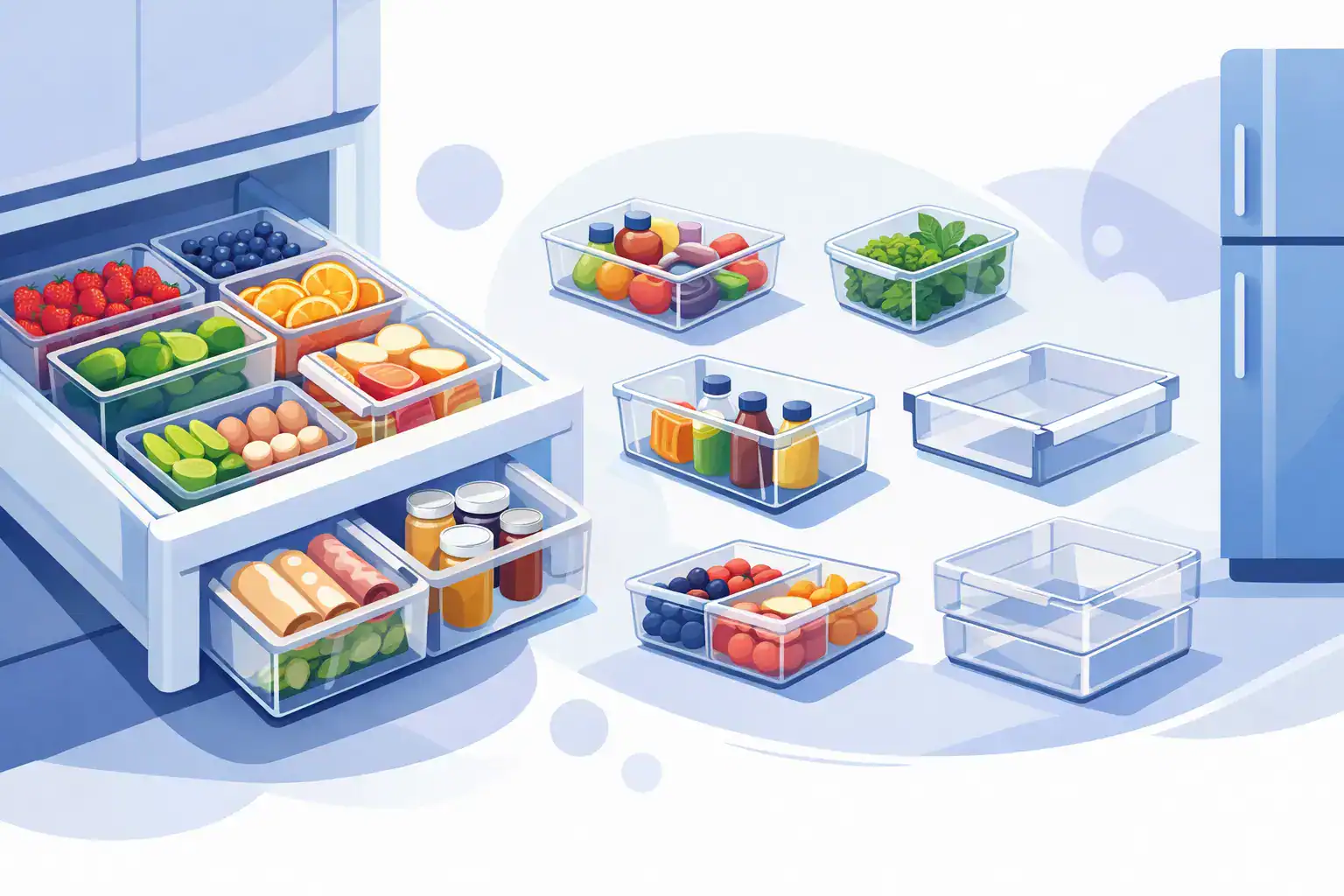
Clear pull-out bins are the most useful starting point for most refrigerators. They create the convenience of a drawer on a standard shelf, making yogurt, drink pouches, deli meat, or individually wrapped snacks easy to reach from the front. Choose a medium-depth bin with an integrated handle and solid sides rather than a flimsy open basket.
They work especially well on eye-level shelves where food tends to get pushed backward. The trade-off is that they use a little vertical space and can make sense only if the shelf has enough clearance above them.
2. Best for produce drawers: Adjustable crisper dividers
If your crisper drawer holds a mix of apples, peppers, herbs, and loose citrus, adjustable dividers are often a better answer than separate containers. They divide one large drawer into flexible sections while preserving airflow and letting you change the layout with your grocery routine.
Look for dividers with non-slip ends that extend to fit your drawer. Use one section for delicate produce and another for sturdier items. Skip tight compartments for large heads of lettuce or bulky produce bags, since crowding can bruise food and make the drawer harder to clean.
3. Best for small refrigerators: Under-shelf hanging drawers
An under-shelf drawer clips or slides beneath an existing refrigerator shelf, turning unused vertical space into a shallow storage spot. It is a smart choice for renters, dorm residents, and anyone with a compact top-freezer fridge. These drawers are particularly handy for cheese slices, tortillas, snack bars, or small condiment packets.
Check the thickness and style of your shelf before ordering. Some versions only work on thin, flat glass shelves, and a full drawer can make it harder to lift the shelf for cleaning.
4. Best for family snacks: Wide handled fridge bins
A wide handled bin is less about creating a literal drawer and more about giving a category one easy-to-grab home. Label it “snacks,” “after school,” or “lunches,” then fill it with options that are ready to eat. When the bin is empty, you know exactly what to add to the grocery list.
For busy households, this is one of the simplest systems to maintain because the whole category comes out at once. Choose a low-sided style for younger kids or a deeper bin if you store drinkable yogurt, fruit cups, and cheese sticks together.
5. Best for deli items: Shallow stackable trays
Deli meat, sliced cheese, and bacon packages create flat stacks that are easy to lose under taller containers. Shallow stackable trays keep these packages contained without wasting the full height of a shelf. They are also useful for leftovers in low containers and grab-and-go breakfast items.
Use no more than two stacked trays unless your refrigerator is unusually tall. A tower of organizers may look tidy, but it adds an extra step every time someone wants a sandwich.
6. Best for cans and small drinks: Rolling refrigerator drawers
Rolling drawers keep small cans, mini sparkling waters, and kids’ drink boxes from scattering across a shelf. The front rolls or pulls forward so you can reach the back row, which means fewer forgotten drinks and less reshuffling. This option is most useful for a dedicated beverage shelf.
Make sure the drawer has a stable base and enough clearance to move when loaded. It is not the best pick for heavy glass bottles, which can strain lightweight plastic tracks and take up space more efficiently stored upright.
7. Best for cheese and condiment packets: Slim narrow bins
Slim bins solve the awkward gaps between larger containers. Use one for cheese sticks, sauce packets, butter portions, or squeeze pouches. A narrow bin can also create a designated “use first” area for half-used ingredients that might otherwise linger behind the milk.
These organizers are inexpensive and easy to move around, but they are best used as supporting players. Buying several before you decide on your larger fridge zones can leave you with a collection of tiny containers that do not fit your actual food.
8. Best for flexible storage: Removable bin inserts
Removable inserts fit inside a bigger refrigerator drawer or shelf bin and create smaller categories without locking you into one layout. They are helpful for separating baby food, school snacks, produce, or different types of meal-prep ingredients. When your needs change, simply lift out an insert instead of replacing the whole system.
Look for inserts with rounded corners and enough depth to stay put. This setup is ideal for people who shop differently from week to week and do not want every inch of the fridge permanently assigned.
How to Choose the Right Size and Style
Before shopping, empty the problem area and take a quick inventory. If the issue is food getting buried at the back of a shelf, choose a pull-out bin. If the issue is a messy crisper, choose dividers or small inserts. If you are short on shelf space, an under-shelf drawer may create room without adding a single new shelf.
Avoid filling every open space with plastic. Refrigerators need airflow, and a packed shelf can make food harder to see and reach. Leave a little room around tall containers and use organizers only where they solve a repeat problem.
Clear organizers are easiest for visibility, while frosted or white bins can look calmer but require labels. If you use labels, keep them broad: “snacks,” “deli,” “breakfast,” and “use first” are easier to maintain than overly specific labels that stop matching your groceries.
A Simple Setup That Actually Stays Organized
Start with one shelf and one drawer rather than reorganizing the entire refrigerator in an afternoon. Give your most-used category the most convenient spot, then create one small use-first bin for open packages and foods nearing their best-by date. That one habit can cut down on both clutter and food waste.
Wash refrigerator organizers by hand with warm, soapy water unless the manufacturer specifically says they are dishwasher-safe. Dry them fully before putting them back, since trapped moisture can make crumbs stick and encourage produce to spoil faster.
You do not need a perfectly matched set to make your fridge easier to use. Start with the drawer or shelf that causes the most daily frustration, choose an organizer that fits the food you actually buy, and let that small improvement make the next grocery day calmer.
About The Storage Society
We’re passionate about turning cluttered spaces into calm, functional ones — one room at a time. Every product we recommend is researched for real usefulness, not just trends. Read more on our About page.