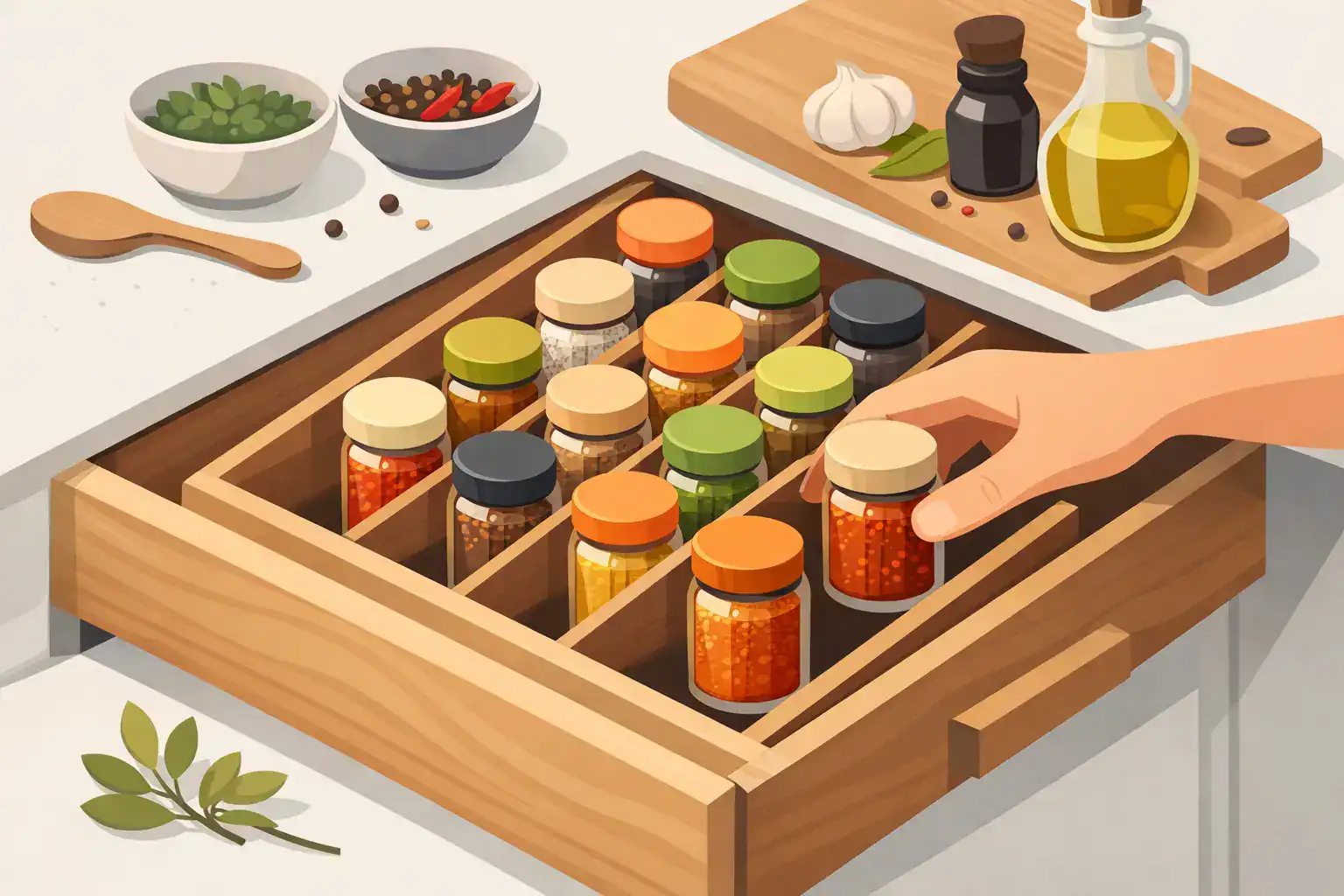
How to Organize a Spice Drawer That Stays Tidy
Organize a spice drawer well, and the payoff is immediate: no more digging past six jars to find cumin while everything else tips over. Then every jar seems to be facing the wrong direction, paprika has rolled behind the drawer track, and you somehow own three nearly empty containers of oregano. Learning how to organize spice drawer storage is less about creating a picture-perfect kitchen and more about making dinner prep feel less chaotic. That’s really what it means to organize a spice drawer well — a system that holds up on busy weeknights, not just picture day.
The best setup is one you can maintain while cooking with one hand, putting groceries away in a hurry, and living in a real home. You do not need matching jars, a complete pantry makeover, or a huge drawer. You need a layout that lets you see what you have and put it back without thinking too hard.
This post contains affiliate links. As an Amazon Associate, I earn from qualifying purchases at no extra cost to you. See our full disclosure here.
Start by Emptying the Drawer
Take every spice, seasoning blend, and extract out of the drawer. It is tempting to organize around the jars, but you cannot see the real problem until the space is empty. Wipe out crumbs and powder residue, then check the drawer’s usable width, depth, and height before ordering any organizer.
As you sort, group duplicates together. Combine partial jars only when the spices are the same brand or clearly have the same texture and freshness. If one container has been open for years and smells faint or dusty, it is probably not helping your cooking anymore.
Spices do not necessarily become unsafe the minute they pass a date, but they do lose flavor over time. Give dried herbs, ground spices, and blends a quick smell test. If the aroma is weak, replace it when you are ready rather than letting it take up valuable drawer space.
This is also a good time to separate spices from items that do not belong there. Measuring spoons, sauce packets, tea bags, and random kitchen gadgets can quickly turn a useful drawer into a catchall. If the drawer has to do double duty, give spices a clearly defined zone instead of letting everything mingle.
Choose the Right Way to Organize a Spice Drawer
There is no single best spice drawer organizer. The right choice depends on your drawer depth, your collection, and how you cook. The practical goal is simple: labels should be easy to read, jars should not roll, and you should be able to remove one spice without disturbing the rest.
For shallow drawers, use angled tiered inserts
Angled spice drawer inserts hold jars at a slight tilt, usually with labels facing upward. They are a strong option for standard spice bottles because you can scan names quickly. Look for expandable or adjustable styles if your drawer width is unusual, which is common in apartments and older kitchens.
Measure carefully before buying. A tiered insert that is even slightly too tall can scrape the drawer above it or stop the drawer from closing. Also check whether your spice jars are round, square, tall, or short. A rack designed for small round bottles may not hold oversized seasoning blends securely.
For deep drawers, store jars label-up in rows
If your drawer has enough depth, simple drawer bins or low-sided dividers may work better than a rack. Arrange jars in neat rows with the top labels facing up. This approach is flexible because you can make a section for everyday spices, another for baking extracts, and another for larger seasoning containers.
The trade-off is that rows can become messy if the bins are too wide. Choose narrow enough sections that bottles stay upright and do not slide into a pile each time the drawer opens. A non-slip liner underneath can make a noticeable difference, especially in a drawer that gets opened quickly during busy meals.
For a small collection, keep it simple
If you use fewer than 15 spices, you may not need an insert at all. A non-slip liner and one small bin for packets or tiny jars can be enough. Adding a large organizer to a lightly used drawer can waste space and make the system feel more complicated than it needs to be.
On the other hand, if you cook often, buy spices in bulk, or use several seasoning blends, dividing the drawer is worth it. The system should match your habits, not an idealized version of your kitchen.
Sort Spices by How You Actually Cook
Once you organize a spice drawer by zone instead of alphabet, everyday cooking gets noticeably faster.Alphabetical order looks orderly, and it works well for people who own a large collection and regularly follow recipes. But it is not always the fastest method for everyday cooking. Think about what you reach for most often.
A useful setup places everyday favorites at the front or closest edge of the drawer. Salt, pepper, garlic powder, onion powder, cinnamon, chili powder, and Italian seasoning might belong here, depending on your household. Put occasional spices, specialty blends, and holiday baking ingredients farther back.
You can also create small cooking categories. Keep taco night seasonings together, place baking spices in one section, and group barbecue rubs or grilling blends in another. This makes sense for busy families because you can grab a few related spices at once instead of searching through the entire drawer.
Avoid over-categorizing. If you need to remember six detailed zones just to put away turmeric, the system will probably fall apart. Two to four broad sections are usually plenty.
Make Every Label Easy to Read
The quickest way to improve a spice drawer is to make identification easy from above. If jars already have labels on the lid, arrange them so the text faces the same direction. For side-labeled bottles, add a small label to each lid with the spice name.
You do not have to decant every spice into matching containers. Decanting can look tidy, but it takes time, costs money, and creates another task when groceries come home. It is most useful when your current jars are mismatched in size, hard to read, or too tall for your organizer.
If you do transfer spices, use airtight jars that fit your drawer and label both the lid and the side. Keep the original packaging until you have copied over the expiration date or purchase date. This small step prevents mystery jars from lingering in the back of the drawer.
For a lower-effort option, use uniform lid labels on your existing bottles. Consistent lettering makes a mixed collection feel organized without requiring a full jar replacement project.
Create a Simple Restock and Reset Routine
A well-organized spice drawer stays useful because it has an easy maintenance plan. When you put groceries away, place new spices directly into their assigned section. Before buying a refill, check the drawer first. That one habit can prevent the duplicate jar problem from returning.
Every few months, take two minutes to straighten the rows, wipe up loose seasoning, and move nearly empty jars to the front. You do not need to empty the entire drawer each time. A quick reset is enough to keep labels visible and stop containers from drifting between categories.
If more than one person cooks in your home, make the setup obvious. Clear labels and broad sections work better than a system only one person understands. The goal is not to keep everyone from touching the drawer. It is to make putting things back the easy choice.
Common Spice Drawer Mistakes to Avoid
The most common mistake is choosing an organizer before measuring the drawer and the jars. Another is storing spices in a tall stack, where the one you need is always underneath something else. Keep bottles in a single visible layer whenever possible.
It also helps to avoid saving every half-used spice just because it might come in handy someday. A crowded drawer makes it harder to use the seasonings you genuinely enjoy. Keep your reliable staples, your favorite blends, and a reasonable number of specialty items, then let the rest earn their space.
How to Organize a Spice Drawer That Stays Tidy for Good
A spice drawer should make cooking feel more approachable, not give you another household standard to maintain. Set it up around the meals you make, leave room for a few new favorites, and give yourself permission to adjust it after a week of real use.
About The Storage Society
We’re passionate about turning cluttered spaces into calm, functional ones — one room at a time. Every product we recommend is researched for real usefulness, not just trends. Read more on our About page.

One Comment
Comments are closed.