How to Declutter Toys Without Family Drama: 7 Genius Tips
The toy bin is overflowing, the living room floor has disappeared, and somehow the one toy your child wants is always at the very bottom. If you are wondering how to declutter toys without turning a Saturday into a battle, start by lowering the stakes. The goal is not a picture-perfect playroom or a childhood with fewer joyful things. It is a home where toys are easier to find, put away, and actually enjoy.
A realistic toy reset makes daily cleanup faster and reveals what your child truly uses. It also prevents the common cycle of buying another storage bin, filling it immediately, and still dealing with clutter two weeks later. That’s the real win when you learn how to declutter toys — less fighting, more playing.
This post contains affiliate links. As an Amazon Associate, I earn from qualifying purchases at no extra cost to you. See our full disclosure here.
| Product | Best For | Shop |
|---|---|---|
| Square Fabric Storage Basket | Larger Toy Categories | Check Price |
| Zilpoo 4-Pack Stackable Bins | Small Sets | Check Price |
| Bins & Things LEGO Organizer | Tiny Pieces | Check Price |
| Humble Crew Toy Organizer w/ Shelf | Puzzles & Games | Check Price |
| MyPerfectClassroom Label Bins | Toy Rotation Storage | Check Price |
Start Small Before You Pull Everything Out
Avoid dumping every toy from every room onto the floor unless you have plenty of time, energy, and a plan to finish. A giant pile can overwhelm adults and kids alike. Pick one contained category instead: stuffed animals, building toys, art supplies, toy cars, or games.
Start with the category causing the most friction. If getting dressed involves digging through a mountain of costumes, begin there. If you step on tiny pieces every evening, tackle the small building sets. Solving one daily annoyance creates momentum and gives you a system you can repeat.
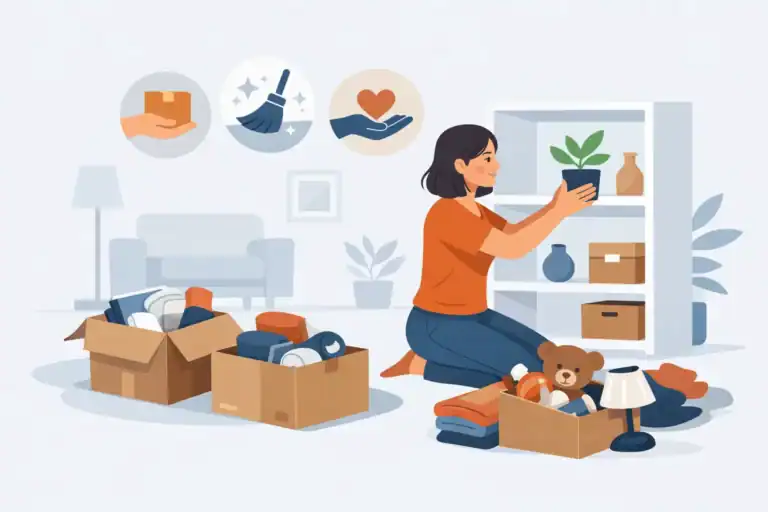
Set out four clearly labeled destinations: keep, donate, recycle or trash, and belongs somewhere else. A laundry basket, cardboard box, and trash bag work fine. You do not need matching bins to make a decision.
How to Declutter Toys With a Simple Sorting Filter
For each item, ask a few honest questions. Has it been used in the last few months? Is it complete and working? Does it fit your child’s current interests and abilities? Would they notice if it disappeared?
Some toys deserve more patience than others. A favorite stuffed animal with a worn ear may have more value than an expensive toy that has not been touched in a year. Sentimental items count, but they need a boundary. Keep a small memory bin for truly meaningful toys rather than letting every outgrown item become a keepsake.
Broken toys, dried-up markers, puzzle boxes with too many missing pieces, and mystery plastic parts are usually the easiest decisions. Remove those first. This quick win reduces visual clutter and makes the harder choices clearer.
Be thoughtful about toys that are temporarily out of favor. Kids often return to open-ended options such as magnetic tiles, blocks, pretend food, dolls, and train tracks. A toy does not have to be played with every week to earn its place. The better question is whether it still has a realistic role in your household.
Include Kids, but Do Not Hand Them Every Decision
Children can participate in decluttering, especially when they have some control over their own space. But asking a young child to choose between every single toy can make the process exhausting. Give limited, concrete choices instead.
Try saying, “We have room for six stuffed animals on this shelf. Which six should live here?” Or, “Let’s find five toys you think another kid would be excited to get.” A visible limit is much easier to understand than a vague request to get rid of things.
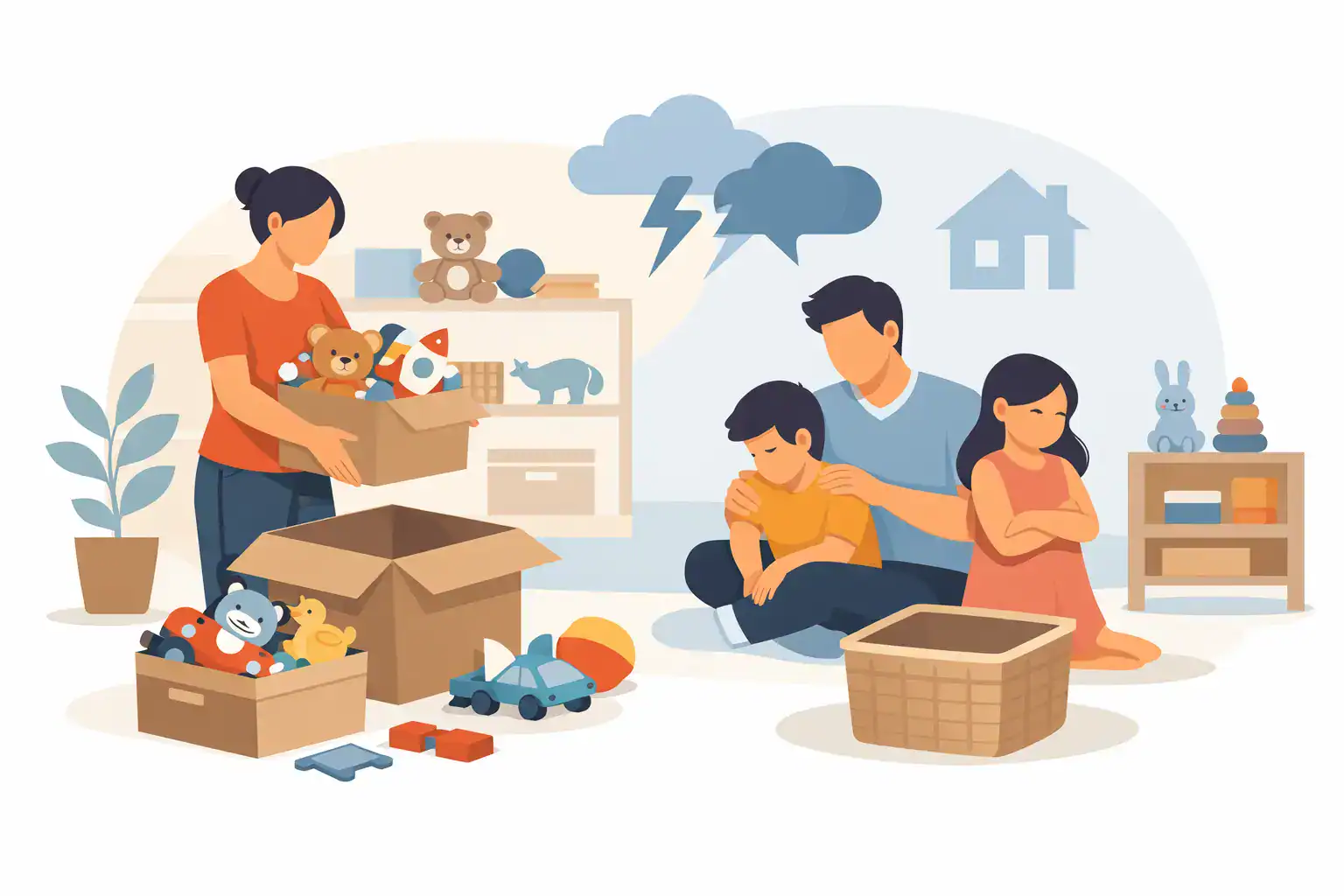
For toddlers and preschoolers, sort while they are occupied or out of the room, then involve them in putting the keepers back. There is no need to ask permission to discard broken party favors or incomplete dollar-store trinkets. For older kids, be more collaborative, particularly with collections, craft supplies, and gifts from relatives.
Do not donate a beloved toy behind a child’s back just because it looks messy or inconvenient. That can damage trust and make future decluttering harder. If an item is meaningful but takes up too much room, look for a compromise: display one special model, save a few favorite creations in a photo album, or store a limited collection in one designated container.
Keep by Category, Not by Room
Toy clutter spreads because categories get split across the house. Blocks live in the playroom, bedrooms, and under the couch. Art supplies are in a desk drawer, a backpack, and three kitchen cabinets. Before organizing what remains, gather each category into one place.
Then assign it a home based on where it is used most. Board games may belong near the dining table. Outdoor toys should stay close to the garage, mudroom, or patio door. A small basket of quiet toys can live in the living room, while the bulk of the collection stays in a bedroom or play area.
This is also the moment to stop storing toys where they are hardest to put away. If the toy chest requires lifting a heavy lid and digging through layers of stuff, kids will avoid it. If all the craft supplies share one deep, unsorted bin, cleanup will be frustrating for everyone.
Use Storage That Makes Cleanup Obvious
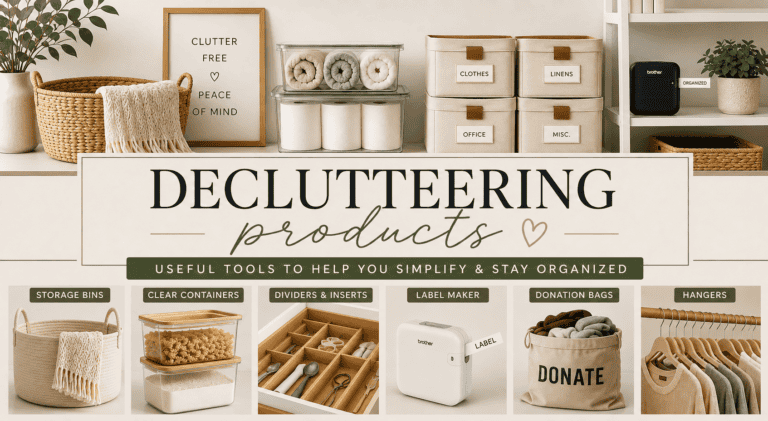
The best toy storage is not always the prettiest option. It is the option your household can use consistently. Choose containers that match the size and type of toy, and make the system easy enough for the youngest regular user.
Open bins work well for larger categories like dolls, dress-up clothes, vehicles, and chunky blocks. Clear containers help with small sets, especially if children need to see what is inside. Shallow drawers or divided organizers are better for tiny pieces than one large catch-all bin. Shelves are useful for puzzles, games, and activity kits because boxes can stay upright and visible.
Labels reduce the number of times you have to explain where something goes. For pre-readers, add a simple photo or picture label. Keep labels broad enough to be practical. “Building toys” is easier to maintain than separate bins for every color or brand of brick.
Before buying more organizers, measure the available shelf, closet, or under-bed space. Storage products can contain clutter, but they cannot solve an oversized collection. If you need multiple new bins just to hold everything, declutter a little more first.
Create Limits That Prevent a Fast Refill
Decluttering works best when your space has a natural stopping point. A shelf, cube organizer, drawer, or single toy cabinet creates a physical limit: when it is full, something needs to leave before more comes in.
Use a one-in, one-out rule for categories that multiply quickly, such as stuffed animals, toy cars, and collectible figures. It does not need to be strict for every birthday or holiday, but it gives your family a simple reset after a big influx of gifts.
A toy rotation can help if you have a lot of quality toys but limited room. Keep a manageable number available and store the rest in a clearly labeled closet bin. Every few weeks, swap a few items. The toys feel fresh without adding anything new to the house. Rotation is helpful for younger children, but it is not mandatory. Some families prefer seeing everything they own, especially when kids are old enough to choose independent activities.
For gifts, make a plan before celebrations whenever possible. Share a wish list with relatives, suggest experience gifts, or ask for consumable supplies such as coloring books, sidewalk chalk, and bubble solution. You cannot control every gift, but setting expectations early can reduce the after-holiday pileup.
Make Resetting Part of the Routine
A decluttered toy area will not stay that way without a simple maintenance habit. The good news is that the daily reset should take minutes, not an hour. Aim for one cleanup before dinner, bedtime, or screen time, depending on when your household has the most cooperation.
Start with a short timer. A five-minute reset is less intimidating than asking kids to “clean the whole room.” Put away one category at a time, and keep the instruction specific: cars in the blue bin, books on the shelf, costumes in the basket.
Once a month, take a quick look at what has accumulated. Remove broken items, return toys that drifted into other rooms, and check whether a bin has become too full. Regular small edits are much easier than another overwhelming weekend purge.
A calmer home does not require fewer toys than everyone else. It requires a collection that fits your space, your child, and the way your family actually lives. Start with one bin today, make room for what gets used, and let the rest find a better next home. However you start, the goal of learning how to declutter toys is a home that works for your family, not a magazine photo.
About The Storage Society
We’re passionate about turning cluttered spaces into calm, functional ones — one room at a time. Every product we recommend is researched for real usefulness, not just trends. Read more on our About page.