12 Genius Under Sink Storage Ideas That Really Work
The cabinet under the sink is where useful things go to disappear. Spray bottles tip over, extra sponges get buried behind drain pipes, and a trash bag box somehow takes up half the space. These under sink storage ideas are built for real cabinets with awkward plumbing, limited room, and supplies you need to grab without digging.
The goal is not to make the area look like a showroom. It is to give every everyday item a workable home, so cleaning up after dinner or finding a fresh bathroom cloth takes a few seconds instead of a frustrating search.
This post contains affiliate links. As an Amazon Associate, I earn from qualifying purchases at no extra cost to you. See our full disclosure here.
Start With the Cabinet You Actually Have
Before buying bins or organizers, empty the cabinet and take a quick look at what is using the space. Note where the drainpipe runs, how much clearance you have under it, and whether there is a disposal, water filter, or shutoff valve in the way. Those details determine which storage tools will help and which will become one more thing to wrestle with.
Wipe the cabinet down, check for slow leaks, and consider adding a waterproof cabinet liner. A simple liner will not prevent a plumbing problem, but it makes small drips easier to spot and protects the cabinet base from routine spills.
Then sort what you pulled out. Keep only products used in that room or for nearby tasks. The kitchen sink cabinet does not need a full backup supply of every cleaner in the house, and the bathroom cabinet rarely needs six half-empty bottles. Move bulk refills and rarely used supplies to a utility closet, laundry area, or higher shelf.
Under Sink Storage Ideas for Awkward Plumbing
1. Use a two-tier pull-out organizer
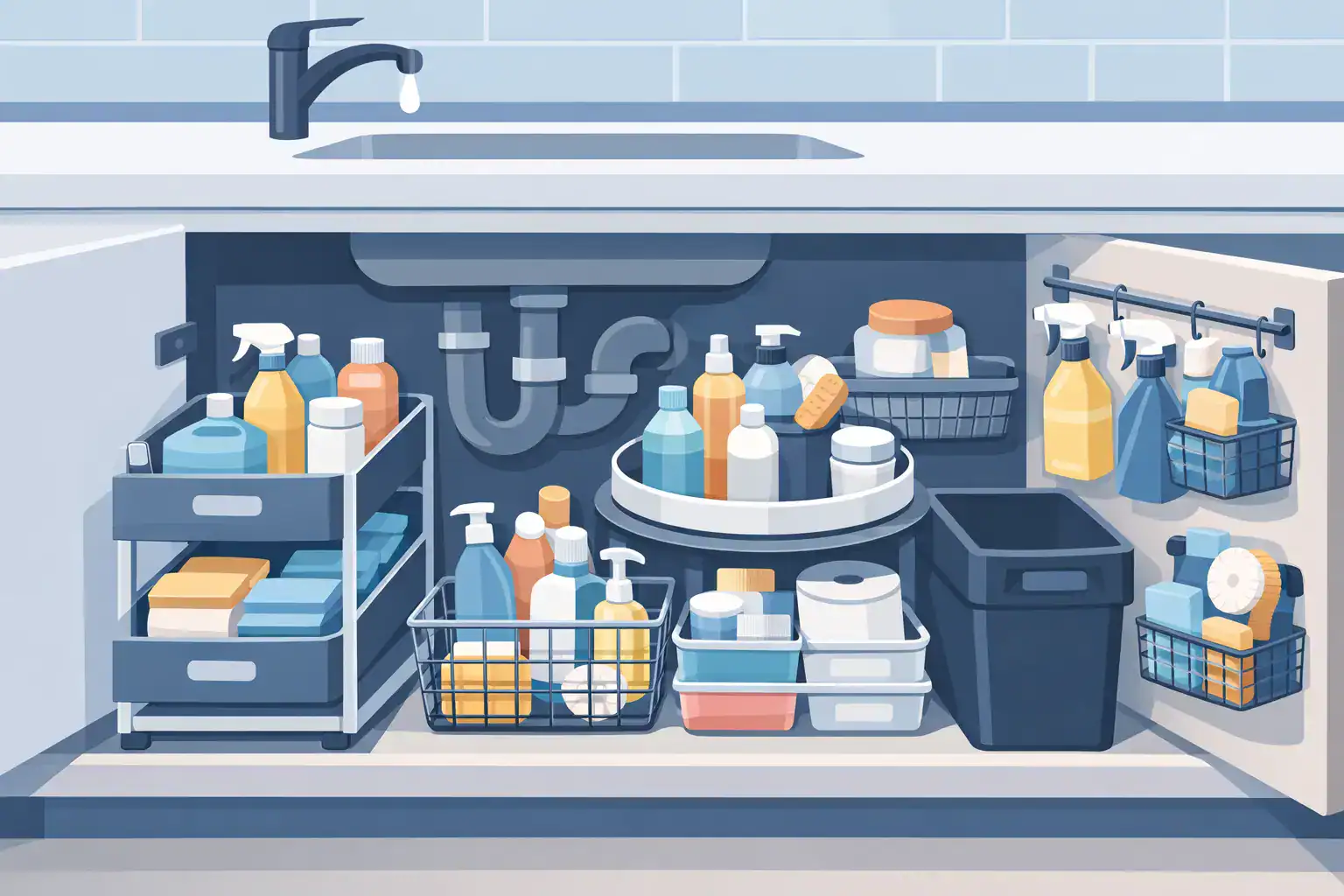
A two-tier pull-out organizer is one of the most practical fixes for a deep cabinet, especially when bottles collect in a hard-to-reach back corner. Look for a model with a narrow top shelf that can sit around or below plumbing, plus a deeper bottom drawer for taller items.
This option works best when your pipes leave open space on one side. Measure carefully before ordering. A pull-out system can be a game changer, but only if the drawer clears the pipe and the cabinet door can close fully.
2. Choose clear bins with handles
For cabinets with too many obstructions for a drawer system, clear handled bins are the simpler choice. Assign one bin to dishwashing supplies and another to cleaning products, then pull the whole bin forward when you need something from the back.
Avoid oversized bins that turn into catch-alls. Narrow bins are easier to lift around pipes, easier to clean, and less likely to hide expired or duplicate products. Clear plastic also lets you see when you are down to your last dishwasher tablet or scrubber refill.
3. Add a tension rod for spray bottles
A tension rod placed near the top of the cabinet gives spray bottles a place to hang by their triggers. It frees the cabinet floor for bins, wipes, or a small basket of sponges, and it stops bottles from falling over each time you open the door.
This is an inexpensive solution, but it depends on the cabinet walls being solid enough to support the rod. Test the fit before hanging several heavy bottles. In a bathroom, it is especially useful for daily shower cleaner, glass cleaner, and disinfecting spray.
4. Mount a slim door rack
The inside of the cabinet door is valuable space, but it should be used thoughtfully. A slim rack or adhesive caddy can hold sponges, gloves, small brushes, or a bottle of dish soap. It is less ideal for heavy bottles that may pull on the mounting strip or bump into cabinet contents when the door closes.
Check the depth first. Close the door gently with the empty rack installed to make sure it will not hit the plumbing or bins. Renters may prefer removable adhesive organizers, while homeowners can use screw-mounted racks for a more secure hold.
5. Put trash bags in a dispenser
A loose box of trash bags is a common space hog under the kitchen sink. A wall-mounted bag dispenser or a narrow vertical container keeps rolls contained and makes it easier to pull out one bag at a time.
If you use a pull-out trash can, install the dispenser on the cabinet wall above it, as long as it does not interfere with the trash frame. This tiny adjustment can reclaim more room than a large organizer because it gets a bulky cardboard box off the cabinet floor.
6. Store dishwasher pods in a sealed container
Bulky packaging is not always easy to stack under a sink. Transfer dishwasher pods to a sealed, clearly labeled container that fits the available height and depth. Choose one with a wide opening so you can grab a pod with wet or hurried hands.
Keep pods away from small children and pets, and use a container with a secure lid if they could access the cabinet. In homes with young kids, a cabinet lock matters more than an attractive container.
Make a Kitchen Sink Cabinet Work Harder
Kitchen cabinets usually need to store more categories than bathroom cabinets: dish soap, sponges, brushes, dishwasher supplies, trash bags, cleaning sprays, and sometimes recycling bags. The easiest way to avoid clutter is to create zones instead of trying to stack everything together.
Keep daily dishwashing supplies closest to the door. Reserve one side for cleaning products, preferably in a handled bin, and use the back area for supplies you do not reach for every day. If your cabinet has a garbage disposal or a large drain assembly, work around it rather than forcing a symmetrical system that wastes usable space.
7. Corral sink tools in a small caddy
A compact plastic or stainless steel caddy keeps scrub brushes, bottle brushes, sink stoppers, and spare sponges together. This is especially helpful if several people clean up in the same kitchen and tend to put tools back in different places.
Choose a caddy that is easy to rinse out. Damp items can leave residue on the cabinet base, so avoid fabric containers under the sink unless they have a washable liner.
8. Use a narrow rolling cart only when it fits
A skinny rolling cart can be useful in a wide cabinet with plumbing pushed toward the back, but it is not a universal answer. Wheels add convenience in a deep space, yet they also take up height and can snag on uneven cabinet bottoms.
If the cart rolls smoothly and clears the pipes, use it for bottles or refills. If not, handled bins will usually be less annoying day to day.
Bathroom Under Sink Storage Ideas That Stay Tidy
Bathroom sink cabinets often have less room but need a cleaner mix of products. Keep daily skincare and dental backups separate from cleaning supplies whenever possible. Nobody wants to search through toilet cleaner to find floss.
9. Divide products by routine
Use small bins or drawer-style organizers to separate hair products, dental care, first-aid basics, and cleaning supplies. Labeling is helpful when a cabinet is shared, but the labels can stay simple: “hair,” “teeth,” “cleaning,” and “backups” are enough.
This system also makes restocking less wasteful. You can see exactly what is low instead of buying another bottle because the old one got lost behind a pipe.
10. Add stackable drawers for small items
Stackable clear drawers work well for travel-size products, contact lens supplies, razors, and extra toothpaste. Unlike an open basket, a drawer keeps small items from scattering while still letting you use vertical space.
Use drawers only in the open areas of the cabinet. Trying to build a tall stack under the drainpipe usually creates a system that has to be dismantled whenever you need one item.
11. Keep a small cleaning bin ready
A grab-and-go bathroom cleaning bin makes quick resets easier. Include the few products you actually use: an all-purpose bathroom spray, microfiber cloth, toilet cleaner, and gloves. If the cabinet is too small, keep the bin in a nearby linen closet instead.
The point is to reduce the number of separate items you have to gather before cleaning. A practical system should make a five-minute wipe-down feel possible on a busy weeknight.
12. Leave room for plumbing access
The best organizer is still the one you can move easily when there is a leak or a repair. Do not pack every inch of the cabinet. Leave a clear path to shutoff valves and avoid permanently attaching organizers directly in front of plumbing connections.
That empty-looking strip of space may not feel productive, but it is functional. It prevents a small maintenance issue from turning into a full cabinet clear-out.
A Simple Rule for Keeping It Organized
Once the cabinet is set up, keep it that way by giving new products a limit. When a bin is full, use up what is already there before adding more. If a product does not fit in its assigned zone, it belongs in bulk storage somewhere else, not wedged beside the drainpipe.
Revisit the cabinet every few months, especially after a big cleaning-supply sale or a change in household routines. A few realistic under sink storage ideas can make this overlooked cabinet feel calmer, but the real win is opening the door and finding exactly what you need without moving five other things first.
About The Storage Society
We’re passionate about turning cluttered spaces into calm, functional ones — one room at a time. Every product we recommend is researched for real usefulness, not just trends. Read more on our About page.

3 Comments
Comments are closed.