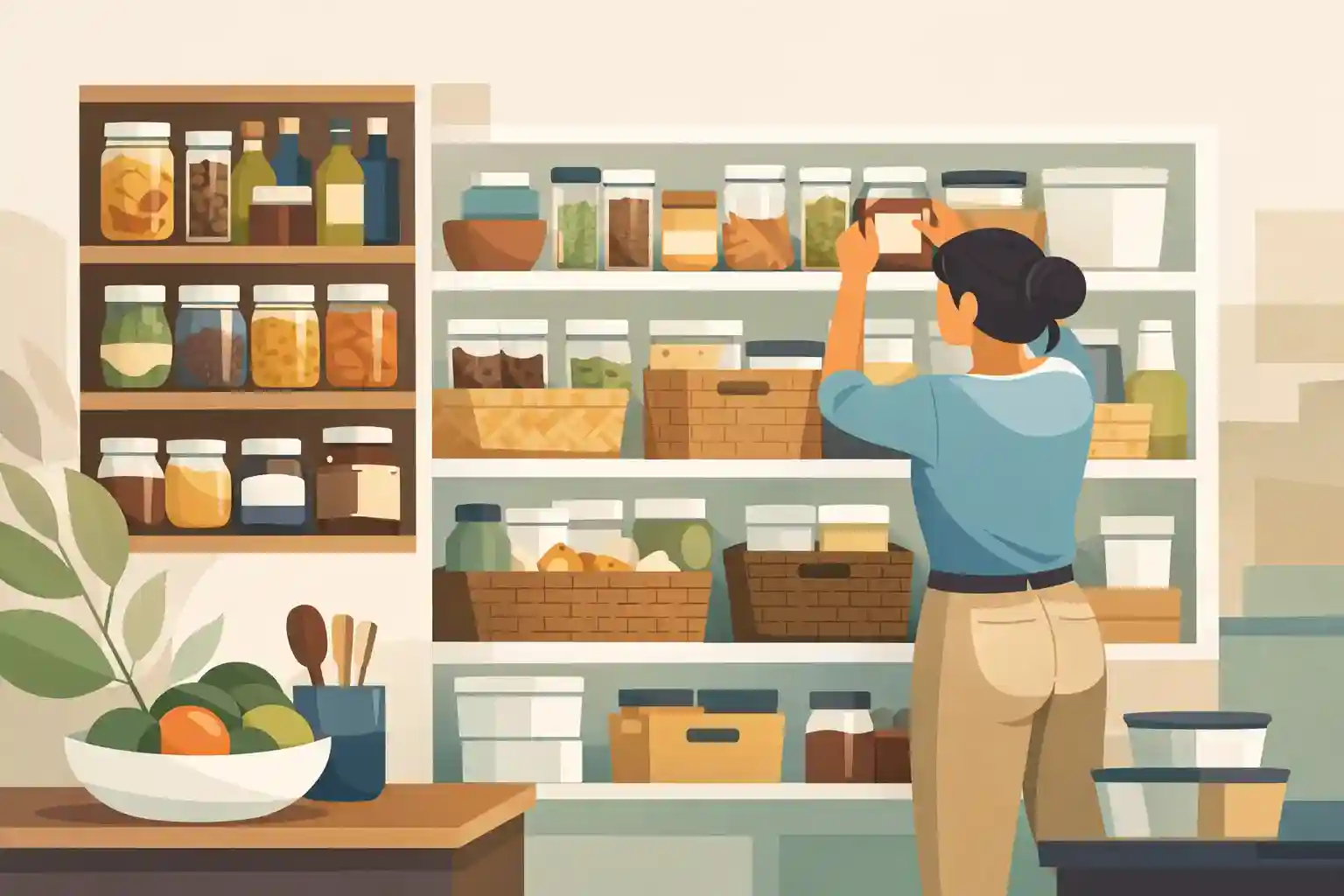
7 Simple Steps to Organize Pantry Shelves That Stay Tidy
A pantry can look fine from the doorway and still make every dinner feel harder. You reach for pasta, find three half-empty boxes, knock over a bag of rice, and realize the snack shelf has become a pile. Learning how to organize pantry shelves is less about making everything match and more about giving the groceries you actually use a dependable place to land. That’s the real goal when you organize pantry shelves — not a styled photo, but a system your household will actually keep using.
The most useful pantry systems are built for real life: rushed school mornings, grocery runs with duplicate purchases, kids grabbing snacks, and the occasional week when nobody has time to decant flour into pretty containers. Start with function, then add storage tools only where they solve a specific problem.
This post contains affiliate links. As an Amazon Associate, I earn from qualifying purchases at no extra cost to you. See our full disclosure here.
Start by seeing what your shelves need
Before buying bins or labels, take everything off one shelf at a time. This keeps the project from turning into a kitchen-wide mess and helps you notice what is hiding in the back. Check expiration dates, toss stale items, and set aside unopened food you know your household will not use.
As you sort, pay attention to the friction points. Maybe canned goods slide into a jumble. Maybe breakfast foods are spread across three shelves. Maybe tall oil bottles waste the space above them. Those details should shape your setup more than a photo of a perfectly styled pantry ever could.
Wipe the empty shelf, then measure its width, depth, and vertical clearance. A bin that is too deep can make food harder to reach, while a shelf riser that is too tall may leave you unable to use the shelf above it. Measurements are a small step that prevents a frustrating return later.
How to organize pantry shelves by zone
Think of a pantry as a small grocery store arranged around your household’s habits. Put the foods you use most often between waist and eye level, where they are easiest to grab. Less-used items, backstock, and specialty baking supplies can live higher up or lower down.
Create broad zones first, rather than assigning every item its own tiny category. A practical setup might include these four areas:
- Breakfast foods, such as cereal, oatmeal, coffee, and pancake mix
- Everyday cooking staples, including pasta, grains, sauces, canned goods, and oils
- Snacks and lunch items that can be grabbed quickly
- Baking supplies, treats, and occasional-use ingredients
You may also need zones for pet food, baby supplies, allergy-friendly foods, or bulk purchases. The right categories depend on what comes through your kitchen every week. If your family eats lots of quick breakfasts, that zone deserves premium shelf space. If you bake twice a year, flour and sprinkles do not need the easiest-to-reach spot.
Keep each zone contained to one area whenever possible. When pasta is on one shelf, sauces on another, and grated cheese crackers mixed with baking supplies, the pantry feels packed even when it is not. Grouping like items makes it easier to see what you have before adding another box to the cart.
Use the right tool for the shelf, not every shelf
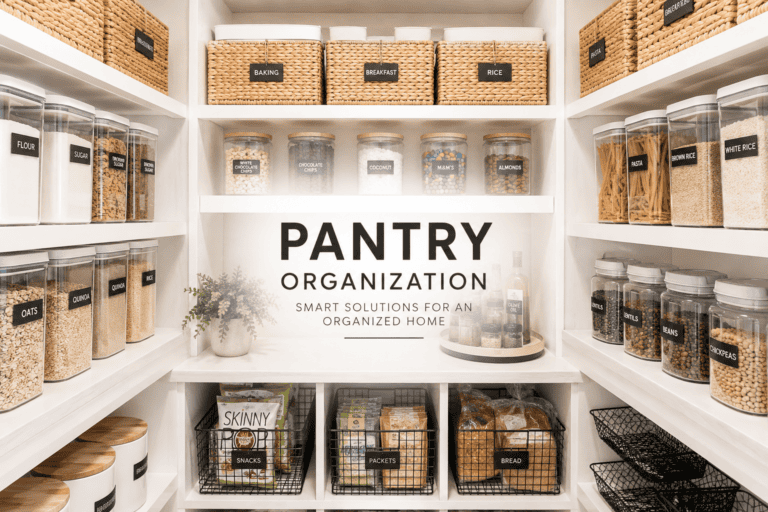
Containers can make a chaotic pantry easier to use, but they are not mandatory. Decanting every dry good takes time, and original packaging is often better for items with cooking instructions or frequent coupon purchases. Use clear containers for foods that create visual clutter, go stale in torn bags, or are hard to pour, such as cereal, flour, sugar, rice, and snacks.
For everything else, open bins are often the better answer. A handled bin lets you pull forward packets of taco seasoning, granola bars, or sauce mixes without digging through a crowded shelf. It also creates a natural limit: when the bin is full, it is time to use what is there before buying more.
Shelf risers work well for short cans, jars, and spices because they turn the unused vertical space behind an item into visible storage. Choose a sturdy riser with enough depth for your cans. If the shelf is shallow, a riser can make items in the back even harder to reach.
Turntables are useful for oils, vinegars, condiments, and small jars on a deep shelf. They are less helpful for heavy cans or large bags, which can make the tray hard to spin. For lower shelves, pull-out bins or wide baskets reduce the need to crouch and reach into the back.
A few well-chosen tools will outperform a pantry full of containers that do not fit your routine. The Storage Society approach is simple: buy storage only after you know exactly what needs containing.
Give every shelf a clear job
A shelf works best when it has one main purpose. Put everyday cooking ingredients where you can see and reach them quickly. Reserve the highest shelf for paper goods, party supplies, extra cereal, or duplicate pantry staples. Use the lowest shelf for heavier items like canned goods, bottled drinks, potatoes, or bulk bags.
If you have adjustable shelves, create tall sections for cereal boxes, oils, and appliance accessories, then use shorter sections for cans and jars. This can recover a surprising amount of vertical space. If your shelves are fixed, stackable bins and risers can help, but do not force a complicated solution into a tight gap.
Keep backstock separate from your active supply. For example, place one open package of pasta in the everyday cooking zone and keep extra boxes together in a labeled backstock bin or on a top shelf. This prevents the pantry from looking overfilled while still allowing you to stock up when a favorite item is on sale.
Make labels useful, not decorative
Labels are most helpful on bins, baskets, and opaque containers. They answer the question, “What goes back here?” after someone grabs a snack or puts away groceries. Use simple category names such as Snacks, Breakfast, Pasta, Baking, and Backstock. A label that is too specific can make the system harder to maintain when your shopping habits change.
If multiple people use the pantry, put labels on the front of bins where everyone can see them. For clear containers, add the food name and, if helpful, a use-by date. You do not need matching fonts or a label maker for the system to work. Clean handwriting on removable labels is completely enough.
Build in room for groceries and imperfect weeks
One of the biggest pantry mistakes is filling every inch. A shelf packed to the edge may look abundant, but it is hard to shop from and nearly impossible to put away. Leave a little breathing room in each zone, especially around the items your household buys regularly.
Use a first-in, first-out habit for anything with a shorter shelf life. When you bring home new crackers, canned tomatoes, or cereal, place the newer package behind the one already open or closest to its date. You do not need to inspect every label weekly. Just make the easy choice the default when groceries come home.
For a busy household, a small “use first” basket can be especially helpful. Put nearly empty boxes, items close to expiration, and foods you forgot you had in one visible spot. It turns random pantry leftovers into lunches, snacks, and simple dinner add-ins instead of waste.
Reset the pantry in five minutes
A pantry will not stay organized because you did one big cleanout. It stays usable because the reset is short enough to happen. Once a week, usually before grocery shopping, straighten a few misplaced items, combine duplicate open packages when appropriate, and check the snack and breakfast zones.
Once a month, scan for expired food and move overlooked items to the front. If a category repeatedly spills beyond its designated shelf, do not blame yourself. Adjust the system. You may need a larger snack bin, less backstock, or a different shelf assignment for the foods your family truly uses.
The goal is not a pantry that never gets messy. The goal is opening the door and finding what you need without a scavenger hunt. When every shelf supports the way your household cooks, snacks, and shops, even a small pantry can make the whole kitchen feel calmer. However you tackle it, learning to organize pantry shelves well pays off every single time you open that door.
About The Storage Society
We’re passionate about turning cluttered spaces into calm, functional ones — one room at a time. Every product we recommend is researched for real usefulness, not just trends. Read more on our About page.
3 Comments
Comments are closed.