
15 Genius Laundry Room Organization Ideas That Work
A laundry room can get chaotic fast: detergent bottles crowd the washer, stray socks land on the floor, and clean clothes wait in baskets longer than anyone wants to admit. The best laundry room organization ideas do not require a renovation or a picture-perfect utility room. They give every frequently used item a clear home and make the next load easier to start, move, fold, and put away.
Start by organizing around your actual laundry routine, not around a system that looks good for one afternoon. A family that washes daily needs easy-access supplies and multiple hampers. Someone in a small apartment may need a system that folds away when the laundry is done. The goal is less visual clutter and fewer frustrating steps.
This post contains affiliate links. As an Amazon Associate, I earn from qualifying purchases at no extra cost to you. See our full disclosure here.
Start With the Space You Can Actually Use
Before buying containers, pull everything out of the room or laundry closet. Toss empty bottles, hardened detergent, mystery cleaning products, broken hangers, and single socks that have been sitting around for months. Then separate what remains into three groups: laundry supplies, clothes-care tools, and items that do not belong there.
This quick reset matters because laundry rooms often become overflow storage for paper towels, pet supplies, cleaning products, and random household extras. Keeping a small backup supply is practical. Storing six months of bulky products in a room with no cabinet space usually is not.
Measure the open wall space, the top of the machines, the narrow gap beside them, and the inside of any cabinet doors. A few measurements prevent a common organization mistake: bringing home bins or shelves that make the room feel tighter instead of more functional.
Use Vertical Storage Before Adding More Bins
In most laundry rooms, the floor is the least useful place to add storage. Vertical space is usually where the real opportunity is.
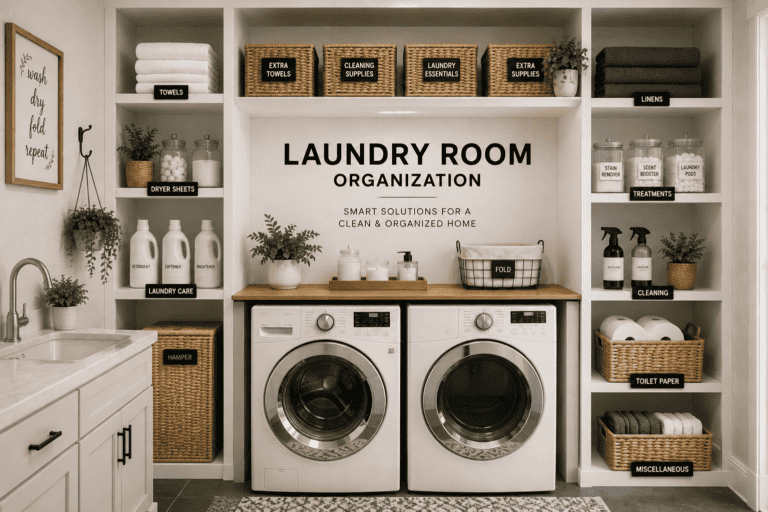
Add shelves above front-loading machines
A sturdy shelf above side-by-side machines creates a natural home for detergent, stain remover, dryer sheets, and baskets. Keep daily-use products on the lowest shelf, where you can reach them without stretching. Put refills or less-used items higher up.
Open shelving is convenient, but it can look cluttered if every package is different. Use matching handled bins for categories such as “refills,” “delicates,” and “cleaning cloths.” You do not need to decant everything. Original containers are often safer and easier to identify, especially for bleach and other chemical products.
Try a narrow rolling cart in tight gaps
A slim rolling cart can turn the few inches beside a washer or dryer into usable storage. It works well for dryer sheets, stain treatments, lint rollers, and small cleaning tools. Choose one with raised edges so bottles do not topple when you pull it out.
This is not the best solution if the gap is near plumbing connections, vents, or a machine that shifts during a spin cycle. Leave enough clearance for safe access and ventilation, and avoid cramming anything behind the machines.
Put hooks where clothes pile up
Wall hooks are one of the simplest ways to stop damp towels, delicates, and “wear again” items from ending up on top of the dryer. Install a few hooks near the washer for items that need to air-dry or need a stain treated before the next load.
A retractable drying rack is another smart option for compact rooms. It gives you hanging space when needed and stays out of the way the rest of the week. For renters, removable hooks can help, though they are better for lightweight items than heavy wet towels.
Create Simple Zones for Every Step of Laundry
The most useful laundry room organization ideas support the sequence you already follow. Think in zones: sort, wash, dry, fold, and return.
Make sorting easier with labeled hampers
If clothes arrive in the laundry room in one giant mixed pile, add a two- or three-section sorter. Labels such as lights, darks, towels, and delicates can reduce decision-making on busy days. A sorter with removable bags is especially helpful because you can carry one load at a time to the washer.
Still, more sections are not always better. A household that mostly washes cold, mixed loads may only need one large hamper and a small basket for delicates. Use the number of categories your household will realistically maintain.
Keep stain treatment within arm’s reach
Stains are easier to handle when treatment happens right away. Store stain spray, a small scrub brush, and a clean microfiber cloth in a caddy near the washer. A shallow tray under the products can catch drips and keep the machine top from getting sticky.
If young children or pets can access the room, place detergents, pods, bleach, and stain removers in a high cabinet or a locked storage bin. Laundry supplies are not the place to prioritize convenience over safety.
Protect one folding surface
A clear folding area changes how a laundry room feels. If you have top-loading machines, a fitted countertop can create a large work surface. In a smaller space, use a fold-down wall table or simply keep the top of a front-loading machine clear.
The important part is protecting that surface from becoming storage. Keep only a small basket for lost socks or items found in pockets there. Everything else should have a shelf, bin, hook, or cabinet home.
Make Small Supplies Easy to Find
Tiny items are what make a laundry room look messy even when the big pieces are under control. Corral clothespins, mesh wash bags, sewing supplies, lint rollers, and spare buttons in clear drawer organizers or small labeled bins.
A divided drawer is ideal for these items, but a handled caddy works well if you do not have built-in storage. You can pull it out while folding and put it away afterward. This is especially useful in a laundry closet, where every inch of counter space counts.
Store laundry manuals, warranty information, and a small list of machine settings in a labeled folder or envelope. It sounds minor until someone needs to troubleshoot an error code or remember how to clean the washer filter.
Use Doors and Cabinets as Hidden Storage
The back of a laundry room door can handle more than an over-the-door hook. An over-the-door organizer with narrow pockets can hold cleaning cloths, dryer balls, lint rollers, and small bottles. It is a good fit for a laundry closet because it creates storage without taking up shelf or floor space.
Inside cabinet doors, add adhesive hooks for measuring cups, reusable dryer balls in a mesh bag, or a small dustpan and brush. Avoid putting heavy products on a door organizer. Cabinet hinges are not designed to carry the weight of full detergent bottles every time the door opens.
If you have open shelving but prefer a calmer look, use opaque bins for visual clutter and reserve clear containers for products you need to see at a glance. This small trade-off keeps the room practical without making it feel like a stockroom.
Give Clean Laundry a Temporary Landing Spot
Clean clothes need a place to wait if you cannot fold them immediately. Without one, they end up back in the same hamper as dirty laundry or in a wrinkled heap on a chair.
Use a dedicated clean-load basket, preferably one that looks different from your regular hamper. For busy families, assign each person a labeled basket. When the load is dry, it goes into the right basket and can be carried directly to a bedroom. This does not eliminate folding, but it prevents clean clothes from becoming another mixed pile.
If your laundry room is far from bedrooms, a small rolling cart can make returns easier. If it is close by, individual baskets may be all you need. Choose the system that removes the most friction from your home, not the one that adds another chore.
Build a Five-Minute Reset Into Wash Day
Organization lasts when it is easy to maintain. At the end of a laundry session, take five minutes to put supplies back, wipe detergent drips, empty the lint trap, return stray items to their owners, and clear the folding surface.
Keep a small trash can nearby for dryer-sheet wrappers and clothing tags, plus a lidded container for lint if your room gets dusty. These details prevent small messes from turning into a packed, frustrating room by the end of the week.
A well-organized laundry room does not need matching jars, custom cabinetry, or an elaborate label maker. It needs a clear path for dirty clothes, accessible supplies, and enough open space to finish the job. Start with one problem area, make it work for a week, and adjust from there. That is how a laundry routine becomes lighter instead of another source of household clutter.
About The Storage Society
We’re passionate about turning cluttered spaces into calm, functional ones — one room at a time. Every product we recommend is researched for real usefulness, not just trends. Read more on our About page.

One Comment
Comments are closed.